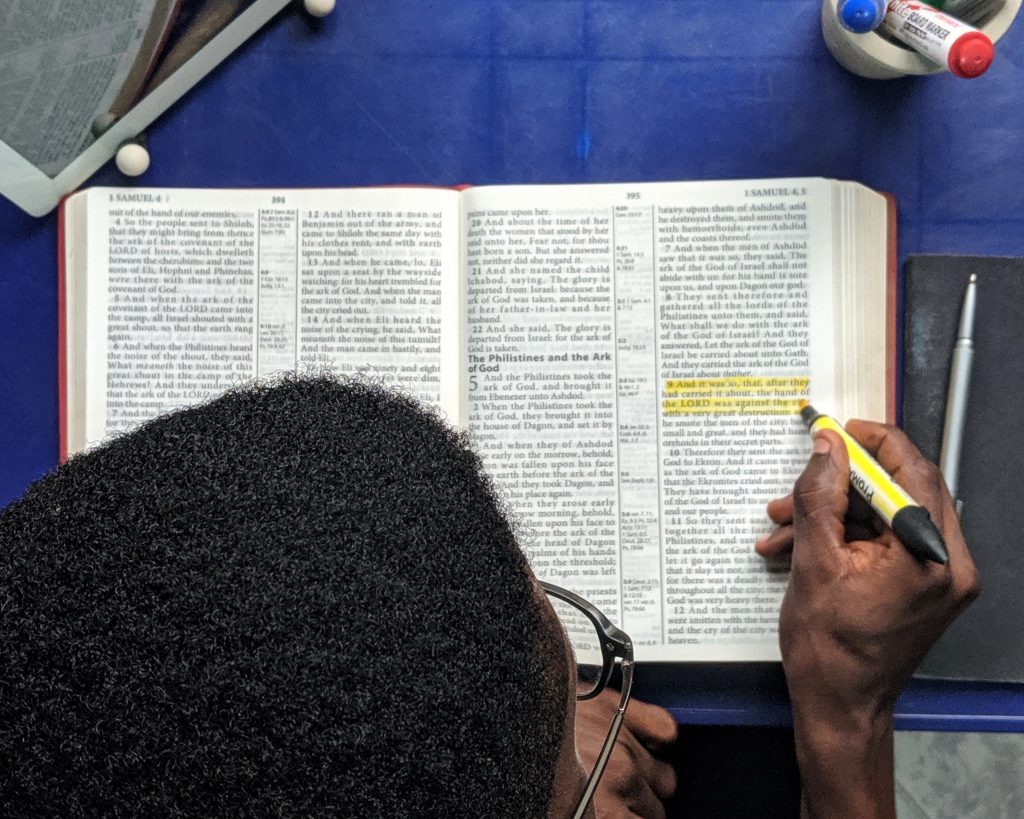
Cleansing the Temple
Study: John 2: 12 – 25
Background: John 2:13 – 25; Matthew 21:12 – 17; Mark 11:15 – 19; Luke 19:45 – 48
Devotional: Jeremiah 7:1 – 15
Lesson 8 July 19, 2025
Key Verse
And to those who were selling the doves He said, “Take these things away from here; stop making My Father’s house a [a]place of business! John 2: 16
INTRODUCTION
The Saviour of the world appeared.
John 1:1-5 tells us who this Saviour was:
“In the beginning was the Word, and the Word was with God, and the Word was God.
The same was in the beginning with God.
All things were made by him; and without him was not anything made that was made.
In him was life; and the life was the light of men.
And the light shineth in darkness; and the darkness comprehended it not.”
We now are faced with considering what the appearance of God among us meant.
We must therefore in the light of this Scripture ask ourselves two questions.
- Do you want to remain in the darkness?
- Do you want to get well?
- Do you want to be able to say, “I was blind but now I see?”
Note therefore the Scriptural admonition to us as we examine what our Saviour did for us. Philippians 2 calls on us to focus on the light that will bring you out of darkness:
“Let this mind be in you, which was also in Christ.
Who, being in the form of God, thought it not robbery to be equal with God:
But made himself of no reputation, and took on him the form of a servant, and was made in the likeness of men:
And being found in fashion as a man, he humbled himself, and became obedient unto death, even the death of the cross.”
Jesus had been born as a man through the work of the Holy Spirit given a human body by His Father. He was nurtured by Mary and Joseph, and now fully grown was made ready for His ministry by the Holy Spirit.
The curtain was beginning to lift on Jesus’ public ministry (John 2–12) and things were going to now move at an up-tempo pace after the long silence of around thirty years in Galilee.
We saw Him first at the happy event of marriage at Cana of Galilee as a couple followed the commandment of God given in Genesis 2 and gave the Lord Jesus the opportunity to display His grace exhibited at Creation and turned water into wine so that joy would overflow.
But then He would have to come suddenly to the house of God and bring the Day of divine judgment.
But to fully understand what is happening let us remind ourselves that in every culture religion is an indispensable part of life and to be considered “religious” bestows on leadership and on the people a good reputation. In the Israel of that day, unlike the situation in our modern countries we live in, to be “religious” gave a great reputation.
John’s account omits much of the early events of Jesus’ life, in keeping with his stated purpose to present Jesus as the Son of God,
(John 20:31).
The Son of God was God and by definition therefore was religious in the true sense of the word and so He would have to go into heart of the religious system of His day to see if the system and the people were ‘religious’ and if necessary to shape up the system and the people.
To carry out his role as Redeemer and Saviour Jesus now moved to challenge what it meant to be religious and as would be the case would have to attempt to fix ‘religion”.
After attending the primary social and religious event in Cana, He now goes to the Jewish Temple to bring judgment to those who came there to worship God.
As He looks around him critically Jesus realizes that He does not respect “religion” as seen by His countrymen.
This Study therefore challenges us for we have to face our personal view of “religion’ and ask ourselves what “religion” should be.
When we do that we have to take the next step and ask ourselves if our “religion” needs fixing.
Are we called to be people of God?
Or in other words are our “religion” to be that which Jesus has proposed?
Let us remind ourselves what the people in Israel were doing. They were in fact being faithful and obedient Jews for they were obeying God’s instruction and coming from near and far distances to the Feast of the Passover.
So why would Jesus not compliment them and instead be critical of what was happening and become upset? Jewish males knew they had to go to the Passover Feast.
Deuteronomy 14:24-26 had told all Jewish they had to go to this great Feast of the Passover and they had to sell their sacrificial offerings in their sundry areas of abode and bring the money to buy sacrificial animals in Jerusalem. These animals had to be without blemish. This would have been impossible after a long arduous and dangerous journey over rough terrain.
So what was missing? Why would Jesus complain as He looked at what was happening in the Temple where faithful and obedient Jews were congregating?
Let us look carefully.
John’s stated purpose for writing his Gospel was clearly aimed at us:
(‘ … but these have been written so that you may believe that Jesus is the [i]Christ, the Son of God; and that by believing you may have life in His name.)
He begins at the very beginning – at Creation where we find the Eternal Word who was God and who existed with the Father and the Spirit before time began. John then begins to provide witnesses to support his thesis; the first being the witness of John the Baptist, (1:29-34). Fittingly Jesus began gathering disciples to Himself, with the notable witness of Nathaniel, (1:49) and then the somewhat curious miracle of turning water into wine which resulted in
‘… His disciples believed in Him, (2:11). John began his account with testimonies concerning Jesus’ deity but in Chapter 2 he turns to the Jesus’ work.
The deeds and the works of Christ also tell us that He is God. Jesus’ life, His words, His personality, His divine knowledge, the miracles He performed, all show us that Jesus was indeed God in a human body.
So let us look again at the timing of our Lesson Study. The event of today’s Text happened at the outset of Jesus’ ministry at the Feast of Passover when He made a dramatic splash in Jerusalem by ‘cleansing’ the Temple.
As well He made what to Jewish authorities was an outrageous statement about ‘His Father’s House! Later Scriptures that speak of believers as the ‘Temple of God’ underscores our necessity for cleansing or else risk the severe discipline of Jesus Christ.
Interestingly the synoptics Gospels record Jesus’ cleansing of the Temple at the time of His ‘triumphal entry’ into Jerusalem, (Matt. 21:12-13; Mark 11:15-16; Luke 19:45-46), an act that in some way setoff events that led to His crucifixion. While the authorities were flabbergasted by Jesus’ audacity in John’s account by the end of His ministry the authorities had had their fill of Him.
The cleansing of the Temple in today’s Lesson differs from the accounts given in the Synoptic Gospels of Matthew, Mark, and Luke. Many scholars believe that John and the writers of the Synoptics are recording different events. Others suggest that John brought the event forward in his narrative to show its significance for everything that Jesus says and does in that Gospel.
If Jesus performed more than one cleansing of the Temple, it might be that His actions caused no permanent reforms, which would make a second cleansing necessary—and perhaps more provocative to those seeking His death.
The Temple was the focal point of Jewish national and religious life and remains the enduring symbol of that nation. Since the days of Solomon, it came to represent the place where God ‘dwelt’ among His people.
Interestingly, though the Temple was uniquely Jewish and so much so that Gentles were only allowed access to its outermost precincts, yet God decreed the Temple as a ‘house of prayer for all nations.
Could it be that what was happening had been directed to prevent the House of God being where Gentiles would want to come and see that this God of Israel and His place of worship would be welcoming to all people?
Would any deviation from practice that would turn Gentiles away from God’s intention for all nations be most psetting for Jesus?
The Temple was originally David’s idea (2 Sam.7:1-13). However God did accept the concept of a permanent structure to mark His presence.
In later times the Temple became a snare to Israel as their worship degenerated into externalism and the place replaced the object of worship (Jeremiah 7). This sad state of affairs did not however negate God’s promise (1Kings 8) and the Temple is featured in several Old Testament prophesies.
The Temple complex was run by a family of priests with questionable reputations. It’s outer court, the court of the Gentiles where Gentiles could go and worship and learn had become the location for selling animals used for sacrifices and associated activities.
Although many probably approved of this practice for convenience, others found it scandalous and a desecration of its hallowed ground. As well, the priesthood profited from the arrangement in no small measure.
The business within the Temple complex desecrated this holy place where God was to meet His people. The sight, sound and smell of sheep and cattle filled the air, along with the din of bickering and bartering over animals and exchange rates.
All this activity happening in the ‘Court of the Gentiles’ meant in effect the Gentiles were denied a place to worship the God of Israel. These activities stirred Jesus’ righteous anger and the result is the main event of our Study.
So let us ask ourselves if what we do in “Church”, wittingly or unwittingly, turn sinners off from the true worship of God. Note it is all so easy to look at sinners coming to church not wearing what we consider appropriate attire (they only seem to have sexy revealing clothing) and they do not know the songs of Zion, or know where the Books of the Bible are so they cannot find the chosen Scripture reading, or they even turn the Bible upside down, and they do not know when to stand and when to sit, and not to chew gum in church.
Believe me the list of what we do to close the court of the gentiles to those “others” from the outside is too long to list.
Let us not even mention our unfriendliness and our only seeming interest to find out things about them (the Gentiles) so we can enjoy the gossip!
Jesus’ action at the Temple was further proof of His true mission which was spiritual cleansing. He forcefully restored the Temple to its intended purpose and exposed the hypocrisy of commercial activity under the guise of serving religious purposes.
While it was necessary for ‘suitable’ animals to be brought to the Temple for sacrifice and Temple tax be paid in the appropriate currency, it was not necessary for these activities to be conducted on the Temple grounds.
Jesus’ quotations from the prophets Isaiah and Jeremiah underlined the gravity and scope of the issue. The Temple was being blatantly desecrated and Gentiles were being denied a place to worship the true God. God’s salvation encompassed Jews and Gentiles and prayer was at the heart of worship.
We may note that Jesus’ cleansing of the Temple of His day is analogous to the activities of two of His ancestors. Hezekiah (715–687 BC) and Josiah (640–609 BC) who were kings of Judah who reformed and renovated the Temple of their day after it was neglected and defiled by idolatry (2 Kings 23:1–30; 2 Chronicles 29:1–36).
Because Jesus is the rightful King and a Son of David, it was fitting for Him to demand reform of the Temple.
Think about the importance of the contrast Jesus faced. Before the events of today’s Text, Jesus was in Cana in Galilee, where He miraculously transformed water into wine (John 2:1–10).
This His first sign was so domestic, so familial!
Care and concern for the common person characterize Jesus as His anger toward the self-righteous religionists reflects the other side of His character.
The priority of people, not traditions or mandatory rituals, reveals Jesus’ freedom, yet reverence for cultural expectations.
This miracle “manifested forth his glory” for His disciples and others to see (2:11). Following that event, Jesus traveled with family members and disciples to Capernaum, a fishing village on the northwest shores of the Sea of Galilee (2:12). After staying in that town for a few days, Jesus and the disciples departed for Jerusalem, a journey of several days on foot. Our story picks up at this point.
In our Text, Jesus goes into the Temple in Jerusalem and starts cleaning house. He did not begin by opening Scripture and teaching everyone the proper use of the Temple. He was not polite, either. He did not ask, “Would you mind moving your animals outside the Temple?
Could you please carry your coin boxes and tables outside the gates?”
Rather, He saw what was going on, made a scourge of cords, and drove the animals and their owners out of there. He dumped out the coins of the money changers and overturned their tables. To those selling doves, He commanded (2:16), “Take these things away; stop making My Father’s house a place of business.”
Jesus acted with an aura of authority that rightly prompted the ‘Jews’ to in effect ask, “What right do you have to do these things?” In the vernacular, “Who do you think you are? Do you think you own this place?”
John wants us to understand, “Yes, Jesus owns this place! The Temple belongs to Him.”
Believers must understand we are the Temple of God by virtue of Jesus’ crucifixion and He demands no less of us than Jesus did in His day.
Note this Text.
“Do you not know that you are a [f]temple of God and that the Spirit of God dwells in you? 17 If anyone destroys the [g]temple of God, God will destroy [h]that person; for the [i]temple of God is holy, [j]and that is what you are”.
1 Corinthians 3:16-17
THE TEXT
12. … He went down to Capernaum … John keeps the narrative and chronology tight; he refers to the very recent ‘wedding at Cana’ in Galilee, (2:1-11). Topographically Capernaum was about thirteen miles away and at a lower elevation than Cana.
… His mother, and His brothers and His disciples … some family members (Matt. 12:46; Mark 6:3) and Jesus’ disciples accompanied Him. Jesus had physical brothers.
The idea of Mary’s perpetual virginity first appeared in the 2nd Century.
Evidently this was only for a short stay since John wrote that they stayed a few days. Jesus adopted Capernaum as His ministry base in Galilee and moved there from Nazareth (Matt. 4:13; Mark 1:21; 2:1). That may have happened now, or it may have taken place after this event. The purpose of this verse in John’s narrative is transitional.
13. Passover is in the spring, either at the end of March or the beginning of April. Some have put this at the year A.D. 28. It celebrates Passover, the deliverance of Israel from slavery after the tenth plague in which the first born of the Egyptians was killed. But those of Israel were spared because they had the blood of the lamb on the door posts and the lintels of their doors of their homes; (Exodus 12:1–27; Leviticus 23:5; Deuteronomy 16:1–8).
The Feast of Unleavened Bread immediately follows Passover (Leviticus 23:4–6; Numbers 28:16–17). Jesus went up to Jerusalem in obedience to the law regarding these observances (Deuteronomy 16:16).
It was an especially important Feast. The Passover was one of the three occasions, or feasts, in which the men of Israel, were required to appear before the Lord, wherever that tabernacle or the Temple was located.
… Jesus went up to Jerusalem … traveling to Jerusalem is usually described in those words ‘going up’ because it was up in the Judean mountains. But more to the point, it’s described in that elevated sense because of its sacred place. It was God’s chosen city where He had put His name; and where He had put His temple. It was the place where God and believers met through the blood shed on the altar of sacrifice. In all of the world there was no place like Jerusalem and the temple. It was God’s house and it was the center of true worship in the world.
Jews’ Passover … John’s use of the phrase mightreflect his intended audience; a combined Jewish-Gentile community in the latter half of the first century. Gentile observance of the Jewish feasts was not a necessity. However, most Jews of Jesus’ day would go to the temple to observe Passover. This one-day observance celebrated God’s deliverance of His people from enslavement in Egypt
(Exodus 12:1–27; Leviticus 23:5; Deuteronomy 16:1–8). The Feast of Unleavened Bread immediately follows Passover (Leviticus 23:4–6; Numbers 28:16–17). Jesus went up to Jerusalem in obedience to the law regarding these observances (Deuteronomy 16:16).
14. And within the temple grounds He found … when the Lord entered the Temple compound that day He found that it had been turned into something very common. It was a bank and a marketplace and worse, with all of the sights and sounds of a stock yard.
There were there, those who were selling oxen and sheep and doves and the money changers seated at their tables. The cattle, sheep, and doves were animals of sacrifice for worship at the temple.
The money changers were at their tables for the payment of the temple tax, which was a half shekel. The tax was to be paid in Tyrian coins because Tyrian currency was of purer silver than other coins. People came from all over the Roman empire and beyond to pay their tax, right there in the temple. It was an arrangement of convenience for the pilgrims who came from all over the world as it would have been near impossible to bring a goat or an ox from Rome or from Persia. So for convenience a market was set up in Jerusalem, which in principle was a good arrangement.
Originally it was across the Kidron Valley on the Mount of Olives. But at some point it had been moved into the temple—into the outer courtyard; the court of the Gentiles. And it was there because it was a very lucrative business for the men who ran the Temple—the family of the High Priest. In fact, the rabbis called the Temple market, “The bazaars of the sons of Annas” and that’s the bazaar Jesus entered.
The Temple included the singular building that housed the Most Holy Place and the adjoining buildings and courts built by Herod the Great (reigned 37–4 BC). By reliable estimates, the Temple complex grew to be larger than 30 acres once completed.
The location in the temple complex where Jesus encountered these animals was likely in the Court of the Gentiles. It was an open-air court where Jews and Gentiles were allowed to congregate but beyond which Gentiles were forbidden.
The priests however had transformed this area from a place of quiet prayer into a noisy bazaar. It was virtually impossible for Gentiles to worship there, the only courtyard accessible to them, with all the business going on. This was probably where the Ethiopian eunuch (Acts 8:27) and other Gentiles like him worshipped when they came to Jerusalem.
Oxen, sheep, and doves are animals used for sacrifice as prescribed by the Law of Moses (Leviticus 17:3; 5:6; 5:7, respectively). Doves were offered as sacrifices by people who could not afford larger animals (12:8; compare Luke 2:24). No one could easily satisfy the expectations for offering and sacrifice without passing money to a third party, one who had the approval of the priesthood.
If a person wanted to bring financial offerings, only one type of coin was allowed for the Temple. Thus, the changers of money allowed travelers to Jerusalem to convert their money or resources into a fitting currency for the Temple. The money changers did business sitting in the Temple courts and often charged exorbitant fees.
15. Actions sometimes speak louder than words. When Jesus entered the Temple
He did not hear the prayers and Psalms of worshipers. He heard the sounds of an oriental
market; bleating sheep and noise of commerce. To a righteous man it was appalling.
Jesus made a scourge of cords and drove them all out; he emptied the place of
sheep and cows and the merchants selling them. He poured out the coins of the money
changers and overturned their tables and it was done in real anger; controlled,
disciplined and righteous anger.
The animals’ owners likely ran to gather their valuable commodities as these animals fled. By scattering the changers’ money, Jesus created a chaotic scene: tables crashing to the ground, coins flying in all directions, and money changers scrambling to prevent theft. All the while, large animals were running through to escape the man wielding an improvised whip.
16. Jesus singled out them that sold doves for special criticism. As a result, we get the first hint of an explanation. Of course, Jesus could not use cords to drive out birds.
A focus on sellers of doves reveals Jesus’ anger at those who were taking advantage of those who were economically impoverished.
Jesus objected to a show of false motives within the Temple. He encountered a massive operation that allowed people to make a show of their devotion to God as they exchanged coins and obtained animals for sacrifice.
While the scene might appear chaotic, note the way He dealt with the doves and the merchants who sold them. He drove out the sheep and oxen and He turned over tables with coins, but He told the dove merchants, “Take these things away.” He did not overturn or break their cages, which would have resulted in the merchants losing their birds.
In fact, none of the merchants lost any of their merchandise. The money changers could collect the coins off the ground. The others could find their animals wandering around not very far away. His actions were very controlled, and they were purposeful.
And the point of it all, and the purpose of it all which He accomplished, was to clean out the Temple.
At the same time He fulfilled prophecy. He fulfilled the prophecy of Malachi 3, “The Lord will suddenly come to His temple.” (vs1). “He will purify the sons of Levi and refine them like gold and silver.” (vs3). He came suddenly to His Temple: He found it full of materialism and He purified it!
Jesus’ inspection of the Temple echoed the Old Testament prophets of Israel who demanded a change of heart of the people.
Isaiah told the people of Israel to quit “vain oblations” and, instead, “learn to do well; seek judgment, relieve the oppressed, judge the fatherless, plead for the widow” (Isaiah 1:13, 17).
Jeremiah gave a similar warning to residents of Judah, who thought that sacrifices would cover sinful hypocrisy (Jeremiah 7:1–29).
An understanding of the Temple grounds layout and its function helps us understand the shame and scandal of what Jesus saw. It was composed of a series of courtyards that led to the central sanctuary, where the Temple proper was. The outer court was called the court of the Gentiles. It was the only place within the Temple precinct in which people of other nations, Gentiles, could come. In fact it was open to all the nations, the only place where they could be and where they could worship.
But when it was filled with merchants and animals, where would these people find a place to worship, or the atmosphere, conducive to worship?
One writer asks: “What impression would the passing and the exchange of money, this merchandising of religion, leave on these Gentiles?
The same impression it leaves on people today when they watch a religious program that ends with a plea for money; or an offer to sell a preacher’s latest book: ‘Religion is business. It’s about money.’ Jesus thought the
merchandising of religion was a disgraceful message. It was a denial of the truth….”
…stop making My Father’s house a place of business. … The Lord is fervent for purity in worship and life. He is not indifferent. It was a bold act on His part.
This carpenter from Nazareth came in and He shut down this entire business establishment, (which was a major business at the time), and brought everything to a stop.
The phrase my Father’s house reveals Jesus’ authority to state such a command. The people of Israel in a corporate sense frequently referred to God as “father” (Deuteronomy 32:6; Psalm 89:26–27; Isaiah 64:8; but not as individuals.).
The Gospel of John describes Jesus’s unique relationship with His Heavenly Father. Jesus is the “only begotten of the Father” (John 1:14)
-who, in coming from Heaven, “hath declared” God the Father (1:18).
– as the only begotten Son of God, Jesus has unparalleled authority: “The Father loveth the Son, and hath given all things into his hand” (3:35).
– Jesus did nothing that was without the agreement and authorization of the Father (5:19–27).
– Jesus’ unique identity as the Son of God culminated in His proclamation, “I and my Father are one” (10:30). No other person in Israel’s past had claimed authority as God’s Son sent from Heaven.
With this authority, Jesus declared that the Temple was not a place for entrepreneurs to enrich themselves at others’ expense.
The Temple and the sacrificial system presented in the Law of Moses were to be a communal practice that allowed the people to experience the presence of God.
In Jesus’ evaluation, this Temple was being corrupted by the very things, sacrificial animals and money for offerings that would please God.
17. The Text that the disciples remembered comes from Psalm 69:9. There David was crying to God because of opposition against him due to his ‘zeal for the LORD’s house.’
They, (those who were opposed to him), were not sympathetic with David and his devotion to the tabernacle.
His zeal for God’s house’ stirred up animosity in many people who were God’s enemies.
The disciples recognized that David wrote about more than himself—that he was writing about his greater descendant, the Lord Jesus. And they recognized this was prophecy.
The Lord’s zeal for His Father’s house stirred up the same animosity in people toward Him as it did in the opposition that David experienced. And opposition and hatred toward Him would lead to the crucifixion itself.
Where there is zeal for the LORD there will be opposition.
John quotes only the first half of the verse, but the second half of that verse is equally appropriate as words about Jesus: “The reproaches of them that reproached thee are fallen upon me” (Romans 15:3).
The word zeal in this context means intense dedication.
It was especially bold to do all of this in the name of His Father. In doing that He claimed to have a special relationship to the Temple; it was His Father’s house. That was a special claim of deity on His part. And that, of course, is the subject of the fourth Gospel, the deity of Christ; that Jesus is the Christ, the Son of God and that believing on
Him you may have life in His name.
And so because He is the eternal Son of God, He retakes His Father’s house and He restores it to order. He cleans it up. It was a brave, bold act. And the disciples recognized it as that.
John commented in verse 17 that “His disciples remembered that it was written, ‘Zeal for Your house will consume me.’
Now zeal is not fanaticism. The Lord was cool and deliberate in this act of cleansing the Temple—not frenzied and chaotic. He was devoted to the LORD.
But devotion to God results often in hostility from the world. It was not long before the opposition responded.
18.Jesus’ actions certainly demanded a response.
The Jews … this is almost a technical term John uses for the religious authorities. John Himself was a Jew.
The Jews were religious leaders who had a keen and vested interest in the Temple and its function. Jesus had put them in a difficult position before a crowd in the Temple courts. On the one hand, they could not be seen as being less devoted to God’s house than to Jesus. On the other hand, they had a vested interest in maintaining the status quo.
It was hard for the religious leaders to deny the propriety of Jesus’ actions. His devotion to the Temple was commendable and from God, but they wanted to know whether or not Jesus could prove His authority.
Their demand for a sign pressured Jesus. The underlying Greek word translated as “sign” is used elsewhere in John’s Gospel to refer to a miracle (John 2:11, 23; 4:54; 12:18). The leaders wanted a public demonstration of Jesus’ power (Matthew 16:1–4; John 6:30).
… What sign do You show us … Their request for ‘a sign’ was misguided. The cleansing of the Temple was, itself, sign enough—and a powerful one. What kind of man can come in and take over that way and do so suddenly? If they had had a sense of it, they would have understood that it was a fulfillment of Malachi’s prophecy, ‘He came suddenly to the temple.’ (Malachi 3:1)
19.Jesus indirectly answered the leaders through a riddle-like response.
They did not think in terms of the Old Testament Scripture for they were too dull spiritually to have recognized the corrupt condition of the Temple and its need to be of the greatest sign ever given;
“Destroy this temple, and in three days I will raise it up.”
In the next verses, John explains that Jesus was speaking of His body and its resurrection. However it appeared to the authorities that He was urging them to pull down Herod’s temple and then He would rebuild it in three days.
Now, actually rebuilding the Temple would have been an easier task than raising the dead, but they could not even believe that. If they could not believe the easier, they certainly would not believe the more difficult. So they rejected the statement.
20.The first Jerusalem Temple was built by King Solomon (1 Kings 5–6). The Babylonians destroyed it when they took the nation of Judah into captivity in 586 B.C. (2 Kings 25:8–17). Following the exile, the Temple was rebuilt (Ezra 3; 6:13–18). That temple remained intact until Herod the Great took control of Jerusalem and, in approximately 19 BC, began renovating the complex. The project continued after Herod died in 4 BC and was a little past its midpoint during Jesus’ ministry. The authorities must have thought that a 46-year building project could not be redone in only three days.
… It took forty-six years … they heaped scorn on the idea. It was the response of materialistic minded, spiritually dull men who would not have believed any sign that He could have given them anyway. We see that throughout their history: They asked for a sign but would not believe any sign that He gave.
21–22. These verses provide an editorial explanation to readers of John’s Gospel: Jesus Himself would become the temple since He will be killed and restored (risen from the dead) after three days (Matthew 27:45–28:10; Mark 15:33–16:8; Luke 23:44–24:12; John 19:24–20:9).
The Temple was the physical manifestation of God’s presence with His people, the place where they could find mercy and forgiveness for sin (Isaiah 56:4–7).
However, the spiritual significance of the Temple was fulfilled in Jesus, for “no man cometh unto the Father, but by Him” (John 14:6). Jesus was revealed as the true Temple, while the physical Tabernacle and Temple were ultimately shadows (Hebrews 8:5; 10:1).
Likewise, the bodies of His followers become a Temple, welcoming the presence of God through the indwelling of the Holy Spirit (1 Corinthians 3:16–17; 6:19).
There is some debate about which Scripture the disciples remembered and believed. John may mean a specific Text from Scripture, such as Psalm 69:9, However, the phrase the Scripture parallels the word which Jesus had said, and Jesus did not repeat Psalm 69:9.
Alternatively, scripture and word might be shorthand for the Old Testament, which is fulfilled in and through Jesus.
(Luke 24:44; John 20:9).
23. John does not state what miracles Jesus did while He was in Jerusalem. John concludes his Gospel with the statement, “There are also many other things which Jesus did, the which, if they should be written everyone, I suppose that even the world itself could not contain the books that should be written” (John 21:25).
These miracles in Jerusalem would be an example of such unwritten things. Whatever these miracles were, they caused many to believe in his name.
It seems that when put to the test and asked for a sign, Jesus resisted. But to those who followed and witnessed His work in Jerusalem, He performed miracles and gave evidence of divine power at work.
24. The Greek word translated commit is the same word translated as “believed” in verse 23, above. Others “believed” Jesus, but He did not trust them. He anticipated the ways their hearts could change.
Later in this Gospel, Jesus will provide for the crowds, leading them to want to make Him their king (John 6:1–15). Yet, the leaders and crowds of Jerusalem would ultimately reject Him (19:14–16).
25. And needed not that any should testify of man: for he knew what was in man.
John’s Gospel shows how Jesus knows and anticipates the motives of others (John 1:47–48; 6:64; 13:11).
Generally, other individuals in this Gospel testified about Jesus rather than to Jesus (1:6–15, 32–34; 4:39; 19:34–35; 21:24).
Jesus did not need to receive the testimony of others because He knew what was in all people.
CONCLUSION
Ironically, in an account expressing Jesus’ zeal for the Jerusalem Temple, He redefines the concept of “temple.” His actions were like those of a prophet—one who does not come to destroy but comes to communicate God’s perspective.
Jesus saw that the Temple was filled with people who faced a business model that extracted financial value from them to enrich others.
Regardless of Herod’s renovations of the Temple, Jesus knew that the building would not stand. Instead, Jesus’ body is a Temple because He is the Word of God from Heaven. (John 1:1, 14).
The Temple in Jerusalem was a failing human institution. Sinful humanity cannot welcome God’s holy presence without repentance and God’s help.
God’s desire to dwell with humans was so great that He sent His only begotten Son to bring them eternal life (3:16). In and through Jesus, we can have direct access to God.
Cleansing the Temple
Study: John 2: 12 – 25
Background: John 2:13 – 25; Matthew 21:12 – 17; Mark 11:15 – 19; Luke 19:45 – 48
Devotional: Jeremiah 7:1 – 15
Lesson 8 July 19, 2025
Key Verse
And to those who were selling the doves He said, “Take these things away from here; stop making My Father’s house a [a]place of business! John 2: 16
INTRODUCTION
The Saviour of the world appeared.
John 1:1-5 tells us who this Saviour was:
“In the beginning was the Word, and the Word was with God, and the Word was God.
The same was in the beginning with God.
All things were made by him; and without him was not anything made that was made.
In him was life; and the life was the light of men.
And the light shineth in darkness; and the darkness comprehended it not.”
We now are faced with considering what the appearance of God among us meant.
We must therefore in the light of this Scripture ask ourselves two questions.
- Do you want to remain in the darkness?
- Do you want to get well?
- Do you want to be able to say, “I was blind but now I see?”
Note therefore the Scriptural admonition to us as we examine what our Saviour did for us. Philippians 2 calls on us to focus on the light that will bring you out of darkness:
“Let this mind be in you, which was also in Christ.
Who, being in the form of God, thought it not robbery to be equal with God:
But made himself of no reputation, and took on him the form of a servant, and was made in the likeness of men:
And being found in fashion as a man, he humbled himself, and became obedient unto death, even the death of the cross.”
Jesus had been born as a man through the work of the Holy Spirit given a human body by His Father. He was nurtured by Mary and Joseph, and now fully grown was made ready for His ministry by the Holy Spirit.
The curtain was beginning to lift on Jesus’ public ministry (John 2–12) and things were going to now move at an up-tempo pace after the long silence of around thirty years in Galilee.
We saw Him first at the happy event of marriage at Cana of Galilee as a couple followed the commandment of God given in Genesis 2 and gave the Lord Jesus the opportunity to display His grace exhibited at Creation and turned water into wine so that joy would overflow.
But then He would have to come suddenly to the house of God and bring the Day of divine judgment.
But to fully understand what is happening let us remind ourselves that in every culture religion is an indispensable part of life and to be considered “religious” bestows on leadership and on the people a good reputation. In the Israel of that day, unlike the situation in our modern countries we live in, to be “religious” gave a great reputation.
John’s account omits much of the early events of Jesus’ life, in keeping with his stated purpose to present Jesus as the Son of God,
(John 20:31).
The Son of God was God and by definition therefore was religious in the true sense of the word and so He would have to go into heart of the religious system of His day to see if the system and the people were ‘religious’ and if necessary to shape up the system and the people.
To carry out his role as Redeemer and Saviour Jesus now moved to challenge what it meant to be religious and as would be the case would have to attempt to fix ‘religion”.
After attending the primary social and religious event in Cana, He now goes to the Jewish Temple to bring judgment to those who came there to worship God.
As He looks around him critically Jesus realizes that He does not respect “religion” as seen by His countrymen.
This Study therefore challenges us for we have to face our personal view of “religion’ and ask ourselves what “religion” should be.
When we do that we have to take the next step and ask ourselves if our “religion” needs fixing.
Are we called to be people of God?
Or in other words are our “religion” to be that which Jesus has proposed?
Let us remind ourselves what the people in Israel were doing. They were in fact being faithful and obedient Jews for they were obeying God’s instruction and coming from near and far distances to the Feast of the Passover.
So why would Jesus not compliment them and instead be critical of what was happening and become upset? Jewish males knew they had to go to the Passover Feast.
Deuteronomy 14:24-26 had told all Jewish they had to go to this great Feast of the Passover and they had to sell their sacrificial offerings in their sundry areas of abode and bring the money to buy sacrificial animals in Jerusalem. These animals had to be without blemish. This would have been impossible after a long arduous and dangerous journey over rough terrain.
So what was missing? Why would Jesus complain as He looked at what was happening in the Temple where faithful and obedient Jews were congregating?
Let us look carefully.
John’s stated purpose for writing his Gospel was clearly aimed at us:
(‘ … but these have been written so that you may believe that Jesus is the [i]Christ, the Son of God; and that by believing you may have life in His name.)
He begins at the very beginning – at Creation where we find the Eternal Word who was God and who existed with the Father and the Spirit before time began. John then begins to provide witnesses to support his thesis; the first being the witness of John the Baptist, (1:29-34). Fittingly Jesus began gathering disciples to Himself, with the notable witness of Nathaniel, (1:49) and then the somewhat curious miracle of turning water into wine which resulted in
‘… His disciples believed in Him, (2:11). John began his account with testimonies concerning Jesus’ deity but in Chapter 2 he turns to the Jesus’ work.
The deeds and the works of Christ also tell us that He is God. Jesus’ life, His words, His personality, His divine knowledge, the miracles He performed, all show us that Jesus was indeed God in a human body.
So let us look again at the timing of our Lesson Study. The event of today’s Text happened at the outset of Jesus’ ministry at the Feast of Passover when He made a dramatic splash in Jerusalem by ‘cleansing’ the Temple.
As well He made what to Jewish authorities was an outrageous statement about ‘His Father’s House! Later Scriptures that speak of believers as the ‘Temple of God’ underscores our necessity for cleansing or else risk the severe discipline of Jesus Christ.
Interestingly the synoptics Gospels record Jesus’ cleansing of the Temple at the time of His ‘triumphal entry’ into Jerusalem, (Matt. 21:12-13; Mark 11:15-16; Luke 19:45-46), an act that in some way setoff events that led to His crucifixion. While the authorities were flabbergasted by Jesus’ audacity in John’s account by the end of His ministry the authorities had had their fill of Him.
The cleansing of the Temple in today’s Lesson differs from the accounts given in the Synoptic Gospels of Matthew, Mark, and Luke. Many scholars believe that John and the writers of the Synoptics are recording different events. Others suggest that John brought the event forward in his narrative to show its significance for everything that Jesus says and does in that Gospel.
If Jesus performed more than one cleansing of the Temple, it might be that His actions caused no permanent reforms, which would make a second cleansing necessary—and perhaps more provocative to those seeking His death.
The Temple was the focal point of Jewish national and religious life and remains the enduring symbol of that nation. Since the days of Solomon, it came to represent the place where God ‘dwelt’ among His people.
Interestingly, though the Temple was uniquely Jewish and so much so that Gentles were only allowed access to its outermost precincts, yet God decreed the Temple as a ‘house of prayer for all nations.
Could it be that what was happening had been directed to prevent the House of God being where Gentiles would want to come and see that this God of Israel and His place of worship would be welcoming to all people?
Would any deviation from practice that would turn Gentiles away from God’s intention for all nations be most psetting for Jesus?
The Temple was originally David’s idea (2 Sam.7:1-13). However God did accept the concept of a permanent structure to mark His presence.
In later times the Temple became a snare to Israel as their worship degenerated into externalism and the place replaced the object of worship (Jeremiah 7). This sad state of affairs did not however negate God’s promise (1Kings 8) and the Temple is featured in several Old Testament prophesies.
The Temple complex was run by a family of priests with questionable reputations. It’s outer court, the court of the Gentiles where Gentiles could go and worship and learn had become the location for selling animals used for sacrifices and associated activities.
Although many probably approved of this practice for convenience, others found it scandalous and a desecration of its hallowed ground. As well, the priesthood profited from the arrangement in no small measure.
The business within the Temple complex desecrated this holy place where God was to meet His people. The sight, sound and smell of sheep and cattle filled the air, along with the din of bickering and bartering over animals and exchange rates.
All this activity happening in the ‘Court of the Gentiles’ meant in effect the Gentiles were denied a place to worship the God of Israel. These activities stirred Jesus’ righteous anger and the result is the main event of our Study.
So let us ask ourselves if what we do in “Church”, wittingly or unwittingly, turn sinners off from the true worship of God. Note it is all so easy to look at sinners coming to church not wearing what we consider appropriate attire (they only seem to have sexy revealing clothing) and they do not know the songs of Zion, or know where the Books of the Bible are so they cannot find the chosen Scripture reading, or they even turn the Bible upside down, and they do not know when to stand and when to sit, and not to chew gum in church.
Believe me the list of what we do to close the court of the gentiles to those “others” from the outside is too long to list.
Let us not even mention our unfriendliness and our only seeming interest to find out things about them (the Gentiles) so we can enjoy the gossip!
Jesus’ action at the Temple was further proof of His true mission which was spiritual cleansing. He forcefully restored the Temple to its intended purpose and exposed the hypocrisy of commercial activity under the guise of serving religious purposes.
While it was necessary for ‘suitable’ animals to be brought to the Temple for sacrifice and Temple tax be paid in the appropriate currency, it was not necessary for these activities to be conducted on the Temple grounds.
Jesus’ quotations from the prophets Isaiah and Jeremiah underlined the gravity and scope of the issue. The Temple was being blatantly desecrated and Gentiles were being denied a place to worship the true God. God’s salvation encompassed Jews and Gentiles and prayer was at the heart of worship.
We may note that Jesus’ cleansing of the Temple of His day is analogous to the activities of two of His ancestors. Hezekiah (715–687 BC) and Josiah (640–609 BC) who were kings of Judah who reformed and renovated the Temple of their day after it was neglected and defiled by idolatry (2 Kings 23:1–30; 2 Chronicles 29:1–36).
Because Jesus is the rightful King and a Son of David, it was fitting for Him to demand reform of the Temple.
Think about the importance of the contrast Jesus faced. Before the events of today’s Text, Jesus was in Cana in Galilee, where He miraculously transformed water into wine (John 2:1–10).
This His first sign was so domestic, so familial!
Care and concern for the common person characterize Jesus as His anger toward the self-righteous religionists reflects the other side of His character.
The priority of people, not traditions or mandatory rituals, reveals Jesus’ freedom, yet reverence for cultural expectations.
This miracle “manifested forth his glory” for His disciples and others to see (2:11). Following that event, Jesus traveled with family members and disciples to Capernaum, a fishing village on the northwest shores of the Sea of Galilee (2:12). After staying in that town for a few days, Jesus and the disciples departed for Jerusalem, a journey of several days on foot. Our story picks up at this point.
In our Text, Jesus goes into the Temple in Jerusalem and starts cleaning house. He did not begin by opening Scripture and teaching everyone the proper use of the Temple. He was not polite, either. He did not ask, “Would you mind moving your animals outside the Temple?
Could you please carry your coin boxes and tables outside the gates?”
Rather, He saw what was going on, made a scourge of cords, and drove the animals and their owners out of there. He dumped out the coins of the money changers and overturned their tables. To those selling doves, He commanded (2:16), “Take these things away; stop making My Father’s house a place of business.”
Jesus acted with an aura of authority that rightly prompted the ‘Jews’ to in effect ask, “What right do you have to do these things?” In the vernacular, “Who do you think you are? Do you think you own this place?”
John wants us to understand, “Yes, Jesus owns this place! The Temple belongs to Him.”
Believers must understand we are the Temple of God by virtue of Jesus’ crucifixion and He demands no less of us than Jesus did in His day.
Note this Text.
“Do you not know that you are a [f]temple of God and that the Spirit of God dwells in you? 17 If anyone destroys the [g]temple of God, God will destroy [h]that person; for the [i]temple of God is holy, [j]and that is what you are”.
1 Corinthians 3:16-17
THE TEXT
12. … He went down to Capernaum … John keeps the narrative and chronology tight; he refers to the very recent ‘wedding at Cana’ in Galilee, (2:1-11). Topographically Capernaum was about thirteen miles away and at a lower elevation than Cana.
… His mother, and His brothers and His disciples … some family members (Matt. 12:46; Mark 6:3) and Jesus’ disciples accompanied Him. Jesus had physical brothers.
The idea of Mary’s perpetual virginity first appeared in the 2nd Century.
Evidently this was only for a short stay since John wrote that they stayed a few days. Jesus adopted Capernaum as His ministry base in Galilee and moved there from Nazareth (Matt. 4:13; Mark 1:21; 2:1). That may have happened now, or it may have taken place after this event. The purpose of this verse in John’s narrative is transitional.
13. Passover is in the spring, either at the end of March or the beginning of April. Some have put this at the year A.D. 28. It celebrates Passover, the deliverance of Israel from slavery after the tenth plague in which the first born of the Egyptians was killed. But those of Israel were spared because they had the blood of the lamb on the door posts and the lintels of their doors of their homes; (Exodus 12:1–27; Leviticus 23:5; Deuteronomy 16:1–8).
The Feast of Unleavened Bread immediately follows Passover (Leviticus 23:4–6; Numbers 28:16–17). Jesus went up to Jerusalem in obedience to the law regarding these observances (Deuteronomy 16:16).
It was an especially important Feast. The Passover was one of the three occasions, or feasts, in which the men of Israel, were required to appear before the Lord, wherever that tabernacle or the Temple was located.
… Jesus went up to Jerusalem … traveling to Jerusalem is usually described in those words ‘going up’ because it was up in the Judean mountains. But more to the point, it’s described in that elevated sense because of its sacred place. It was God’s chosen city where He had put His name; and where He had put His temple. It was the place where God and believers met through the blood shed on the altar of sacrifice. In all of the world there was no place like Jerusalem and the temple. It was God’s house and it was the center of true worship in the world.
Jews’ Passover … John’s use of the phrase might reflect his intended audience; a combined Jewish-Gentile community in the latter half of the first century. Gentile observance of the Jewish feasts was not a necessity. However, most Jews of Jesus’ day would go to the temple to observe Passover. This one-day observance celebrated God’s deliverance of His people from enslavement in Egypt
(Exodus 12:1–27; Leviticus 23:5; Deuteronomy 16:1–8). The Feast of Unleavened Bread immediately follows Passover (Leviticus 23:4–6; Numbers 28:16–17). Jesus went up to Jerusalem in obedience to the law regarding these observances (Deuteronomy 16:16).
14. And within the temple grounds He found … when the Lord entered the Temple compound that day He found that it had been turned into something very common. It was a bank and a marketplace and worse, with all of the sights and sounds of a stock yard.
There were there, those who were selling oxen and sheep and doves and the money changers seated at their tables. The cattle, sheep, and doves were animals of sacrifice for worship at the temple.
The money changers were at their tables for the payment of the temple tax, which was a half shekel. The tax was to be paid in Tyrian coins because Tyrian currency was of purer silver than other coins. People came from all over the Roman empire and beyond to pay their tax, right there in the temple. It was an arrangement of convenience for the pilgrims who came from all over the world as it would have been near impossible to bring a goat or an ox from Rome or from Persia. So for convenience a market was set up in Jerusalem, which in principle was a good arrangement.
Originally it was across the Kidron Valley on the Mount of Olives. But at some point it had been moved into the temple—into the outer courtyard; the court of the Gentiles. And it was there because it was a very lucrative business for the men who ran the Temple—the family of the High Priest. In fact, the rabbis called the Temple market, “The bazaars of the sons of Annas” and that’s the bazaar Jesus entered.
The Temple included the singular building that housed the Most Holy Place and the adjoining buildings and courts built by Herod the Great (reigned 37–4 BC). By reliable estimates, the Temple complex grew to be larger than 30 acres once completed.
The location in the temple complex where Jesus encountered these animals was likely in the Court of the Gentiles. It was an open-air court where Jews and Gentiles were allowed to congregate but beyond which Gentiles were forbidden.
The priests however had transformed this area from a place of quiet prayer into a noisy bazaar. It was virtually impossible for Gentiles to worship there, the only courtyard accessible to them, with all the business going on. This was probably where the Ethiopian eunuch (Acts 8:27) and other Gentiles like him worshipped when they came to Jerusalem.
Oxen, sheep, and doves are animals used for sacrifice as prescribed by the Law of Moses (Leviticus 17:3; 5:6; 5:7, respectively). Doves were offered as sacrifices by people who could not afford larger animals (12:8; compare Luke 2:24). No one could easily satisfy the expectations for offering and sacrifice without passing money to a third party, one who had the approval of the priesthood.
If a person wanted to bring financial offerings, only one type of coin was allowed for the Temple. Thus, the changers of money allowed travelers to Jerusalem to convert their money or resources into a fitting currency for the Temple. The money changers did business sitting in the Temple courts and often charged exorbitant fees.
15. Actions sometimes speak louder than words. When Jesus entered the Temple
He did not hear the prayers and Psalms of worshipers. He heard the sounds of an oriental
market; bleating sheep and noise of commerce. To a righteous man it was appalling.
Jesus made a scourge of cords and drove them all out; he emptied the place of
sheep and cows and the merchants selling them. He poured out the coins of the money
changers and overturned their tables and it was done in real anger; controlled,
disciplined and righteous anger.
The animals’ owners likely ran to gather their valuable commodities as these animals fled. By scattering the changers’ money, Jesus created a chaotic scene: tables crashing to the ground, coins flying in all directions, and money changers scrambling to prevent theft. All the while, large animals were running through to escape the man wielding an improvised whip.
16. Jesus singled out them that sold doves for special criticism. As a result, we get the first hint of an explanation. Of course, Jesus could not use cords to drive out birds.
A focus on sellers of doves reveals Jesus’ anger at those who were taking advantage of those who were economically impoverished.
Jesus objected to a show of false motives within the Temple. He encountered a massive operation that allowed people to make a show of their devotion to God as they exchanged coins and obtained animals for sacrifice.
While the scene might appear chaotic, note the way He dealt with the doves and the merchants who sold them. He drove out the sheep and oxen and He turned over tables with coins, but He told the dove merchants, “Take these things away.” He did not overturn or break their cages, which would have resulted in the merchants losing their birds.
In fact, none of the merchants lost any of their merchandise. The money changers could collect the coins off the ground. The others could find their animals wandering around not very far away. His actions were very controlled, and they were purposeful.
And the point of it all, and the purpose of it all which He accomplished, was to clean out the Temple.
At the same time He fulfilled prophecy. He fulfilled the prophecy of Malachi 3, “The Lord will suddenly come to His temple.” (vs1). “He will purify the sons of Levi and refine them like gold and silver.” (vs3). He came suddenly to His Temple: He found it full of materialism and He purified it!
Jesus’ inspection of the Temple echoed the Old Testament prophets of Israel who demanded a change of heart of the people.
Isaiah told the people of Israel to quit “vain oblations” and, instead, “learn to do well; seek judgment, relieve the oppressed, judge the fatherless, plead for the widow” (Isaiah 1:13, 17).
Jeremiah gave a similar warning to residents of Judah, who thought that sacrifices would cover sinful hypocrisy (Jeremiah 7:1–29).
An understanding of the Temple grounds layout and its function helps us understand the shame and scandal of what Jesus saw. It was composed of a series of courtyards that led to the central sanctuary, where the Temple proper was. The outer court was called the court of the Gentiles. It was the only place within the Temple precinct in which people of other nations, Gentiles, could come. In fact it was open to all the nations, the only place where they could be and where they could worship.
But when it was filled with merchants and animals, where would these people find a place to worship, or the atmosphere, conducive to worship?
One writer asks: “What impression would the passing and the exchange of money, this merchandising of religion, leave on these Gentiles?
The same impression it leaves on people today when they watch a religious program that ends with a plea for money; or an offer to sell a preacher’s latest book: ‘Religion is business. It’s about money.’ Jesus thought the
merchandising of religion was a disgraceful message. It was a denial of the truth….”
…stop making My Father’s house a place of business. … The Lord is fervent for purity in worship and life. He is not indifferent. It was a bold act on His part.
This carpenter from Nazareth came in and He shut down this entire business establishment, (which was a major business at the time), and brought everything to a stop.
The phrase my Father’s house reveals Jesus’ authority to state such a command. The people of Israel in a corporate sense frequently referred to God as “father” (Deuteronomy 32:6; Psalm 89:26–27; Isaiah 64:8; but not as individuals.).
The Gospel of John describes Jesus’s unique relationship with His Heavenly Father. Jesus is the “only begotten of the Father” (John 1:14)
– who, in coming from Heaven, “hath declared” God the Father (1:18).
– as the only begotten Son of God, Jesus has unparalleled authority: “The Father loveth the Son, and hath given all things into his hand” (3:35).
– Jesus did nothing that was without the agreement and authorization of the Father (5:19–27).
– Jesus’ unique identity as the Son of God culminated in His proclamation, “I and my Father are one” (10:30). No other person in Israel’s past had claimed authority as God’s Son sent from Heaven.
With this authority, Jesus declared that the Temple was not a place for entrepreneurs to enrich themselves at others’ expense.
The Temple and the sacrificial system presented in the Law of Moses were to be a communal practice that allowed the people to experience the presence of God.
In Jesus’ evaluation, this Temple was being corrupted by the very things, sacrificial animals and money for offerings that would please God.
17. The Text that the disciples remembered comes from Psalm 69:9. There David was crying to God because of opposition against him due to his ‘zeal for the LORD’s house.’
They, (those who were opposed to him), were not sympathetic with David and his devotion to the tabernacle.
His zeal for God’s house’ stirred up animosity in many people who were God’s enemies.
The disciples recognized that David wrote about more than himself—that he was writing about his greater descendant, the Lord Jesus. And they recognized this was prophecy.
The Lord’s zeal for His Father’s house stirred up the same animosity in people toward Him as it did in the opposition that David experienced. And opposition and hatred toward Him would lead to the crucifixion itself.
Where there is zeal for the LORD there will be opposition.
John quotes only the first half of the verse, but the second half of that verse is equally appropriate as words about Jesus: “The reproaches of them that reproached thee are fallen upon me” (Romans 15:3).
The word zeal in this context means intense dedication.
It was especially bold to do all of this in the name of His Father. In doing that He claimed to have a special relationship to the Temple; it was His Father’s house. That was a special claim of deity on His part. And that, of course, is the subject of the fourth Gospel, the deity of Christ; that Jesus is the Christ, the Son of God and that believing on
Him you may have life in His name.
And so because He is the eternal Son of God, He retakes His Father’s house and He restores it to order. He cleans it up. It was a brave, bold act. And the disciples recognized it as that.
John commented in verse 17 that “His disciples remembered that it was written, ‘Zeal for Your house will consume me.’
Now zeal is not fanaticism. The Lord was cool and deliberate in this act of cleansing the Temple—not frenzied and chaotic. He was devoted to the LORD.
But devotion to God results often in hostility from the world. It was not long before the opposition responded.
18. Jesus’ actions certainly demanded a response.
The Jews … this is almost a technical term John uses for the religious authorities. John Himself was a Jew.
The Jews were religious leaders who had a keen and vested interest in the Temple and its function. Jesus had put them in a difficult position before a crowd in the Temple courts. On the one hand, they could not be seen as being less devoted to God’s house than to Jesus. On the other hand, they had a vested interest in maintaining the status quo.
It was hard for the religious leaders to deny the propriety of Jesus’ actions. His devotion to the Temple was commendable and from God, but they wanted to know whether or not Jesus could prove His authority.
Their demand for a sign pressured Jesus. The underlying Greek word translated as “sign” is used elsewhere in John’s Gospel to refer to a miracle (John 2:11, 23; 4:54; 12:18). The leaders wanted a public demonstration of Jesus’ power (Matthew 16:1–4; John 6:30).
… What sign do You show us … Their request for ‘a sign’ was misguided. The cleansing of the Temple was, itself, sign enough—and a powerful one. What kind of man can come in and take over that way and do so suddenly? If they had had a sense of it, they would have understood that it was a fulfillment of Malachi’s prophecy, ‘He came suddenly to the temple.’ (Malachi 3:1)
19. Jesus indirectly answered the leaders through a riddle-like response.
They did not think in terms of the Old Testament Scripture for they were too dull spiritually to have recognized the corrupt condition of the Temple and its need to be of the greatest sign ever given;
“Destroy this temple, and in three days I will raise it up.”
In the next verses, John explains that Jesus was speaking of His body and its resurrection. However it appeared to the authorities that He was urging them to pull down Herod’s temple and then He would rebuild it in three days.
Now, actually rebuilding the Temple would have been an easier task than raising the dead, but they could not even believe that. If they could not believe the easier, they certainly would not believe the more difficult. So they rejected the statement.
20. The first Jerusalem Temple was built by King Solomon (1 Kings 5–6). The Babylonians destroyed it when they took the nation of Judah into captivity in 586 B.C. (2 Kings 25:8–17). Following the exile, the Temple was rebuilt (Ezra 3; 6:13–18). That temple remained intact until Herod the Great took control of Jerusalem and, in approximately 19 BC, began renovating the complex. The project continued after Herod died in 4 BC and was a little past its midpoint during Jesus’ ministry. The authorities must have thought that a 46-year building project could not be redone in only three days.
… It took forty-six years … they heaped scorn on the idea. It was the response of materialistic minded, spiritually dull men who would not have believed any sign that He could have given them anyway. We see that throughout their history: They asked for a sign but would not believe any sign that He gave.
21–22. These verses provide an editorial explanation to readers of John’s Gospel: Jesus Himself would become the temple since He will be killed and restored (risen from the dead) after three days (Matthew 27:45–28:10; Mark 15:33–16:8; Luke 23:44–24:12; John 19:24–20:9).
The Temple was the physical manifestation of God’s presence with His people, the place where they could find mercy and forgiveness for sin (Isaiah 56:4–7).
However, the spiritual significance of the Temple was fulfilled in Jesus, for “no man cometh unto the Father, but by Him” (John 14:6). Jesus was revealed as the true Temple, while the physical Tabernacle and Temple were ultimately shadows (Hebrews 8:5; 10:1).
Likewise, the bodies of His followers become a Temple, welcoming the presence of God through the indwelling of the Holy Spirit (1 Corinthians 3:16–17; 6:19).
There is some debate about which Scripture the disciples remembered and believed. John may mean a specific Text from Scripture, such as Psalm 69:9, However, the phrase the Scripture parallels the word which Jesus had said, and Jesus did not repeat Psalm 69:9.
Alternatively, scripture and word might be shorthand for the Old Testament, which is fulfilled in and through Jesus.
(Luke 24:44; John 20:9).
23. John does not state what miracles Jesus did while He was in Jerusalem. John concludes his Gospel with the statement, “There are also many other things which Jesus did, the which, if they should be written everyone, I suppose that even the world itself could not contain the books that should be written” (John 21:25).
These miracles in Jerusalem would be an example of such unwritten things. Whatever these miracles were, they caused many to believe in his name.
It seems that when put to the test and asked for a sign, Jesus resisted. But to those who followed and witnessed His work in Jerusalem, He performed miracles and gave evidence of divine power at work.
24. The Greek word translated commit is the same word translated as “believed” in verse 23, above. Others “believed” Jesus, but He did not trust them. He anticipated the ways their hearts could change.
Later in this Gospel, Jesus will provide for the crowds, leading them to want to make Him their king (John 6:1–15). Yet, the leaders and crowds of Jerusalem would ultimately reject Him (19:14–16).
25. And needed not that any should testify of man: for he knew what was in man.
John’s Gospel shows how Jesus knows and anticipates the motives of others (John 1:47–48; 6:64; 13:11).
Generally, other individuals in this Gospel testified about Jesus rather than to Jesus (1:6–15, 32–34; 4:39; 19:34–35; 21:24).
Jesus did not need to receive the testimony of others because He knew what was in all people.
CONCLUSION
Ironically, in an account expressing Jesus’ zeal for the Jerusalem Temple, He redefines the concept of “temple.” His actions were like those of a prophet—one who does not come to destroy but comes to communicate God’s perspective.
Jesus saw that the Temple was filled with people who faced a business model that extracted financial value from them to enrich others.
Regardless of Herod’s renovations of the Temple, Jesus knew that the building would not stand. Instead, Jesus’ body is a Temple because He is the Word of God from Heaven. (John 1:1, 14).
The Temple in Jerusalem was a failing human institution. Sinful humanity cannot welcome God’s holy presence without repentance and God’s help.
God’s desire to dwell with humans was so great that He sent His only begotten Son to bring them eternal life (3:16). In and through Jesus, we can have direct access to God.
Cleansing the Temple
Study: John 2: 12 – 25
Background: John 2:13 – 25; Matthew 21:12 – 17; Mark 11:15 – 19; Luke 19:45 – 48
Devotional: Jeremiah 7:1 – 15
Lesson 8 July 19, 2025
Key Verse
And to those who were selling the doves He said, “Take these things away from here; stop making My Father’s house a [a]place of business! John 2: 16
INTRODUCTION
The Saviour of the world appeared.
John 1:1-5 tells us who this Saviour was:
“In the beginning was the Word, and the Word was with God, and the Word was God.
The same was in the beginning with God.
All things were made by him; and without him was not anything made that was made.
In him was life; and the life was the light of men.
And the light shineth in darkness; and the darkness comprehended it not.”
We now are faced with considering what the appearance of God among us meant.
We must therefore in the light of this Scripture ask ourselves two questions.
- Do you want to remain in the darkness?
- Do you want to get well?
- Do you want to be able to say, “I was blind but now I see?”
Note therefore the Scriptural admonition to us as we examine what our Saviour did for us. Philippians 2 calls on us to focus on the light that will bring you out of darkness:
“Let this mind be in you, which was also in Christ.
Who, being in the form of God, thought it not robbery to be equal with God:
But made himself of no reputation, and took on him the form of a servant, and was made in the likeness of men:
And being found in fashion as a man, he humbled himself, and became obedient unto death, even the death of the cross.”
Jesus had been born as a man through the work of the Holy Spirit given a human body by His Father. He was nurtured by Mary and Joseph, and now fully grown was made ready for His ministry by the Holy Spirit.
The curtain was beginning to lift on Jesus’ public ministry (John 2–12) and things were going to now move at an up-tempo pace after the long silence of around thirty years in Galilee.
We saw Him first at the happy event of marriage at Cana of Galilee as a couple followed the commandment of God given in Genesis 2 and gave the Lord Jesus the opportunity to display His grace exhibited at Creation and turned water into wine so that joy would overflow.
But then He would have to come suddenly to the house of God and bring the Day of divine judgment.
But to fully understand what is happening let us remind ourselves that in every culture religion is an indispensable part of life and to be considered “religious” bestows on leadership and on the people a good reputation. In the Israel of that day, unlike the situation in our modern countries we live in, to be “religious” gave a great reputation.
John’s account omits much of the early events of Jesus’ life, in keeping with his stated purpose to present Jesus as the Son of God,
(John 20:31).
The Son of God was God and by definition therefore was religious in the true sense of the word and so He would have to go into heart of the religious system of His day to see if the system and the people were ‘religious’ and if necessary to shape up the system and the people.
To carry out his role as Redeemer and Saviour Jesus now moved to challenge what it meant to be religious and as would be the case would have to attempt to fix ‘religion”.
After attending the primary social and religious event in Cana, He now goes to the Jewish Temple to bring judgment to those who came there to worship God.
As He looks around him critically Jesus realizes that He does not respect “religion” as seen by His countrymen.
This Study therefore challenges us for we have to face our personal view of “religion’ and ask ourselves what “religion” should be.
When we do that we have to take the next step and ask ourselves if our “religion” needs fixing.
Are we called to be people of God?
Or in other words are our “religion” to be that which Jesus has proposed?
Let us remind ourselves what the people in Israel were doing. They were in fact being faithful and obedient Jews for they were obeying God’s instruction and coming from near and far distances to the Feast of the Passover.
So why would Jesus not compliment them and instead be critical of what was happening and become upset? Jewish males knew they had to go to the Passover Feast.
Deuteronomy 14:24-26 had told all Jewish they had to go to this great Feast of the Passover and they had to sell their sacrificial offerings in their sundry areas of abode and bring the money to buy sacrificial animals in Jerusalem. These animals had to be without blemish. This would have been impossible after a long arduous and dangerous journey over rough terrain.
So what was missing? Why would Jesus complain as He looked at what was happening in the Temple where faithful and obedient Jews were congregating?
Let us look carefully.
John’s stated purpose for writing his Gospel was clearly aimed at us:
(‘ … but these have been written so that you may believe that Jesus is the [i]Christ, the Son of God; and that by believing you may have life in His name.)
He begins at the very beginning – at Creation where we find the Eternal Word who was God and who existed with the Father and the Spirit before time began. John then begins to provide witnesses to support his thesis; the first being the witness of John the Baptist, (1:29-34). Fittingly Jesus began gathering disciples to Himself, with the notable witness of Nathaniel, (1:49) and then the somewhat curious miracle of turning water into wine which resulted in
‘… His disciples believed in Him, (2:11). John began his account with testimonies concerning Jesus’ deity but in Chapter 2 he turns to the Jesus’ work.
The deeds and the works of Christ also tell us that He is God. Jesus’ life, His words, His personality, His divine knowledge, the miracles He performed, all show us that Jesus was indeed God in a human body.
So let us look again at the timing of our Lesson Study. The event of today’s Text happened at the outset of Jesus’ ministry at the Feast of Passover when He made a dramatic splash in Jerusalem by ‘cleansing’ the Temple.
As well He made what to Jewish authorities was an outrageous statement about ‘His Father’s House! Later Scriptures that speak of believers as the ‘Temple of God’ underscores our necessity for cleansing or else risk the severe discipline of Jesus Christ.
Interestingly the synoptics Gospels record Jesus’ cleansing of the Temple at the time of His ‘triumphal entry’ into Jerusalem, (Matt. 21:12-13; Mark 11:15-16; Luke 19:45-46), an act that in some way setoff events that led to His crucifixion. While the authorities were flabbergasted by Jesus’ audacity in John’s account by the end of His ministry the authorities had had their fill of Him.
The cleansing of the Temple in today’s Lesson differs from the accounts given in the Synoptic Gospels of Matthew, Mark, and Luke. Many scholars believe that John and the writers of the Synoptics are recording different events. Others suggest that John brought the event forward in his narrative to show its significance for everything that Jesus says and does in that Gospel.
If Jesus performed more than one cleansing of the Temple, it might be that His actions caused no permanent reforms, which would make a second cleansing necessary—and perhaps more provocative to those seeking His death.
The Temple was the focal point of Jewish national and religious life and remains the enduring symbol of that nation. Since the days of Solomon, it came to represent the place where God ‘dwelt’ among His people.
Interestingly, though the Temple was uniquely Jewish and so much so that Gentles were only allowed access to its outermost precincts, yet God decreed the Temple as a ‘house of prayer for all nations.
Could it be that what was happening had been directed to prevent the House of God being where Gentiles would want to come and see that this God of Israel and His place of worship would be welcoming to all people?
Would any deviation from practice that would turn Gentiles away from God’s intention for all nations be most psetting for Jesus?
The Temple was originally David’s idea (2 Sam.7:1-13). However God did accept the concept of a permanent structure to mark His presence.
In later times the Temple became a snare to Israel as their worship degenerated into externalism and the place replaced the object of worship (Jeremiah 7). This sad state of affairs did not however negate God’s promise (1Kings 8) and the Temple is featured in several Old Testament prophesies.
The Temple complex was run by a family of priests with questionable reputations. It’s outer court, the court of the Gentiles where Gentiles could go and worship and learn had become the location for selling animals used for sacrifices and associated activities.
Although many probably approved of this practice for convenience, others found it scandalous and a desecration of its hallowed ground. As well, the priesthood profited from the arrangement in no small measure.
The business within the Temple complex desecrated this holy place where God was to meet His people. The sight, sound and smell of sheep and cattle filled the air, along with the din of bickering and bartering over animals and exchange rates.
All this activity happening in the ‘Court of the Gentiles’ meant in effect the Gentiles were denied a place to worship the God of Israel. These activities stirred Jesus’ righteous anger and the result is the main event of our Study.
So let us ask ourselves if what we do in “Church”, wittingly or unwittingly, turn sinners off from the true worship of God. Note it is all so easy to look at sinners coming to church not wearing what we consider appropriate attire (they only seem to have sexy revealing clothing) and they do not know the songs of Zion, or know where the Books of the Bible are so they cannot find the chosen Scripture reading, or they even turn the Bible upside down, and they do not know when to stand and when to sit, and not to chew gum in church.
Believe me the list of what we do to close the court of the gentiles to those “others” from the outside is too long to list.
Let us not even mention our unfriendliness and our only seeming interest to find out things about them (the Gentiles) so we can enjoy the gossip!
Jesus’ action at the Temple was further proof of His true mission which was spiritual cleansing. He forcefully restored the Temple to its intended purpose and exposed the hypocrisy of commercial activity under the guise of serving religious purposes.
While it was necessary for ‘suitable’ animals to be brought to the Temple for sacrifice and Temple tax be paid in the appropriate currency, it was not necessary for these activities to be conducted on the Temple grounds.
Jesus’ quotations from the prophets Isaiah and Jeremiah underlined the gravity and scope of the issue. The Temple was being blatantly desecrated and Gentiles were being denied a place to worship the true God. God’s salvation encompassed Jews and Gentiles and prayer was at the heart of worship.
We may note that Jesus’ cleansing of the Temple of His day is analogous to the activities of two of His ancestors. Hezekiah (715–687 BC) and Josiah (640–609 BC) who were kings of Judah who reformed and renovated the Temple of their day after it was neglected and defiled by idolatry (2 Kings 23:1–30; 2 Chronicles 29:1–36).
Because Jesus is the rightful King and a Son of David, it was fitting for Him to demand reform of the Temple.
Think about the importance of the contrast Jesus faced. Before the events of today’s Text, Jesus was in Cana in Galilee, where He miraculously transformed water into wine (John 2:1–10).
This His first sign was so domestic, so familial!
Care and concern for the common person characterize Jesus as His anger toward the self-righteous religionists reflects the other side of His character.
The priority of people, not traditions or mandatory rituals, reveals Jesus’ freedom, yet reverence for cultural expectations.
This miracle “manifested forth his glory” for His disciples and others to see (2:11). Following that event, Jesus traveled with family members and disciples to Capernaum, a fishing village on the northwest shores of the Sea of Galilee (2:12). After staying in that town for a few days, Jesus and the disciples departed for Jerusalem, a journey of several days on foot. Our story picks up at this point.
In our Text, Jesus goes into the Temple in Jerusalem and starts cleaning house. He did not begin by opening Scripture and teaching everyone the proper use of the Temple. He was not polite, either. He did not ask, “Would you mind moving your animals outside the Temple?
Could you please carry your coin boxes and tables outside the gates?”
Rather, He saw what was going on, made a scourge of cords, and drove the animals and their owners out of there. He dumped out the coins of the money changers and overturned their tables. To those selling doves, He commanded (2:16), “Take these things away; stop making My Father’s house a place of business.”
Jesus acted with an aura of authority that rightly prompted the ‘Jews’ to in effect ask, “What right do you have to do these things?” In the vernacular, “Who do you think you are? Do you think you own this place?”
John wants us to understand, “Yes, Jesus owns this place! The Temple belongs to Him.”
Believers must understand we are the Temple of God by virtue of Jesus’ crucifixion and He demands no less of us than Jesus did in His day.
Note this Text.
“Do you not know that you are a [f]temple of God and that the Spirit of God dwells in you? 17 If anyone destroys the [g]temple of God, God will destroy [h]that person; for the [i]temple of God is holy, [j]and that is what you are”.
1 Corinthians 3:16-17
THE TEXT
12. … He went down to Capernaum … John keeps the narrative and chronology tight; he refers to the very recent ‘wedding at Cana’ in Galilee, (2:1-11). Topographically Capernaum was about thirteen miles away and at a lower elevation than Cana.
… His mother, and His brothers and His disciples … some family members (Matt. 12:46; Mark 6:3) and Jesus’ disciples accompanied Him. Jesus had physical brothers.
The idea of Mary’s perpetual virginity first appeared in the 2nd Century.
Evidently this was only for a short stay since John wrote that they stayed a few days. Jesus adopted Capernaum as His ministry base in Galilee and moved there from Nazareth (Matt. 4:13; Mark 1:21; 2:1). That may have happened now, or it may have taken place after this event. The purpose of this verse in John’s narrative is transitional.
13. Passover is in the spring, either at the end of March or the beginning of April. Some have put this at the year A.D. 28. It celebrates Passover, the deliverance of Israel from slavery after the tenth plague in which the first born of the Egyptians was killed. But those of Israel were spared because they had the blood of the lamb on the door posts and the lintels of their doors of their homes; (Exodus 12:1–27; Leviticus 23:5; Deuteronomy 16:1–8).
The Feast of Unleavened Bread immediately follows Passover (Leviticus 23:4–6; Numbers 28:16–17). Jesus went up to Jerusalem in obedience to the law regarding these observances (Deuteronomy 16:16).
It was an especially important Feast. The Passover was one of the three occasions, or feasts, in which the men of Israel, were required to appear before the Lord, wherever that tabernacle or the Temple was located.
… Jesus went up to Jerusalem … traveling to Jerusalem is usually described in those words ‘going up’ because it was up in the Judean mountains. But more to the point, it’s described in that elevated sense because of its sacred place. It was God’s chosen city where He had put His name; and where He had put His temple. It was the place where God and believers met through the blood shed on the altar of sacrifice. In all of the world there was no place like Jerusalem and the temple. It was God’s house and it was the center of true worship in the world.
Jews’ Passover … John’s use of the phrase mightreflect his intended audience; a combined Jewish-Gentile community in the latter half of the first century. Gentile observance of the Jewish feasts was not a necessity. However, most Jews of Jesus’ day would go to the temple to observe Passover. This one-day observance celebrated God’s deliverance of His people from enslavement in Egypt
(Exodus 12:1–27; Leviticus 23:5; Deuteronomy 16:1–8). The Feast of Unleavened Bread immediately follows Passover (Leviticus 23:4–6; Numbers 28:16–17). Jesus went up to Jerusalem in obedience to the law regarding these observances (Deuteronomy 16:16).
14. And within the temple grounds He found … when the Lord entered the Temple compound that day He found that it had been turned into something very common. It was a bank and a marketplace and worse, with all of the sights and sounds of a stock yard.
There were there, those who were selling oxen and sheep and doves and the money changers seated at their tables. The cattle, sheep, and doves were animals of sacrifice for worship at the temple.
The money changers were at their tables for the payment of the temple tax, which was a half shekel. The tax was to be paid in Tyrian coins because Tyrian currency was of purer silver than other coins. People came from all over the Roman empire and beyond to pay their tax, right there in the temple. It was an arrangement of convenience for the pilgrims who came from all over the world as it would have been near impossible to bring a goat or an ox from Rome or from Persia. So for convenience a market was set up in Jerusalem, which in principle was a good arrangement.
Originally it was across the Kidron Valley on the Mount of Olives. But at some point it had been moved into the temple—into the outer courtyard; the court of the Gentiles. And it was there because it was a very lucrative business for the men who ran the Temple—the family of the High Priest. In fact, the rabbis called the Temple market, “The bazaars of the sons of Annas” and that’s the bazaar Jesus entered.
The Temple included the singular building that housed the Most Holy Place and the adjoining buildings and courts built by Herod the Great (reigned 37–4 BC). By reliable estimates, the Temple complex grew to be larger than 30 acres once completed.
The location in the temple complex where Jesus encountered these animals was likely in the Court of the Gentiles. It was an open-air court where Jews and Gentiles were allowed to congregate but beyond which Gentiles were forbidden.
The priests however had transformed this area from a place of quiet prayer into a noisy bazaar. It was virtually impossible for Gentiles to worship there, the only courtyard accessible to them, with all the business going on. This was probably where the Ethiopian eunuch (Acts 8:27) and other Gentiles like him worshipped when they came to Jerusalem.
Oxen, sheep, and doves are animals used for sacrifice as prescribed by the Law of Moses (Leviticus 17:3; 5:6; 5:7, respectively). Doves were offered as sacrifices by people who could not afford larger animals (12:8; compare Luke 2:24). No one could easily satisfy the expectations for offering and sacrifice without passing money to a third party, one who had the approval of the priesthood.
If a person wanted to bring financial offerings, only one type of coin was allowed for the Temple. Thus, the changers of money allowed travelers to Jerusalem to convert their money or resources into a fitting currency for the Temple. The money changers did business sitting in the Temple courts and often charged exorbitant fees.
15. Actions sometimes speak louder than words. When Jesus entered the Temple
He did not hear the prayers and Psalms of worshipers. He heard the sounds of an oriental
market; bleating sheep and noise of commerce. To a righteous man it was appalling.
Jesus made a scourge of cords and drove them all out; he emptied the place of
sheep and cows and the merchants selling them. He poured out the coins of the money
changers and overturned their tables and it was done in real anger; controlled,
disciplined and righteous anger.
The animals’ owners likely ran to gather their valuable commodities as these animals fled. By scattering the changers’ money, Jesus created a chaotic scene: tables crashing to the ground, coins flying in all directions, and money changers scrambling to prevent theft. All the while, large animals were running through to escape the man wielding an improvised whip.
16. Jesus singled out them that sold doves for special criticism. As a result, we get the first hint of an explanation. Of course, Jesus could not use cords to drive out birds.
A focus on sellers of doves reveals Jesus’ anger at those who were taking advantage of those who were economically impoverished.
Jesus objected to a show of false motives within the Temple. He encountered a massive operation that allowed people to make a show of their devotion to God as they exchanged coins and obtained animals for sacrifice.
While the scene might appear chaotic, note the way He dealt with the doves and the merchants who sold them. He drove out the sheep and oxen and He turned over tables with coins, but He told the dove merchants, “Take these things away.” He did not overturn or break their cages, which would have resulted in the merchants losing their birds.
In fact, none of the merchants lost any of their merchandise. The money changers could collect the coins off the ground. The others could find their animals wandering around not very far away. His actions were very controlled, and they were purposeful.
And the point of it all, and the purpose of it all which He accomplished, was to clean out the Temple.
At the same time He fulfilled prophecy. He fulfilled the prophecy of Malachi 3, “The Lord will suddenly come to His temple.” (vs1). “He will purify the sons of Levi and refine them like gold and silver.” (vs3). He came suddenly to His Temple: He found it full of materialism and He purified it!
Jesus’ inspection of the Temple echoed the Old Testament prophets of Israel who demanded a change of heart of the people.
Isaiah told the people of Israel to quit “vain oblations” and, instead, “learn to do well; seek judgment, relieve the oppressed, judge the fatherless, plead for the widow” (Isaiah 1:13, 17).
Jeremiah gave a similar warning to residents of Judah, who thought that sacrifices would cover sinful hypocrisy (Jeremiah 7:1–29).
An understanding of the Temple grounds layout and its function helps us understand the shame and scandal of what Jesus saw. It was composed of a series of courtyards that led to the central sanctuary, where the Temple proper was. The outer court was called the court of the Gentiles. It was the only place within the Temple precinct in which people of other nations, Gentiles, could come. In fact it was open to all the nations, the only place where they could be and where they could worship.
But when it was filled with merchants and animals, where would these people find a place to worship, or the atmosphere, conducive to worship?
One writer asks: “What impression would the passing and the exchange of money, this merchandising of religion, leave on these Gentiles?
The same impression it leaves on people today when they watch a religious program that ends with a plea for money; or an offer to sell a preacher’s latest book: ‘Religion is business. It’s about money.’ Jesus thought the
merchandising of religion was a disgraceful message. It was a denial of the truth….”
…stop making My Father’s house a place of business. … The Lord is fervent for purity in worship and life. He is not indifferent. It was a bold act on His part.
This carpenter from Nazareth came in and He shut down this entire business establishment, (which was a major business at the time), and brought everything to a stop.
The phrase my Father’s house reveals Jesus’ authority to state such a command. The people of Israel in a corporate sense frequently referred to God as “father” (Deuteronomy 32:6; Psalm 89:26–27; Isaiah 64:8; but not as individuals.).
The Gospel of John describes Jesus’s unique relationship with His Heavenly Father. Jesus is the “only begotten of the Father” (John 1:14)
-who, in coming from Heaven, “hath declared” God the Father (1:18).
– as the only begotten Son of God, Jesus has unparalleled authority: “The Father loveth the Son, and hath given all things into his hand” (3:35).
– Jesus did nothing that was without the agreement and authorization of the Father (5:19–27).
– Jesus’ unique identity as the Son of God culminated in His proclamation, “I and my Father are one” (10:30). No other person in Israel’s past had claimed authority as God’s Son sent from Heaven.
With this authority, Jesus declared that the Temple was not a place for entrepreneurs to enrich themselves at others’ expense.
The Temple and the sacrificial system presented in the Law of Moses were to be a communal practice that allowed the people to experience the presence of God.
In Jesus’ evaluation, this Temple was being corrupted by the very things, sacrificial animals and money for offerings that would please God.
17. The Text that the disciples remembered comes from Psalm 69:9. There David was crying to God because of opposition against him due to his ‘zeal for the LORD’s house.’
They, (those who were opposed to him), were not sympathetic with David and his devotion to the tabernacle.
His zeal for God’s house’ stirred up animosity in many people who were God’s enemies.
The disciples recognized that David wrote about more than himself—that he was writing about his greater descendant, the Lord Jesus. And they recognized this was prophecy.
The Lord’s zeal for His Father’s house stirred up the same animosity in people toward Him as it did in the opposition that David experienced. And opposition and hatred toward Him would lead to the crucifixion itself.
Where there is zeal for the LORD there will be opposition.
John quotes only the first half of the verse, but the second half of that verse is equally appropriate as words about Jesus: “The reproaches of them that reproached thee are fallen upon me” (Romans 15:3).
The word zeal in this context means intense dedication.
It was especially bold to do all of this in the name of His Father. In doing that He claimed to have a special relationship to the Temple; it was His Father’s house. That was a special claim of deity on His part. And that, of course, is the subject of the fourth Gospel, the deity of Christ; that Jesus is the Christ, the Son of God and that believing on
Him you may have life in His name.
And so because He is the eternal Son of God, He retakes His Father’s house and He restores it to order. He cleans it up. It was a brave, bold act. And the disciples recognized it as that.
John commented in verse 17 that “His disciples remembered that it was written, ‘Zeal for Your house will consume me.’
Now zeal is not fanaticism. The Lord was cool and deliberate in this act of cleansing the Temple—not frenzied and chaotic. He was devoted to the LORD.
But devotion to God results often in hostility from the world. It was not long before the opposition responded.
18.Jesus’ actions certainly demanded a response.
The Jews … this is almost a technical term John uses for the religious authorities. John Himself was a Jew.
The Jews were religious leaders who had a keen and vested interest in the Temple and its function. Jesus had put them in a difficult position before a crowd in the Temple courts. On the one hand, they could not be seen as being less devoted to God’s house than to Jesus. On the other hand, they had a vested interest in maintaining the status quo.
It was hard for the religious leaders to deny the propriety of Jesus’ actions. His devotion to the Temple was commendable and from God, but they wanted to know whether or not Jesus could prove His authority.
Their demand for a sign pressured Jesus. The underlying Greek word translated as “sign” is used elsewhere in John’s Gospel to refer to a miracle (John 2:11, 23; 4:54; 12:18). The leaders wanted a public demonstration of Jesus’ power (Matthew 16:1–4; John 6:30).
… What sign do You show us … Their request for ‘a sign’ was misguided. The cleansing of the Temple was, itself, sign enough—and a powerful one. What kind of man can come in and take over that way and do so suddenly? If they had had a sense of it, they would have understood that it was a fulfillment of Malachi’s prophecy, ‘He came suddenly to the temple.’ (Malachi 3:1)
19.Jesus indirectly answered the leaders through a riddle-like response.
They did not think in terms of the Old Testament Scripture for they were too dull spiritually to have recognized the corrupt condition of the Temple and its need to be of the greatest sign ever given;
“Destroy this temple, and in three days I will raise it up.”
In the next verses, John explains that Jesus was speaking of His body and its resurrection. However it appeared to the authorities that He was urging them to pull down Herod’s temple and then He would rebuild it in three days.
Now, actually rebuilding the Temple would have been an easier task than raising the dead, but they could not even believe that. If they could not believe the easier, they certainly would not believe the more difficult. So they rejected the statement.
20.The first Jerusalem Temple was built by King Solomon (1 Kings 5–6). The Babylonians destroyed it when they took the nation of Judah into captivity in 586 B.C. (2 Kings 25:8–17). Following the exile, the Temple was rebuilt (Ezra 3; 6:13–18). That temple remained intact until Herod the Great took control of Jerusalem and, in approximately 19 BC, began renovating the complex. The project continued after Herod died in 4 BC and was a little past its midpoint during Jesus’ ministry. The authorities must have thought that a 46-year building project could not be redone in only three days.
… It took forty-six years … they heaped scorn on the idea. It was the response of materialistic minded, spiritually dull men who would not have believed any sign that He could have given them anyway. We see that throughout their history: They asked for a sign but would not believe any sign that He gave.
21–22. These verses provide an editorial explanation to readers of John’s Gospel: Jesus Himself would become the temple since He will be killed and restored (risen from the dead) after three days (Matthew 27:45–28:10; Mark 15:33–16:8; Luke 23:44–24:12; John 19:24–20:9).
The Temple was the physical manifestation of God’s presence with His people, the place where they could find mercy and forgiveness for sin (Isaiah 56:4–7).
However, the spiritual significance of the Temple was fulfilled in Jesus, for “no man cometh unto the Father, but by Him” (John 14:6). Jesus was revealed as the true Temple, while the physical Tabernacle and Temple were ultimately shadows (Hebrews 8:5; 10:1).
Likewise, the bodies of His followers become a Temple, welcoming the presence of God through the indwelling of the Holy Spirit (1 Corinthians 3:16–17; 6:19).
There is some debate about which Scripture the disciples remembered and believed. John may mean a specific Text from Scripture, such as Psalm 69:9, However, the phrase the Scripture parallels the word which Jesus had said, and Jesus did not repeat Psalm 69:9.
Alternatively, scripture and word might be shorthand for the Old Testament, which is fulfilled in and through Jesus.
(Luke 24:44; John 20:9).
23. John does not state what miracles Jesus did while He was in Jerusalem. John concludes his Gospel with the statement, “There are also many other things which Jesus did, the which, if they should be written everyone, I suppose that even the world itself could not contain the books that should be written” (John 21:25).
These miracles in Jerusalem would be an example of such unwritten things. Whatever these miracles were, they caused many to believe in his name.
It seems that when put to the test and asked for a sign, Jesus resisted. But to those who followed and witnessed His work in Jerusalem, He performed miracles and gave evidence of divine power at work.
24. The Greek word translated commit is the same word translated as “believed” in verse 23, above. Others “believed” Jesus, but He did not trust them. He anticipated the ways their hearts could change.
Later in this Gospel, Jesus will provide for the crowds, leading them to want to make Him their king (John 6:1–15). Yet, the leaders and crowds of Jerusalem would ultimately reject Him (19:14–16).
25. And needed not that any should testify of man: for he knew what was in man.
John’s Gospel shows how Jesus knows and anticipates the motives of others (John 1:47–48; 6:64; 13:11).
Generally, other individuals in this Gospel testified about Jesus rather than to Jesus (1:6–15, 32–34; 4:39; 19:34–35; 21:24).
Jesus did not need to receive the testimony of others because He knew what was in all people.
CONCLUSION
Ironically, in an account expressing Jesus’ zeal for the Jerusalem Temple, He redefines the concept of “temple.” His actions were like those of a prophet—one who does not come to destroy but comes to communicate God’s perspective.
Jesus saw that the Temple was filled with people who faced a business model that extracted financial value from them to enrich others.
Regardless of Herod’s renovations of the Temple, Jesus knew that the building would not stand. Instead, Jesus’ body is a Temple because He is the Word of God from Heaven. (John 1:1, 14).
The Temple in Jerusalem was a failing human institution. Sinful humanity cannot welcome God’s holy presence without repentance and God’s help.
God’s desire to dwell with humans was so great that He sent His only begotten Son to bring them eternal life (3:16). In and through Jesus, we can have direct access to God.
Cleansing the Temple
Study: John 2: 12 – 25
Background: John 2:13 – 25; Matthew 21:12 – 17; Mark 11:15 – 19; Luke 19:45 – 48
Devotional: Jeremiah 7:1 – 15
Lesson 8 July 19, 2025
Key Verse
And to those who were selling the doves He said, “Take these things away from here; stop making My Father’s house a [a]place of business! John 2: 16
INTRODUCTION
The Saviour of the world appeared.
John 1:1-5 tells us who this Saviour was:
“In the beginning was the Word, and the Word was with God, and the Word was God.
The same was in the beginning with God.
All things were made by him; and without him was not anything made that was made.
In him was life; and the life was the light of men.
And the light shineth in darkness; and the darkness comprehended it not.”
We now are faced with considering what the appearance of God among us meant.
We must therefore in the light of this Scripture ask ourselves two questions.
- Do you want to remain in the darkness?
- Do you want to get well?
- Do you want to be able to say, “I was blind but now I see?”
Note therefore the Scriptural admonition to us as we examine what our Saviour did for us. Philippians 2 calls on us to focus on the light that will bring you out of darkness:
“Let this mind be in you, which was also in Christ.
Who, being in the form of God, thought it not robbery to be equal with God:
But made himself of no reputation, and took on him the form of a servant, and was made in the likeness of men:
And being found in fashion as a man, he humbled himself, and became obedient unto death, even the death of the cross.”
Jesus had been born as a man through the work of the Holy Spirit given a human body by His Father. He was nurtured by Mary and Joseph, and now fully grown was made ready for His ministry by the Holy Spirit.
The curtain was beginning to lift on Jesus’ public ministry (John 2–12) and things were going to now move at an up-tempo pace after the long silence of around thirty years in Galilee.
We saw Him first at the happy event of marriage at Cana of Galilee as a couple followed the commandment of God given in Genesis 2 and gave the Lord Jesus the opportunity to display His grace exhibited at Creation and turned water into wine so that joy would overflow.
But then He would have to come suddenly to the house of God and bring the Day of divine judgment.
But to fully understand what is happening let us remind ourselves that in every culture religion is an indispensable part of life and to be considered “religious” bestows on leadership and on the people a good reputation. In the Israel of that day, unlike the situation in our modern countries we live in, to be “religious” gave a great reputation.
John’s account omits much of the early events of Jesus’ life, in keeping with his stated purpose to present Jesus as the Son of God,
(John 20:31).
The Son of God was God and by definition therefore was religious in the true sense of the word and so He would have to go into heart of the religious system of His day to see if the system and the people were ‘religious’ and if necessary to shape up the system and the people.
To carry out his role as Redeemer and Saviour Jesus now moved to challenge what it meant to be religious and as would be the case would have to attempt to fix ‘religion”.
After attending the primary social and religious event in Cana, He now goes to the Jewish Temple to bring judgment to those who came there to worship God.
As He looks around him critically Jesus realizes that He does not respect “religion” as seen by His countrymen.
This Study therefore challenges us for we have to face our personal view of “religion’ and ask ourselves what “religion” should be.
When we do that we have to take the next step and ask ourselves if our “religion” needs fixing.
Are we called to be people of God?
Or in other words are our “religion” to be that which Jesus has proposed?
Let us remind ourselves what the people in Israel were doing. They were in fact being faithful and obedient Jews for they were obeying God’s instruction and coming from near and far distances to the Feast of the Passover.
So why would Jesus not compliment them and instead be critical of what was happening and become upset? Jewish males knew they had to go to the Passover Feast.
Deuteronomy 14:24-26 had told all Jewish they had to go to this great Feast of the Passover and they had to sell their sacrificial offerings in their sundry areas of abode and bring the money to buy sacrificial animals in Jerusalem. These animals had to be without blemish. This would have been impossible after a long arduous and dangerous journey over rough terrain.
So what was missing? Why would Jesus complain as He looked at what was happening in the Temple where faithful and obedient Jews were congregating?
Let us look carefully.
John’s stated purpose for writing his Gospel was clearly aimed at us:
(‘ … but these have been written so that you may believe that Jesus is the [i]Christ, the Son of God; and that by believing you may have life in His name.)
He begins at the very beginning – at Creation where we find the Eternal Word who was God and who existed with the Father and the Spirit before time began. John then begins to provide witnesses to support his thesis; the first being the witness of John the Baptist, (1:29-34). Fittingly Jesus began gathering disciples to Himself, with the notable witness of Nathaniel, (1:49) and then the somewhat curious miracle of turning water into wine which resulted in
‘… His disciples believed in Him, (2:11). John began his account with testimonies concerning Jesus’ deity but in Chapter 2 he turns to the Jesus’ work.
The deeds and the works of Christ also tell us that He is God. Jesus’ life, His words, His personality, His divine knowledge, the miracles He performed, all show us that Jesus was indeed God in a human body.
So let us look again at the timing of our Lesson Study. The event of today’s Text happened at the outset of Jesus’ ministry at the Feast of Passover when He made a dramatic splash in Jerusalem by ‘cleansing’ the Temple.
As well He made what to Jewish authorities was an outrageous statement about ‘His Father’s House! Later Scriptures that speak of believers as the ‘Temple of God’ underscores our necessity for cleansing or else risk the severe discipline of Jesus Christ.
Interestingly the synoptics Gospels record Jesus’ cleansing of the Temple at the time of His ‘triumphal entry’ into Jerusalem, (Matt. 21:12-13; Mark 11:15-16; Luke 19:45-46), an act that in some way setoff events that led to His crucifixion. While the authorities were flabbergasted by Jesus’ audacity in John’s account by the end of His ministry the authorities had had their fill of Him.
The cleansing of the Temple in today’s Lesson differs from the accounts given in the Synoptic Gospels of Matthew, Mark, and Luke. Many scholars believe that John and the writers of the Synoptics are recording different events. Others suggest that John brought the event forward in his narrative to show its significance for everything that Jesus says and does in that Gospel.
If Jesus performed more than one cleansing of the Temple, it might be that His actions caused no permanent reforms, which would make a second cleansing necessary—and perhaps more provocative to those seeking His death.
The Temple was the focal point of Jewish national and religious life and remains the enduring symbol of that nation. Since the days of Solomon, it came to represent the place where God ‘dwelt’ among His people.
Interestingly, though the Temple was uniquely Jewish and so much so that Gentles were only allowed access to its outermost precincts, yet God decreed the Temple as a ‘house of prayer for all nations.
Could it be that what was happening had been directed to prevent the House of God being where Gentiles would want to come and see that this God of Israel and His place of worship would be welcoming to all people?
Would any deviation from practice that would turn Gentiles away from God’s intention for all nations be most psetting for Jesus?
The Temple was originally David’s idea (2 Sam.7:1-13). However God did accept the concept of a permanent structure to mark His presence.
In later times the Temple became a snare to Israel as their worship degenerated into externalism and the place replaced the object of worship (Jeremiah 7). This sad state of affairs did not however negate God’s promise (1Kings 8) and the Temple is featured in several Old Testament prophesies.
The Temple complex was run by a family of priests with questionable reputations. It’s outer court, the court of the Gentiles where Gentiles could go and worship and learn had become the location for selling animals used for sacrifices and associated activities.
Although many probably approved of this practice for convenience, others found it scandalous and a desecration of its hallowed ground. As well, the priesthood profited from the arrangement in no small measure.
The business within the Temple complex desecrated this holy place where God was to meet His people. The sight, sound and smell of sheep and cattle filled the air, along with the din of bickering and bartering over animals and exchange rates.
All this activity happening in the ‘Court of the Gentiles’ meant in effect the Gentiles were denied a place to worship the God of Israel. These activities stirred Jesus’ righteous anger and the result is the main event of our Study.
So let us ask ourselves if what we do in “Church”, wittingly or unwittingly, turn sinners off from the true worship of God. Note it is all so easy to look at sinners coming to church not wearing what we consider appropriate attire (they only seem to have sexy revealing clothing) and they do not know the songs of Zion, or know where the Books of the Bible are so they cannot find the chosen Scripture reading, or they even turn the Bible upside down, and they do not know when to stand and when to sit, and not to chew gum in church.
Believe me the list of what we do to close the court of the gentiles to those “others” from the outside is too long to list.
Let us not even mention our unfriendliness and our only seeming interest to find out things about them (the Gentiles) so we can enjoy the gossip!
Jesus’ action at the Temple was further proof of His true mission which was spiritual cleansing. He forcefully restored the Temple to its intended purpose and exposed the hypocrisy of commercial activity under the guise of serving religious purposes.
While it was necessary for ‘suitable’ animals to be brought to the Temple for sacrifice and Temple tax be paid in the appropriate currency, it was not necessary for these activities to be conducted on the Temple grounds.
Jesus’ quotations from the prophets Isaiah and Jeremiah underlined the gravity and scope of the issue. The Temple was being blatantly desecrated and Gentiles were being denied a place to worship the true God. God’s salvation encompassed Jews and Gentiles and prayer was at the heart of worship.
We may note that Jesus’ cleansing of the Temple of His day is analogous to the activities of two of His ancestors. Hezekiah (715–687 BC) and Josiah (640–609 BC) who were kings of Judah who reformed and renovated the Temple of their day after it was neglected and defiled by idolatry (2 Kings 23:1–30; 2 Chronicles 29:1–36).
Because Jesus is the rightful King and a Son of David, it was fitting for Him to demand reform of the Temple.
Think about the importance of the contrast Jesus faced. Before the events of today’s Text, Jesus was in Cana in Galilee, where He miraculously transformed water into wine (John 2:1–10).
This His first sign was so domestic, so familial!
Care and concern for the common person characterize Jesus as His anger toward the self-righteous religionists reflects the other side of His character.
The priority of people, not traditions or mandatory rituals, reveals Jesus’ freedom, yet reverence for cultural expectations.
This miracle “manifested forth his glory” for His disciples and others to see (2:11). Following that event, Jesus traveled with family members and disciples to Capernaum, a fishing village on the northwest shores of the Sea of Galilee (2:12). After staying in that town for a few days, Jesus and the disciples departed for Jerusalem, a journey of several days on foot. Our story picks up at this point.
In our Text, Jesus goes into the Temple in Jerusalem and starts cleaning house. He did not begin by opening Scripture and teaching everyone the proper use of the Temple. He was not polite, either. He did not ask, “Would you mind moving your animals outside the Temple?
Could you please carry your coin boxes and tables outside the gates?”
Rather, He saw what was going on, made a scourge of cords, and drove the animals and their owners out of there. He dumped out the coins of the money changers and overturned their tables. To those selling doves, He commanded (2:16), “Take these things away; stop making My Father’s house a place of business.”
Jesus acted with an aura of authority that rightly prompted the ‘Jews’ to in effect ask, “What right do you have to do these things?” In the vernacular, “Who do you think you are? Do you think you own this place?”
John wants us to understand, “Yes, Jesus owns this place! The Temple belongs to Him.”
Believers must understand we are the Temple of God by virtue of Jesus’ crucifixion and He demands no less of us than Jesus did in His day.
Note this Text.
“Do you not know that you are a [f]temple of God and that the Spirit of God dwells in you? 17 If anyone destroys the [g]temple of God, God will destroy [h]that person; for the [i]temple of God is holy, [j]and that is what you are”.
1 Corinthians 3:16-17
THE TEXT
12. … He went down to Capernaum … John keeps the narrative and chronology tight; he refers to the very recent ‘wedding at Cana’ in Galilee, (2:1-11). Topographically Capernaum was about thirteen miles away and at a lower elevation than Cana.
… His mother, and His brothers and His disciples … some family members (Matt. 12:46; Mark 6:3) and Jesus’ disciples accompanied Him. Jesus had physical brothers.
The idea of Mary’s perpetual virginity first appeared in the 2nd Century.
Evidently this was only for a short stay since John wrote that they stayed a few days. Jesus adopted Capernaum as His ministry base in Galilee and moved there from Nazareth (Matt. 4:13; Mark 1:21; 2:1). That may have happened now, or it may have taken place after this event. The purpose of this verse in John’s narrative is transitional.
13. Passover is in the spring, either at the end of March or the beginning of April. Some have put this at the year A.D. 28. It celebrates Passover, the deliverance of Israel from slavery after the tenth plague in which the first born of the Egyptians was killed. But those of Israel were spared because they had the blood of the lamb on the door posts and the lintels of their doors of their homes; (Exodus 12:1–27; Leviticus 23:5; Deuteronomy 16:1–8).
The Feast of Unleavened Bread immediately follows Passover (Leviticus 23:4–6; Numbers 28:16–17). Jesus went up to Jerusalem in obedience to the law regarding these observances (Deuteronomy 16:16).
It was an especially important Feast. The Passover was one of the three occasions, or feasts, in which the men of Israel, were required to appear before the Lord, wherever that tabernacle or the Temple was located.
… Jesus went up to Jerusalem … traveling to Jerusalem is usually described in those words ‘going up’ because it was up in the Judean mountains. But more to the point, it’s described in that elevated sense because of its sacred place. It was God’s chosen city where He had put His name; and where He had put His temple. It was the place where God and believers met through the blood shed on the altar of sacrifice. In all of the world there was no place like Jerusalem and the temple. It was God’s house and it was the center of true worship in the world.
Jews’ Passover … John’s use of the phrase might reflect his intended audience; a combined Jewish-Gentile community in the latter half of the first century. Gentile observance of the Jewish feasts was not a necessity. However, most Jews of Jesus’ day would go to the temple to observe Passover. This one-day observance celebrated God’s deliverance of His people from enslavement in Egypt
(Exodus 12:1–27; Leviticus 23:5; Deuteronomy 16:1–8). The Feast of Unleavened Bread immediately follows Passover (Leviticus 23:4–6; Numbers 28:16–17). Jesus went up to Jerusalem in obedience to the law regarding these observances (Deuteronomy 16:16).
14. And within the temple grounds He found … when the Lord entered the Temple compound that day He found that it had been turned into something very common. It was a bank and a marketplace and worse, with all of the sights and sounds of a stock yard.
There were there, those who were selling oxen and sheep and doves and the money changers seated at their tables. The cattle, sheep, and doves were animals of sacrifice for worship at the temple.
The money changers were at their tables for the payment of the temple tax, which was a half shekel. The tax was to be paid in Tyrian coins because Tyrian currency was of purer silver than other coins. People came from all over the Roman empire and beyond to pay their tax, right there in the temple. It was an arrangement of convenience for the pilgrims who came from all over the world as it would have been near impossible to bring a goat or an ox from Rome or from Persia. So for convenience a market was set up in Jerusalem, which in principle was a good arrangement.
Originally it was across the Kidron Valley on the Mount of Olives. But at some point it had been moved into the temple—into the outer courtyard; the court of the Gentiles. And it was there because it was a very lucrative business for the men who ran the Temple—the family of the High Priest. In fact, the rabbis called the Temple market, “The bazaars of the sons of Annas” and that’s the bazaar Jesus entered.
The Temple included the singular building that housed the Most Holy Place and the adjoining buildings and courts built by Herod the Great (reigned 37–4 BC). By reliable estimates, the Temple complex grew to be larger than 30 acres once completed.
The location in the temple complex where Jesus encountered these animals was likely in the Court of the Gentiles. It was an open-air court where Jews and Gentiles were allowed to congregate but beyond which Gentiles were forbidden.
The priests however had transformed this area from a place of quiet prayer into a noisy bazaar. It was virtually impossible for Gentiles to worship there, the only courtyard accessible to them, with all the business going on. This was probably where the Ethiopian eunuch (Acts 8:27) and other Gentiles like him worshipped when they came to Jerusalem.
Oxen, sheep, and doves are animals used for sacrifice as prescribed by the Law of Moses (Leviticus 17:3; 5:6; 5:7, respectively). Doves were offered as sacrifices by people who could not afford larger animals (12:8; compare Luke 2:24). No one could easily satisfy the expectations for offering and sacrifice without passing money to a third party, one who had the approval of the priesthood.
If a person wanted to bring financial offerings, only one type of coin was allowed for the Temple. Thus, the changers of money allowed travelers to Jerusalem to convert their money or resources into a fitting currency for the Temple. The money changers did business sitting in the Temple courts and often charged exorbitant fees.
15. Actions sometimes speak louder than words. When Jesus entered the Temple
He did not hear the prayers and Psalms of worshipers. He heard the sounds of an oriental
market; bleating sheep and noise of commerce. To a righteous man it was appalling.
Jesus made a scourge of cords and drove them all out; he emptied the place of
sheep and cows and the merchants selling them. He poured out the coins of the money
changers and overturned their tables and it was done in real anger; controlled,
disciplined and righteous anger.
The animals’ owners likely ran to gather their valuable commodities as these animals fled. By scattering the changers’ money, Jesus created a chaotic scene: tables crashing to the ground, coins flying in all directions, and money changers scrambling to prevent theft. All the while, large animals were running through to escape the man wielding an improvised whip.
16. Jesus singled out them that sold doves for special criticism. As a result, we get the first hint of an explanation. Of course, Jesus could not use cords to drive out birds.
A focus on sellers of doves reveals Jesus’ anger at those who were taking advantage of those who were economically impoverished.
Jesus objected to a show of false motives within the Temple. He encountered a massive operation that allowed people to make a show of their devotion to God as they exchanged coins and obtained animals for sacrifice.
While the scene might appear chaotic, note the way He dealt with the doves and the merchants who sold them. He drove out the sheep and oxen and He turned over tables with coins, but He told the dove merchants, “Take these things away.” He did not overturn or break their cages, which would have resulted in the merchants losing their birds.
In fact, none of the merchants lost any of their merchandise. The money changers could collect the coins off the ground. The others could find their animals wandering around not very far away. His actions were very controlled, and they were purposeful.
And the point of it all, and the purpose of it all which He accomplished, was to clean out the Temple.
At the same time He fulfilled prophecy. He fulfilled the prophecy of Malachi 3, “The Lord will suddenly come to His temple.” (vs1). “He will purify the sons of Levi and refine them like gold and silver.” (vs3). He came suddenly to His Temple: He found it full of materialism and He purified it!
Jesus’ inspection of the Temple echoed the Old Testament prophets of Israel who demanded a change of heart of the people.
Isaiah told the people of Israel to quit “vain oblations” and, instead, “learn to do well; seek judgment, relieve the oppressed, judge the fatherless, plead for the widow” (Isaiah 1:13, 17).
Jeremiah gave a similar warning to residents of Judah, who thought that sacrifices would cover sinful hypocrisy (Jeremiah 7:1–29).
An understanding of the Temple grounds layout and its function helps us understand the shame and scandal of what Jesus saw. It was composed of a series of courtyards that led to the central sanctuary, where the Temple proper was. The outer court was called the court of the Gentiles. It was the only place within the Temple precinct in which people of other nations, Gentiles, could come. In fact it was open to all the nations, the only place where they could be and where they could worship.
But when it was filled with merchants and animals, where would these people find a place to worship, or the atmosphere, conducive to worship?
One writer asks: “What impression would the passing and the exchange of money, this merchandising of religion, leave on these Gentiles?
The same impression it leaves on people today when they watch a religious program that ends with a plea for money; or an offer to sell a preacher’s latest book: ‘Religion is business. It’s about money.’ Jesus thought the
merchandising of religion was a disgraceful message. It was a denial of the truth….”
…stop making My Father’s house a place of business. … The Lord is fervent for purity in worship and life. He is not indifferent. It was a bold act on His part.
This carpenter from Nazareth came in and He shut down this entire business establishment, (which was a major business at the time), and brought everything to a stop.
The phrase my Father’s house reveals Jesus’ authority to state such a command. The people of Israel in a corporate sense frequently referred to God as “father” (Deuteronomy 32:6; Psalm 89:26–27; Isaiah 64:8; but not as individuals.).
The Gospel of John describes Jesus’s unique relationship with His Heavenly Father. Jesus is the “only begotten of the Father” (John 1:14)
– who, in coming from Heaven, “hath declared” God the Father (1:18).
– as the only begotten Son of God, Jesus has unparalleled authority: “The Father loveth the Son, and hath given all things into his hand” (3:35).
– Jesus did nothing that was without the agreement and authorization of the Father (5:19–27).
– Jesus’ unique identity as the Son of God culminated in His proclamation, “I and my Father are one” (10:30). No other person in Israel’s past had claimed authority as God’s Son sent from Heaven.
With this authority, Jesus declared that the Temple was not a place for entrepreneurs to enrich themselves at others’ expense.
The Temple and the sacrificial system presented in the Law of Moses were to be a communal practice that allowed the people to experience the presence of God.
In Jesus’ evaluation, this Temple was being corrupted by the very things, sacrificial animals and money for offerings that would please God.
17. The Text that the disciples remembered comes from Psalm 69:9. There David was crying to God because of opposition against him due to his ‘zeal for the LORD’s house.’
They, (those who were opposed to him), were not sympathetic with David and his devotion to the tabernacle.
His zeal for God’s house’ stirred up animosity in many people who were God’s enemies.
The disciples recognized that David wrote about more than himself—that he was writing about his greater descendant, the Lord Jesus. And they recognized this was prophecy.
The Lord’s zeal for His Father’s house stirred up the same animosity in people toward Him as it did in the opposition that David experienced. And opposition and hatred toward Him would lead to the crucifixion itself.
Where there is zeal for the LORD there will be opposition.
John quotes only the first half of the verse, but the second half of that verse is equally appropriate as words about Jesus: “The reproaches of them that reproached thee are fallen upon me” (Romans 15:3).
The word zeal in this context means intense dedication.
It was especially bold to do all of this in the name of His Father. In doing that He claimed to have a special relationship to the Temple; it was His Father’s house. That was a special claim of deity on His part. And that, of course, is the subject of the fourth Gospel, the deity of Christ; that Jesus is the Christ, the Son of God and that believing on
Him you may have life in His name.
And so because He is the eternal Son of God, He retakes His Father’s house and He restores it to order. He cleans it up. It was a brave, bold act. And the disciples recognized it as that.
John commented in verse 17 that “His disciples remembered that it was written, ‘Zeal for Your house will consume me.’
Now zeal is not fanaticism. The Lord was cool and deliberate in this act of cleansing the Temple—not frenzied and chaotic. He was devoted to the LORD.
But devotion to God results often in hostility from the world. It was not long before the opposition responded.
18. Jesus’ actions certainly demanded a response.
The Jews … this is almost a technical term John uses for the religious authorities. John Himself was a Jew.
The Jews were religious leaders who had a keen and vested interest in the Temple and its function. Jesus had put them in a difficult position before a crowd in the Temple courts. On the one hand, they could not be seen as being less devoted to God’s house than to Jesus. On the other hand, they had a vested interest in maintaining the status quo.
It was hard for the religious leaders to deny the propriety of Jesus’ actions. His devotion to the Temple was commendable and from God, but they wanted to know whether or not Jesus could prove His authority.
Their demand for a sign pressured Jesus. The underlying Greek word translated as “sign” is used elsewhere in John’s Gospel to refer to a miracle (John 2:11, 23; 4:54; 12:18). The leaders wanted a public demonstration of Jesus’ power (Matthew 16:1–4; John 6:30).
… What sign do You show us … Their request for ‘a sign’ was misguided. The cleansing of the Temple was, itself, sign enough—and a powerful one. What kind of man can come in and take over that way and do so suddenly? If they had had a sense of it, they would have understood that it was a fulfillment of Malachi’s prophecy, ‘He came suddenly to the temple.’ (Malachi 3:1)
19. Jesus indirectly answered the leaders through a riddle-like response.
They did not think in terms of the Old Testament Scripture for they were too dull spiritually to have recognized the corrupt condition of the Temple and its need to be of the greatest sign ever given;
“Destroy this temple, and in three days I will raise it up.”
In the next verses, John explains that Jesus was speaking of His body and its resurrection. However it appeared to the authorities that He was urging them to pull down Herod’s temple and then He would rebuild it in three days.
Now, actually rebuilding the Temple would have been an easier task than raising the dead, but they could not even believe that. If they could not believe the easier, they certainly would not believe the more difficult. So they rejected the statement.
20. The first Jerusalem Temple was built by King Solomon (1 Kings 5–6). The Babylonians destroyed it when they took the nation of Judah into captivity in 586 B.C. (2 Kings 25:8–17). Following the exile, the Temple was rebuilt (Ezra 3; 6:13–18). That temple remained intact until Herod the Great took control of Jerusalem and, in approximately 19 BC, began renovating the complex. The project continued after Herod died in 4 BC and was a little past its midpoint during Jesus’ ministry. The authorities must have thought that a 46-year building project could not be redone in only three days.
… It took forty-six years … they heaped scorn on the idea. It was the response of materialistic minded, spiritually dull men who would not have believed any sign that He could have given them anyway. We see that throughout their history: They asked for a sign but would not believe any sign that He gave.
21–22. These verses provide an editorial explanation to readers of John’s Gospel: Jesus Himself would become the temple since He will be killed and restored (risen from the dead) after three days (Matthew 27:45–28:10; Mark 15:33–16:8; Luke 23:44–24:12; John 19:24–20:9).
The Temple was the physical manifestation of God’s presence with His people, the place where they could find mercy and forgiveness for sin (Isaiah 56:4–7).
However, the spiritual significance of the Temple was fulfilled in Jesus, for “no man cometh unto the Father, but by Him” (John 14:6). Jesus was revealed as the true Temple, while the physical Tabernacle and Temple were ultimately shadows (Hebrews 8:5; 10:1).
Likewise, the bodies of His followers become a Temple, welcoming the presence of God through the indwelling of the Holy Spirit (1 Corinthians 3:16–17; 6:19).
There is some debate about which Scripture the disciples remembered and believed. John may mean a specific Text from Scripture, such as Psalm 69:9, However, the phrase the Scripture parallels the word which Jesus had said, and Jesus did not repeat Psalm 69:9.
Alternatively, scripture and word might be shorthand for the Old Testament, which is fulfilled in and through Jesus.
(Luke 24:44; John 20:9).
23. John does not state what miracles Jesus did while He was in Jerusalem. John concludes his Gospel with the statement, “There are also many other things which Jesus did, the which, if they should be written everyone, I suppose that even the world itself could not contain the books that should be written” (John 21:25).
These miracles in Jerusalem would be an example of such unwritten things. Whatever these miracles were, they caused many to believe in his name.
It seems that when put to the test and asked for a sign, Jesus resisted. But to those who followed and witnessed His work in Jerusalem, He performed miracles and gave evidence of divine power at work.
24. The Greek word translated commit is the same word translated as “believed” in verse 23, above. Others “believed” Jesus, but He did not trust them. He anticipated the ways their hearts could change.
Later in this Gospel, Jesus will provide for the crowds, leading them to want to make Him their king (John 6:1–15). Yet, the leaders and crowds of Jerusalem would ultimately reject Him (19:14–16).
25. And needed not that any should testify of man: for he knew what was in man.
John’s Gospel shows how Jesus knows and anticipates the motives of others (John 1:47–48; 6:64; 13:11).
Generally, other individuals in this Gospel testified about Jesus rather than to Jesus (1:6–15, 32–34; 4:39; 19:34–35; 21:24).
Jesus did not need to receive the testimony of others because He knew what was in all people.
CONCLUSION
Ironically, in an account expressing Jesus’ zeal for the Jerusalem Temple, He redefines the concept of “temple.” His actions were like those of a prophet—one who does not come to destroy but comes to communicate God’s perspective.
Jesus saw that the Temple was filled with people who faced a business model that extracted financial value from them to enrich others.
Regardless of Herod’s renovations of the Temple, Jesus knew that the building would not stand. Instead, Jesus’ body is a Temple because He is the Word of God from Heaven. (John 1:1, 14).
The Temple in Jerusalem was a failing human institution. Sinful humanity cannot welcome God’s holy presence without repentance and God’s help.
God’s desire to dwell with humans was so great that He sent His only begotten Son to bring them eternal life (3:16). In and through Jesus, we can have direct access to God.