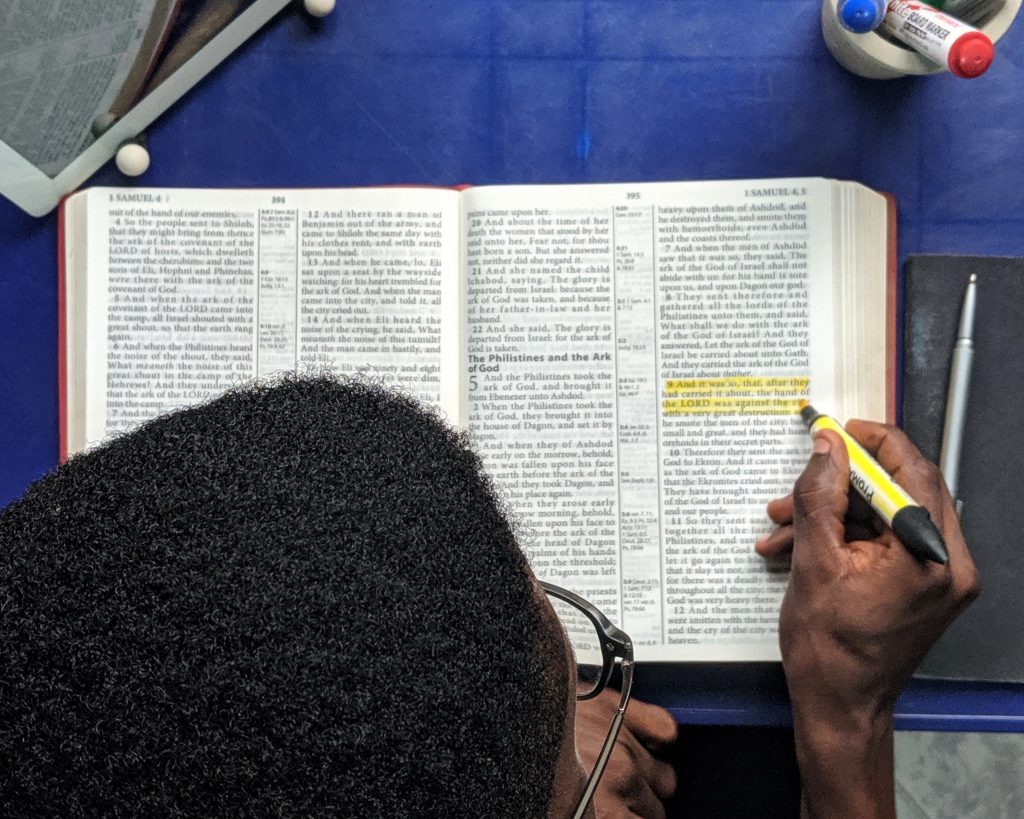
Abraham Makes an Offering
Study Scripture: Genesis 22: 1 – 14
Background Scripture: Genesis 22: 1 – 14
Lesson 3 June 14, 2025
Key Verse
And Abraham called the name of that place Jehovahjireh: as it is said to this day, In the mount of the LORD it shall be seen.
Genesis 22: 14
INTRODUCTION
Our Lesson faces us with what most consider a most difficult way to govern our lives. This position arises because the Lord Jesus said;
“He who loveth father or mother, son or daughter, more than me, is not worthy of me”.
This issue become prominent because we often have difficulty synchronizing our knowledge and our understanding theologically with what “faith” means.
We therefore instinctively shy away from the kind of “tests” God will present us with so that it will be seen who we really are and the level of our spiritual development.
It is good to “know” doctrine and to say we are in a particular set of beliefs about God, but it is often quite another thing to make our actions move in concert with the will of God.
The stress on human nature to properly apply our knowledge of God to our human situation is much more deep and agonizing than we like to face and so we cannot properly face up to this and the reaction of the Lord Jesus Christ in His humanity who have had to cry to the Father, “My God, My God, why have You forsaken Me?” before coming to express total synchronization with the will of the Father and then saying,
“Father, into Your hand I commit My spirit”.
When we consider the position of Abraham, the father of faith, we cannot avoid thinking that God’s command is very shocking. What a dilemma Abraham was faced with as a result of this command which was real and its implications devastating, causing him to try to explain what God intended and what God would do given his
dilemma.
As a result one scholar presents us with a thoughtful explanation of why this unquestionably man of faith acted the way he did. It is stated:
“Of course we have listened to enough theology….to know that the reason that Abraham was able to make this decision was not because of anything in Abraham’s life or in Abraham naturally. As a matter of fact, Abraham could not even stand up to a Pharaoh or to an Abimelech. Even then, he would lie and say, she is really my sister and not my wife. And so we know from the teaching of the word of God that it is because of what God had implanted in Abraham and the aid that he gave Abraham, that Abraham was able to meet this test and pass it successfully”.
Whether or not we agree with that scholar’s view, we should never try to doubt that the experiences we have had and will have in life are similar to Abraham’s and that at one time or another we will face similar tests and it will be only the strength of the Holy Spirit in the believer that will enable them to pass any such “tests”.
We ought to remember that the Lord Jesus Christ lived and acted in the full power of the Holy Spirit, and He warned His disciples in John 15:4-5 “without Me you can do nothing”.
Understand that teaching of the Messiah the Apostle Paul taught:
“I know how to be abased, and I know how to abound. Everywhere and in all things I have learned both to be full and to be hungry, both to abound and to suffer need.
I can do all things through Christ who strengthens me”.(Philippians 4:12-13).
We are also told in Philippians “for it is God that worketh in you both to will and to do of his good pleasure”. (Philippians 2:13).
It is therefore generally thought by Bible students
“Can there it be any doubt at all that the sacrifice of Isaac by Abraham is one of the greatest scenes in the history of God’s salvation?
It is surpassed only by that of the Son of God.
When the greatest father offered up his Isaac, the story here finds its ultimate climax in the anti-type.
Christ’s cross, which is the fulfillment of the sufferings of Isaac, surrounds the latter with reflected glory and makes it one of the most famous types, if not the most famous of all of the Bible, of the sufferings of Christ”.
Our Study Scripture therefore notably deals with Abraham’s greatest trial during which the ‘cross’ of Christ was introduced in his life according to the writer of Hebrews, for it was a remarkable foreshadowing of the work of Christ in the New Testament.
It also introduces us to God’s progressive revelation of His attributes or character to His people, so that they would begin to know Him in a deeper and more personal way.
We will see God test Abraham and then we will see Abraham respond with a name for God which revealed to His people that God provided for them, healed them and was their defender.
The Text shows how a crisis of faith comes on the people of God. These crises come to the people of God very suddenly, they come out of the blue, and they shock us.
This is what happened to Abraham as well as to other believers in the past and to us today.
The Study Text introduces what we might call ‘the supreme test’.
Many things happen to believers that do not make sense. We ask why the Supreme and Sovereign God who controls life often presents us with pressures that seem unreasonable and irrational, and even present us with questions that are too great for us to even present an answer.
Sometimes however they are faced with trials and they understand well enough that the trials have come because they have sinned and they have to face the consequences of their sin and rebellion.
Our Study Text as one writer puts it, help us with the problem of understanding the difficult, hurtful and frightening experiences that made no sense.
God gave a shocking command to Abraham after he had waited twenty-five years for the Promised Child to be finally born when Abraham was one hundred years old and his wife ninety nine years old. It was after a long period of wait that this couple had the ‘son of promise’, a miracle baby, which was delivered to them by the hand of God Himself.
They had laughed when God promised that they would have this child in their old age and when he was born they named him “laughter”, a most appropriate name.
All their hopes and dreams for descendants that would be as numberless as the stars of heaven and that promise that great nations would come from him rested on this child. One well known commentator, James Boyce states:
“God had told Abraham that Isaac was to live, marry, and have a son and that from that family there would come One that would be the deliverer. Now God says that Isaac is to be sacrificed, and for the first time in all Abraham’s experience with God he is confronted by a conflict between God’s command and God’s promise.
Earlier, Abraham had been tested as to whether he would believe that God would do the seemingly impossible task of giving Abraham and Sarah a son. That was a hard test, but it was not as hard as this one.
This test involved a conflict apparently within the words of God Himself. God had promised posterity through Isaac. But God had now also commanded Abraham to kill him”.
One writer reminds us that what is worst is that Isaac is now not just a young boy, but a young man now and well on his way to fulfilling the promise that he would be the father of many nations. This would make the impact of the command from God even worse.
Now carefully that in this dramatic story we are told nothing of Abraham’s emotions, but we only see him acting in obedience to God. We are left to ourselves to imagine what it was like as Abraham stood under the morning sky chopping wood to burn the body of his son. We can imagine what Abraham went through traveling with his son to the place of sacrifice. We are also left to imagine what this was like when Isaacs asked his father “Where is the lamb for the sacrifice?” We have the wood and everything we need but where is the lamb to be sacrificed?
Why would God run such a test given His omnipotence and omniscience and His knowledge of everything that would happen as a result of His command? Was God trying to teach Abraham something so that he would learn about his own heart, doing something to stabilize and increase Abraham’s faith and not really doing it to find out anything about Abraham?
Does God bring His sudden crises in our lives not because He does not know how we will react and what we will do but because He wants to teach us something about our own heart and our faith and strengthen our faith?
Why does God seem to bring or allow troubles to come so quickly and unexpectedly?
Note carefully that this story has stunned many people for they ask why would God ask such a thing of His follower.
This story is to some an offense and is not something that we can figure out easily for we prefer to put God into a nice comfortable box. So as we look at our Text let us remember what one writer warns us:
“God asks hard things from His people in Scripture, and from us as well. He demands our allegiance, not to the things He gives us, but to Him.
This test is unique to Abraham for a specific purpose in God’s salvation history,
still we are presented in our own lives with tests which challenge our faith and challenge us to consider where we put our allegiance. Do we love God or the gifts of God more?
Is Abraham’s heart attached to Isaac or to God Himself?
This is the question that Abraham’s test is asking Abraham, and by extension, us”.
Note we are looking at the great theme involving the concept of the “Lamb of God”. We see this in Genesis 4 with the case of Abel’s required sacrifice of the “lamb’, the “lamb” at the Passover in Egypt and in the following history of Israel, in the Book of Isaiah where we are told of a “lamb” led to the slaughter for our sins, and in Revelation 5 where the Lion of the tribe of Judah appears before the throne in heaven as a “slain lamb”.
THE TEXT
Verse 1. The opening verse begins with “after these things” obviously referring to the incident in Chapter 21 when Abraham encountered Abimelech. No time is given so we do not know the time Abraham spent musing over that bruising episode. Here is no word from God to Abraham that is recorded before the last things and the events in Chapter 22.
This first verse starts off in a unique and odd manner stating that God did tempt Abraham.
This is the first mention of the word “test” in the Bible, and it occurs interestingly because it is used when concerning the love of a father for a son.
It reminds us of John 3:16, For God so loved the world that He gave His only begotten Son, that whosoever believeth in him shall not perish, but have everlasting life”.
We therefore are looking at love, the love of a father for a son. It is connected to the promises of God, promises that cannot be broken.
It shows deep love when God tests His people such as He did when He tested Israel in the wilderness (Exodus 15:25; 15:4).
What does it exactly mean when God tempts one of His children? How does it differ from the situations where the devil is tempting man?
When God “tempts” or “tests” His children it is for a direct and beneficial purpose. It is meant solely to try, to prove, and to give occasion for the development of faith. God does not tempt man to incite him to sin, and thus separate him further from his Creator like the devil, but the purpose of the temptation is to prove that especially for Abraham that he was not just a good man, but to make him an even greater man in the service of God.
This “test” was there to reveal the faith that God had slowly built up in Abraham, a little bit at a time, year by year. The act of offering Isaac as a sacrifice would not have been imputed to Abraham as sin as it was ordered by God, who is the Lord of life, and the sovereign disposer of life. But the purpose as always was to prove him, to know his faith in Him, his fear of Him, his love to Him and the cheerful obedience to His commands, leading to a stronger display of faith by Abraham and a general but vital witness for us.
The few opening words of the verse imply, that being, “After these things”, God was building, fashioning a better man in Abraham with every experience up to this point.
It is however thought by some that there is a twenty year gap between chapters 21 and 22, and when we last saw Abraham in Chapter 21 he was in a tent by the well of Beersheba in the wilderness with his son Isaac. In that place Abraham built an altar and worshiped God the LORD, the Everlasting God. For over twenty years Isaac blessed the heart of his parents and brought laughter to them, with their life centering on their beloved child of promise as he became a young man.
From calling him out of the land of his father, the situation between Sarai and Hagar, the intersession of Abraham for Sodom, the situation with Abimelech, and even the separation from Ishmael, all were designed to prepare him to this point. All throughout those trials, God was with Abraham, and he knew it. Even so, the former trials concluded did not mean that more trials were not to follow.
Concerning the trial itself, God appeared to him by calling his name, Abraham, given to him in ratification of the promise. God was the one who initiated the approach and the project despite the fact that He would state clearly later in verse twelve that He had all along known Abraham’s heart.
It is interesting to look at the word used to say that God tested Abraham. The Hebrew word for “test” is nissi which really means to prove another worthy. Clearly then the “test” was not aimed at making Abraham stumble and fall but to prove that Abraham’s faith was real and genuine and that he was worthy to have been the one called to have a son that would produce the seed and the holy nation that would be God’s possession forever.
As was Abraham’s habit, he answered God, indicating that whatever his Master and Lord, would ask of him he would be ready to fulfill that task. This was quick response to do as commanded. Abraham proved himself as a man that listened carefully to every word that proceeded from the mouth of his God. True to form Abraham listened and heard all that was said by his Master.
Now in this present age we are in some respects in a much better position than Abraham, for he did not know that this test was coming. We know we will be tested and we know the words of 1 Corinthians 10:9-13 which warns and comforts as follows:“…nor let us tempt Christ, as some of them also tempted, and were destroyed by serpents; Nor complain, as some of them also complained, and were destroyed by the destroyer. Now all these things happened to them as examples, and they were written for our admonition, upon whom the ends of the ages have come. Therefore let him who thinks he stands take heed lest he fall. No temptation as overtaken you except such as is common to man; but God is faithful, who will not allow you to be tempted beyond what you are able, but with the temptation we also make the way of escape, that you may be able to bear it”.
So one writer observes: “An unchallenged faith is not a strong faith”.
So Abraham, the man who had had some rather large failures and who sometimes rebelled against the command of God because fear and hopelessness were greater than his faith, now had to demonstrate to the world who he had really become.
Verse 2. God gave Abraham a direct instruction. That instruction was different and unique and was strange and seemingly contrary to what God promised Abraham. Still he did not flinch, but proceeded to carry out the command.
Note this was different from the recorded incident of some Nazarites who had made a vow not to drink wine throughout their generations because of their oath to Jonadab their father, they declined to accept God’s permission to drink wine. Jeremiah 35:1-19 recounts this amazing and interesting story and God’s reaction to the commitment of the sons of Jonadab the son of Rechab.
God knows that Abraham loved Isaac intensely. The question that God wanted Abraham to answer to himself, was did he love Isaac above God?.
Abraham would gladly have traded the lambs and bullocks as a sacrifice for the burnt offerings, but God said that the offering would be Isaac, calling him by name. This was clearly something different than the situation with Sodom, where Abraham pleaded with God to spare the city, in this case, Abraham knew that he could not plead for Isaac as this was not done as punishment for some crime against God; it was just the will of God for this task to be done.
‘Thy only son”… God made it abundantly clear that Isaac was to be the sacrifice even though Ishmael was still alive. God meant the “Child of Promise” and exposed the painful nature of His requirement. Notice, the emphasis as we separate the clauses in God’ instructions: “Take now your son, your only son Isaac, whom you love, and go up to the land of Moriah, and offer him there as a burnt offering on one of the mountains of which I will tell you”.
This must have been a massive blow to Abraham, but we are told it was a test, a test of love. Abraham had to face the meaning of the first commandment “Thou shall love the Lord your God with all your heart, and with all your soul, and with all your might”.
But note that we should see that this passage teaches us that God knows and expresses His knowledge of the very difficult things He asks us to do and that He knows that the circumstances will be confusing, frightening, and painful.
The essential thing is to understand that the Lord knows what we are going through even as He tells us what He requires us to do for Him. We cannot experience pain and hurt without God knowing the depth of the pain and the details of the pain that we are going through. So this knowledge of Abraham’s experience helps us tremendously as we too live our lives in submission to God.
In this trial of love, not for the child, but for Abraham to God, Abraham must travel to the land of Moriah which was three days journey to a mountain of God’s choosing. Just because Isaac was the child, God’s command must overrule all these considerations. Abraham was being taught to trust the Promiser, and not just the promise. Abraham had time to deliberate the strange command from God and what it must all mean.
Verse 3. This verse tells us that Abraham did not delay and his obedience was such that he responded immediately without procrastinating, looking for a way out, resisting like what we do from time to time, rationalizing or any such thing. He responded quickly and even split the wood for the burnt offering himself. This however did not say that he might not have had questions but he kept them to himself and went through to fulfill what he had to do. This puts us in mind of the awful struggle that Jesus Christ underwent in the Garden of Gethsemane when He faced the reality of what God the Father was asking Him to do.
You should ask yourself as to how often you looked in unbelief at some circumstance in your life and asked whether or not God wanted you to go through with this, or what it was God was asking of you, or, whether or not is this God’s will?
Often the most difficult trials are when we cannot see a reason for them, and we fail to see any logic, or rational. So we cry out to God and the answer is not immediate. But this is when faith is really put to the test. Just remember that God is a complete realist and is not impressed with emotional or hysterical outbursts and therefore our crying will not melt the heart of God. When He commands He expects obedience.
Since Abraham loved Isaac, it also weighted heavily on him in what must be done as this is the child that he and his wife Sarah finally had in their old age. Despite the fact that they were old, they knew it was possible for God to give them another child, but this again was the child of promise, which they both loved very much.
The other aspect to this command was that Isaac was the burnt offering, not just a sacrifice. In the ritual of offering up a burnt offering Isaac must be bound a certain way and killed in a certain fashion and at no point did God say that Isaac was to be unconscious, but awake. This was to be like any other offering in execution, only now Abraham’s son was to be offering. The sacrifice now had to carry the wood for the sacrifice just as Jesus had to carry His cross on which He would die.
Every instruction given by God concerning this sacrifice seemed to be intended to stab deep to the parental bosom of Abraham, especially since it is his own hands that would be doing the act. The three days journey was to give Abraham time to think about it. But yet, everything was obeyed without a murmur.
This clearly associates Isaac as a type of Christ, in that his father offered him as a sacrifice for sins, and that it was Abraham’s beloved son.
We see the obedience that Abraham demonstrated in his actions. In his mind he must have had the questions as to way would his God, acted differently from all other gods suddenly act like them, asking for a human offering, and that of the child of His servant. But yet, he, Abraham obeyed. In like fashion, Isaac obeyed his Father, as Jesus, obeyed His Father.
Verse 4 & 5. These verses tell the reader that Abraham arrived at his destination after the three days. Plenty of time to think, change his mind, and perhaps try to evade his duty as Jonah did. But no, Abraham was a man who was characterized by his faith in God, someone to emulate in this respect.
Abraham, preparing to go up the mountain, instructed the two helpers to stay as he and Isaac went up the mountain to worship, more accurately to bow down before God. As perhaps Jesus was doing in the Garden of Gethsemane Abraham wasn’t delusional. He knew what God’s expectation was in this manner. They all remembered that Isaac was the ‘child of promise’ in whom all blessings given to Abraham would be realized. Abraham solved any doubt in the mind of his servants and told the two young men with him, that they, both he and Isaac would return.
It is clear that he trusted God to make a way. Abraham trusted in God, and with that trust came obedience to God. Abraham knew he was being tested. But certain aspects of this test were unknown to him. Yet, he obeyed, for he knew God would make a way as His promises never return to Him void. Hebrews 11:17-19.
It is told us in the Book of Hebrews that even though Isaac’s life may be taken, Abraham believed that God would raise him up again. But at this point in Biblical history no one had ever been raised from the dead. So all Abraham had to go on was his faith. As they departed up the mountain, Abraham had the knife and Isaac the wood.
Verse 6. Abraham asked Isaac to carry the wood to test his obedience in this small matter, possibly as a prelude to what he would ask Isaac to do later on. It was Abraham himself that placed the wood on the back of his son Isaac and this must have been an extremely painful moment for him as he determined what had to be done.
Given that it was three days journey, it again implies that Isaac was old enough to take part in offering a sacrifice to God. Some scholars put his age at the time of this event as mid- twenties even though just reading the Text one might impute a younger age to him.
The final part of the verse indicates that they went off together without any hesitation. Abraham was well aware of his role, he knew what was required of him, but Isaac was being lead as a lamb to the slaughter.
Verse 7. As mentioned before, perhaps by now Isaac had accompanied his father on these sacrifices, and knew what they might need for sacrifice. Isaac most likely was not the only one that noticed that there was no sacrifice for the burnt offering.
As they went to Mount Moriah, they talked about what would happen, and it seems as though Abraham did not give up any details, just continued on the path. Isaac’s choice of words to his father showed that he loved and respected his father greatly, which I would assume cut Abraham right to the core of his being.
In answering, Abraham maintained his composure and countenance to the point where it is admirable. Isaac pointed out that there was something obviously missing, and inquired as to how they will complete the sacrifice without the lamb. From the question posed by Isaac, it is clear that even at this particular age he knew what was expected in a terms of the law and sacrifice to God.
Abraham must have been beside himself when contemplating what answer to give. It could only have been the wisdom of God that allowed him to come up with the response that he did. Isaac recognized that his family was not prepared for the worship, just as we should also know if we are truly prepared for worship.
Verse 8. Abraham’s response to his son was that God would provide a lamb for Himself. This was a strange response as Abraham clearly indicated that all was done to and for the glory of God. Every sacrifice done is to honor the Almighty Lord and God, and even though He required this for our redemption purposes, it is to Him that this supplication is made.
Abraham’s response also indicated a clear respect for God and his willingness to obey God no matter what was asked. We have seen Abraham learn how to submit to the will of God, and now he continued to honor his God by following the command given to him. He reinforced that it was God’s prerogative, and that it was best if they (both him and Isaac) left the providing of the sacrifice to God.
Abraham’s response can also be taken as a show of his faith. It would be speculation to say what was on his mind when he was forming the response to Isaac, whether he truly meant that God would provide a sacrifice or he was saying that and praying and hoping that God would do something miraculous in order to preserve or return his son to him.
As we can now see, in hindsight, it was God who initially choose the original offering, that being Isaac. Abraham’s job was to carry out the sacrifice, under the instructions given to him by God. He had no choice in the sacrifice being offered or else he would not have chosen his son.
As mentioned before, it is interesting however to note that in verse 5 when Abraham instructed the young men that accompanied him on the journey to stay with the donkey while he and Isaac would go on by themselves and worship, Abraham said that “we” would come back to them after the worship.
They both would return, says Abraham, and so we conclude with the writer of Hebrews that Abraham thought that if he killed Isaac in sacrifice, God would raise him from the dead. We see this and other important points about this incident raised in Hebrews.
When we compare this to Christ, we see that in heaven when God asks who will go and be that special offering, no one could step up, angel or any other being. That is when God said that He would go, because only He could make that decision, only He could be worthy enough to be that special sacrifice.
As Abraham gave his response to Isaac, it seemed that that was enough of an explanation for him and they continued to Mount Moriah together. Again, it would be speculation to say whether Isaac thought at that point that he was the sacrifice or that God would provide one, so let’s just leave it at he trusted his father and God, as Abraham trusted God.
Verse 9. Abraham and Isaac finally arrived at Mount Moriah. They were alone for they had left behind two servants. As they had moved to the spot that God had told Abraham to go to, Abraham proceeded in making an altar for the sacrifice.
This was truly a man who trusted in God as he proceeded with the same resolution and composure of mind that led him to the place. Now he just had to conclude his mission, by following through with the sacrifice. At the place set apart by God, Abraham set up the altar as per the instructions given to him by God as usual. As if he had done this type of activity before, there does not seem to be any hesitation in his actions as he took Isaac and prepared him as the sacrifice.
It is interesting that the Bible does not put down a response from Isaac, as if by the conversation that they had earlier, Isaac assumed that the sacrifice had something to do with him. Either way, he did not resist his father as he completed the ritual and placed Isaac on the altar for sacrifice.
Isaac had just as his father come to a point that he was willing to submit to the will of The Father, and also trusted in his earthly father. In accordance with the rites of sacrificial offerings, the sacrifice must be bound, and that is what was done with Isaac. By this time, Isaac must have known the intentions of his father, but he knowingly and willingly submitted to the will of his father and his God thus displaying great faith.
Once again keep in mind that scholars agree that Isaac at this time was a man, and quite capable of running away from his much older father. In a very similar likeness to Jesus, he submitted to the will of his father, he agreed to be bound, and given up for a sacrifice.
It is interesting to note that God knew exactly where He wanted Abraham to offer the sacrifice of Isaac and He specifically told Abraham that He would direct him to the chosen spot. Moriah is not mentioned frequently in Scripture and the mountain is called by other names. But we know exactly where this sacrifice was to be held for in 2 Chronicles 3:1 we are told that Solomon begun to build the house of the Lord in Jerusalem on Mount Moriah where the Lord had appeared to his father David. So the hill to which Abraham was sent was the hill that was later surrounded by the city of Jerusalem and it was the hill on which the Temple would be built.
Note also that Mount Moriah was the very same hill where the Lamb of God that took away the sins of the world, namely Jesus Christ, would be sacrificed.
Verse 10. Abraham did not waste any time in looking to complete the command of his God. He stretched forth his hand and was fully intending to complete the sacrifice. This display clearly showed a complete trust in God.
Most of the times, we might experience doubt which causes hesitation in our actions, but here Abraham was completely committed to this action as he completely trusted in the promises of God.
Abraham’s obedience teaches us many things about the relationship we have with God and that God has with us.
The offering of Isaac as a sacrifice is a testimony of the love of God for us, as God delivered His only begotten Son to suffer and die for us, as a sacrifice. It pleased the Lord to bruise him (Isa. 53:10, Zec. 13:7).
Abraham was obliged, both in duty and gratitude, to part with Isaac. He was prepared to part with Isaac and hand him over to a beloved friend who was also his God.
Note God was under no obligation to us for we were His enemies.
In offering up Isaac, Abraham demonstrated the same duty to God we must all have, especially when we consider the love our God has for us. God calls us to part with all for Christ, thus removing all competitors and rivals with Christ for the sovereignty of the heart. Abraham was at this point, and cheerfully let them all go, with a resignation and submission to the will of the Almighty Lord and just God.
Verses 11 – 12. There is no way that any child of God could believe that this story would have an unhappy ending. God’s promises are true, and it is only a mystery to us how He would have fulfilled them.
The Bible then reveals that the angel of the Lord, which often is a term associated with God Himself; God the great Redeemer and comforter stepped in to give Abraham the happy ending that he did desire.
Note that Abraham and Isaac were not alone on that mountain. Abraham thought that he was alone with Isaac and so the angel of the Lord had to call his name twice to get his attention. All of heaven was watching with interest.
So remember that when you are in a time of crisis you are not alone for heaven is watching you and what you are doing with great interest. The child of God is never alone.
The command to offer Isaac was intended only for a trial, and it appear that upon the trial, that Abraham did indeed love God better than he loved Isaac.
It is to be noted that God never requires human sacrifice. The reasons are quite clear. The near Eastern gods were thought by their adherents to use the sacrifices and the worship activities to gather strength to carry out their activities. It was as if these pagan gods were feeding on the sacrifices. So it was believed that when for example someone offered a child to Molech and burned them in the mouth of the god, this would somehow strengthen the god.
Similarly, when one went to the pagan temples and engaged in sexual activity, it was believed that engaging in the sexual activities would increase the potency of their god and that if these things were not done the gods would grow impotent and unable to act. By doing these awful acts of sexual immorality human beings would energize the gods.
God is omnipotent. He gives life and is the only One who breathes life into the people that need Him. So it has been said by the prophet that to obey is better than sacrifice and to listen to God and to be obedient to Him is better than offering the fat of rams. In any case God reminds His people that the cattle on a thousand hills are His and so He does not depend on our burnt offerings of earthly gifts for His existence, His wealth, or His strength
God is capable of seeing into the hearts of men, and even though God knew what type of man Abraham was, until faced with certain trials, we may not know how we would handle the situation, but that is where we lean heavily on the everlasting arms of God. God countermanded the order, and set Isaac free.
God acted as a witness, an omniscient witness to the intent of Abraham to carry through with the sacrifice with sincerity and fullness, thus meeting with God’s acceptance in the highest terms of approval.
God could not have let Abraham carry through with the sacrifice, He often takes the will for the deed with His people. This is good and bad, as in other parts of the Scriptures it says that in our hearts we have committed sin even before the actual act is committed in the world. God knows the intent of our hearts. There is no fooling Him!
Abraham displayed his heart towards God in that he was willing to give his only son. God displays His heart towards us in the same way, by giving His only begotten Son.
This was the ultimate demonstration of love and commitment that God had asked of Abraham. God has also shown us His love and commitment for us in that He gave His Son for us.
Verse 13. Another sacrifice is provided instead of Isaac. The altar was built and the wood laid in order, and so it was necessary that something should be offered.
God must be acknowledged with thankfulness for the deliverance of Isaac. Abraham’s words were made good as God provided a lamb for Himself.
God will never disappoint those expectations of His people which are of His own raising, but according to their faith it is to them.
Christ was sacrificed in our stead. This ram was sacrificed instead of Isaac. The type died. Salvation was achieved. So we know that at the death of Jesus, His death was our discharge.
A promise of a seed was given to God’s children, and from that seed the perfect sacrifice would come, that being Jesus Christ.
Until that point in time, the sacrifice of beasts should be accepted, as this ram was as a pledge of that expiation which should one day be made by that great sacrifice.
Verse 14. A new name is given to the place to the honor of God, and for the encouragement of all believers, to the end of the world, cheerfully to trust in God in the way of obedience: Jehovah-jireh.
Jehovah-jireh, the Lord will provide, probably alludes to what He did for Abraham and simultaneously to what God did in providing Himself a Lamb to redeem all of mankind.
In this trial, both Abraham and Isaac displayed faith, trust and obedience to their God. God controlled all the circumstances of the events that would play out, so that it may be a witness to His people what faith in God can accomplish. God will always have an eye on His people in their straits and distresses. He will come in with seasonable succor in the critical juncture.
He will be seen in the greatest perplexities of His people. In so doing God will not only manifest, but will magnify His wisdom, power, and goodness in their deliverance.
In a final word, Isaac is once again pictured as a type of Christ:
- Both were loved by their father.
- Both offered themselves willingly.
- Both carried wood up the hill of their sacrifice.
- Both were sacrificed on the same hill.
- Both were delivered from death on the third day.
CONCLUSION
Abraham did not just say that the Lord has provided but he literally said that the Lord will provide. The tense is most important. That is what this name of God means. It means that the Lord will provide.
So Abraham was looking to the future and so with that in John 8 Jesus would say “Abraham saw my day and was glad”.
Jesus was obviously thinking of this experience of Abraham on the very mountain on which the Lord God the Father would require Him to provide the life-saving sacrifice for us all.
We began this Study with God calling Abraham to do something that made no sense to him. But now we see that Abraham saw the cross of Christ because of his experiences with Isaac.
It was painful and unreasonable and difficult but Abraham trusted God and he discovered the love of God, the love of God that made Him deliver up His Son for our sake.
It is often been pointed out that many of us have spiritual gifts that we want to use to glorify God but several things block everything we attempt to do. When we try to do things and develop relationships we often fail and we wonder why God would keep us from doing the very thing He has told us that we should pursue. We wonder why God would give us these difficult assignments that make no sense.
But Abraham faced that situation and he trusted God, testifying of his obedience, and his prayers were answered.
So God provides and as a result of that we encourage all men to come to Jesus for He will forgive your sins and give you New Life. He is the only true Provider.
One thing we do know is that death will come to all of us and when it comes most often than not it comes as a surprise. So come to Jesus, for He has been provided for us. His rewards and His provisions are sure. They can never be taken away from His people. They are reserved in heaven, says the Apostle Peter.
In addition we all should ask ourselves whether there are any Isaacs in our lives that we must place on the altar. Let us pay close attention to Psalm 139:23-24 which says, “Search me, O God, and know my heart;
Try me and know my anxious thoughts;
And see if there be any hurtful way in me,
And lead me in the everlasting way”.
Let us also read and meditate on Psalm 103:1-5 which reads:
“Bless the Lord, O my soul;
And all that is within me, bless His holy name!
Bless the Lord, O my soul,
And forget not all His benefits.
Who forgives all your iniquities,
Who heals all your diseases,
Who redeems your life from destruction,
Who crowns you with loving kindness and tender mercies,
Who satisfies your mouth with good things,
So that your youth is renewed like the eagle’s.”
Remember that God intervenes in all the events of life. Respond to Him and His commands quickly. Do not quibble.
He always provides. His name is forever Yahweh-Jireh THE LORD PROVIDES