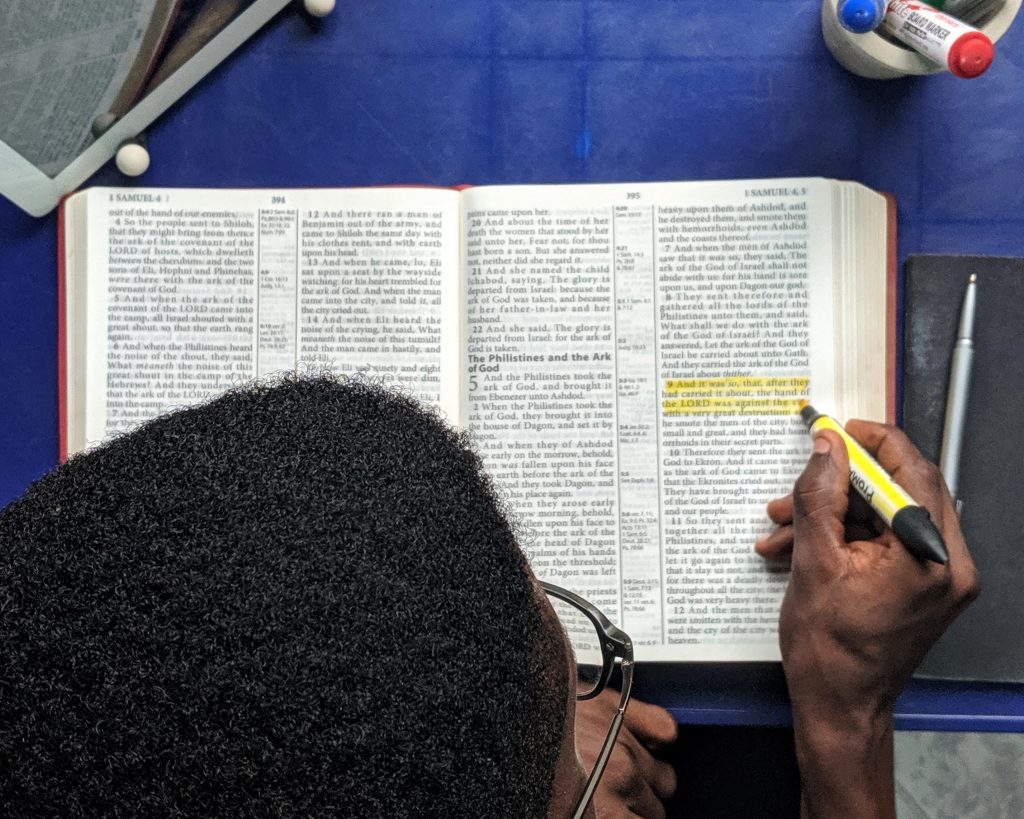
THE DOCTRINE OF THE HOLY SPIRIT
This topic is an extremely important one for the correct doctrine of the Holy Spirit is almost entirely ignored if not wholly abandoned.
Some openly deny that the Spirit is a Person and Deity as the Father and the Son are.
Others say it is not essential for they want to substitute their own rules and structures for His complete insistence on obedience to the complete Word of God.
Others might say they believe in the Holy Spirit but then they claim to be His representative and everything they do is by His power. They can by their own initiative make disciples of their own and then drag persons away from the true God.
The history of the Christian religion is full of deviations from the teachings of Scripture about the Holy Spirit. There have been many, many attempts to develop doctrinal positions which rob the Spirit of His nature and His role to bring atonement and justification by faith. These doctrines really are attempts to usurp His power which they then transfer to human beings. People will teach that this transfer make them superior human beings which must be depended on for a complete salvation.
But if you take the Christian religion seriously, you cannot pass over or reduce the supernatural agency and work of the Holy Spirit, for He is the epitome of truth and is the only One that can apply the redemption wrought by the Lord Jesus Christ on the Cross.
Bringing forward any reference to any other person or institution as the great applier of redemption is doing no less that proposing a satanic doctrine.
In many cases the commonly found tendency in Christian history can be called a romantic style sentiment with all the noise, fervor, and zeal that will attract many. Jeremiah describes them and gives the reason for their position. He says in 4:22
“For my people are foolish”.
They have not known Me,
They are silly children,
And they have no understanding
They are wise to do evil,
But to do good they have no knowledge”.
The Apostle Paul highlights this problem that has damaged men and women in Christian history as we will see later when we look at the Church’s history and the sects that have developed and flourished.
The Apostle describes what will happen in the perilous times because of perilous men and their activities to seduce others. He states in 2 Timothy 3:1-9
“But know this that in the last days perilous times will come
For men will be lovers of themselves, lovers of money, boasters, proud, blasphemers, disobedient to parents, unthankful, unholy, unloving, unforgiving, slanderers without self-control, brutal, despisers of good
Traitors, headstrong, haughty, lovers of pleasure rather than lovers of God,
Having a form of godliness but denying its power”
And here is unpleasant but most practical advice which many professing Christian will not like:
“And from such people turn away
For of this sort are those who creep into households and make captives of gullible women loaded down with sins, led away by various lusts
Always learning and never able to come to the knowledge of the truth”
And here the apostle gives an actual example of men who rejected the appointed leader sent by God, an event which occurred in the nation of Israel. This unholy activity continued in the early church:
“Now as Jannes and Jambres resisted Moses, so do these also resist the truth; men of corrupt minds, disapproved concerning the faith.
But they will progress no further, for their folly will be manifest to all, as theirs also was.”
But note in the history of the church this deviation of the truth of Scripture developed into a system with a formal dogma, showing a defective view of the relations among the Father, the Son, andthe Holy Spirit.
When we maintain silence on this matter and are afraid to teach the truth, and reject the many deviations apparent in Christian history, what we are doing is to be complicit in watering down or even denying the grand provisions of the Gospel which was designed by God to meet the wants and needs of mankind.
Our great position as we begin is about the relations which essentially belong to the Holy Spirit.
We do know that the Scriptures attribute the divine works in creation and in the salvation history to the Father as the source from which every operation comes. The Spirit of course was involved in this work of creation, and brooded over the birth as a mother hen broods over her chickens.
Scripture then teaches that theSon is the medium through which the works are performed. The Apostle John describes him as the active being in the work of creation.
The Holy Spirit is the One who manages the performance of the works done by the Cross by endowing men to carry out the works of inspiration of the Scripture, and doing the activities necessary to advance the kingdom of God. He therefore take centre stage only after the Son had come and dwelt among men performing the work of redemption by dying on th Cross to bear the sins of humanity.
Among the attributes stated for the Holy Spirit are:
- Eternity (There in Hebrews 9:14 He is called the ‘Eternal Spirit).
- Omniscience (John 14:26, (1 Corinthians 2:10).
- Omnipotence (Job 26:13)
- Omnipresence (Psalm 139:7-12; 1 Corinthians 3: 16-17).
Therefore it is no surprise the Holy Spirit was involved in Creation (Job 33:4, Psalm 104:30); Life-giving (John 6:33); Inspires the prophets; Regenerates; Resurrects, and Transforms.
It must be made however that the Father, the Son, and the Holy Spirit from the start all participate seamlessly in carrying out what was decided on in the Councils of Eternity, and each took centre stage at the agreed on time and era.
The faith of the church thus can be listed as proposedby one writer, namely:
1. That there is one God or divine essence.
2. That the same mentioned divine essence is common to three truly divine “Persons”, who are designated Father, Son, and Holy Ghost.
3. That between these three divine Persons there obtains a natural order of subsistence and operation; that the first Person hath life in Himself (John . 26); and that the second and third Person subsist and acts from the first.
4. That this order of the divine Persons belong to the divine essence prior to, and irrespective of the covenant of grace.
5. That this natural order of subsistence and action is the ground and reason of the several names, Father, Son, and Spirit; the Son being begotten of the Father, and the Spirit by spiration proceeding from both.
Note there is no indication of inferiority or superiority when the Father, the Son, and the Holy Spirit are discussed. They are One and operate seamlessly and in total agreement, and each knows the mind and will of the other. There is the incredible and impossible to understand by human beings, the kind of divine love that exists between all three.
So whether one is sent by the other and proceeds from the other cannot be viewed by the human mind for the human mind cannot really understand to any great extent the mind of God and the things of God.
There is undoubtedly a massive divine mystery that humans will probably not ever be able to understand completely. We are told in Scripture that not even the powerful and incredibly wise angels who are around the throne of God and interact with Him constantly do not understand the matter of the salvation of human beings and they simply marvel and praise and glorify God for His divine wisdom.
As we examine the nature of the Holy Spirit we see that various references to the Holy Spirit are interchangeable with references to God, and the passage speak of the Spirit as God
We see this in Acts 5 in the incident surrounding Annanias and Sapphira, and the dogmatic statement in verse 4.
We see this again in 1 Corinthians 3:16-17:
“Do you not know that you are God’s temple and that God’s Spirit dwells in you? If any one destroys God’s temple, God will destroy him. For God’s temple is holy, and that temple you are”.
And the Apostle continues to make clear that to be indwelt by the Holy Spirit is to be indwelt by God. He equates the phrase God’s temple” with the phrase “a temple of the Holy Spirit.”
“Do you not know that your body is a Temple of the Holy Spirit within you, which you have from God? You are not your own; you were bought with a price. So glorify God in your body”.
1 Corinthians 2:10-11 tells us the Spirit knows everything, even the depths of God. The Spirit is omniscient, an attribute of God. Hebrews 9:14 calls the Spirit “the eternal Spirit” thus attributing to the Spirit the attribute of eternality
In John 16:8-11 Jesus says the Spirit can change human hearts and personalities. Jesus stated in Matthew 19:26, vv 16-25 that this ability “with men this is impossible, but with God all things are possible”.
The Spirit works conviction and regeneration (John 3:5-8).
Also in Luke 1:35 the phrases “the Holy Spirit” and “the power of the Most High” are in parallel or synonymous construction.
The quest for knowing God is a search for knowing whether or not there is a being superior to man and his ability to think and act in ways which he thinks is in his interest.
The problem for thinking man is of course that if one believes that there is God the Father, Jesus Christ His Son whom He has sent to earth out of the place or state called eternity, and if the claim is true, then human beings do not have the authority or the wisdom necessary to abrogate, deny, or modify what is being taught or revealed.
In this case the positions or teachings what Jesus advanced as He founded the movement and transmitted the authority to interpret His teachings is what we call Christianity.
One can expect some re-interpretations of the thoughts proposed, and some reapplications of the concepts taught which constitute Christianity but if too much adaptation is done to the teachings by Jesus and the Apostles the teachings of this neo-Christianity can be regarded as outside the mainstream and spirit of the founder Jesus Christ, and if the differences become so great this neo-Christianity can morph into quite a different movement which cannot rightfully claim the name of Christianity. This principle regarding changes in a movement applies to any movement, secular, political. economic, or religious.
This is a very important matter for Jesus the founder of Christianity established what is accepted as constituting Christianity by accepting as normative for religious truth what we call the Old Testament Scriptures, and as well taught His disciples whatever truths result from the application of His interpretations and teachings of divine truth.
Jesus defined who God is and that God is high above the earth and is beyond nature, transcendent, and not limited to a certain spot within nature. and as one commentator stated, “He does not have the limited knowledge that we do. His love, mercy, and attributes go far beyond anything found in human beings.”
God is infinite and man is finite and so man must be given revelation by God about Himself to man if man is to know Him to any extent.
God therefore has chosen to communicate Himself to all persons at all times and everywhere by what we call general revelation. But God has also chosen to reveal Himself in special communications and manifestations available in special sacred writings.
All persons at all times have been given access to the content of God’s message through nature, and the events of history. Knowledge truth outside of general revelation is available. But there has been the need for special revelation given the deviation of man from the originally given teachings of God and the certain need for discipline and a strict regimen. But the detailed and built-in knowledge to members of humanity, has also been done to the inner being of the created being.
The inspiration of the revelation in Scriptures is stated to mean that there has been the supernatural influence of the Holy Spirit. This word of God records the communication of God’s truth to man. The supernatural quality of the Scripture guarantees its accuracy and its permanence, and hence the Apostle Paul who was appointed by Jesus Himself stated in 2 Timothy 3:16:
“All Scripture is (literally) God breathed and is profitable for doctrine, for reproof, for correction, for instruction in righteousness:
That the man of God may be perfect, thoroughly furnished unto all good works”.
Clearly Paul had in mind that there was a definite body of writings that Timothy knew from his childhood. Luke 24:25-27 and 44-45 includes in this “”Moses and all the prophets” and so we know they are the inspired Scriptures.
John 10:34-36 and 2 Peter 1:19-21, 2 Peter 3:16 and 1 John 4:6 state by Scriptures we know the “spirit of truth, and the spirit of error.”
Paul insisted in 1 Thessalonians 1:5 that the Gospel received by the Thessalonians had come by the Holy Spirit, and that which they accepted by them was the Word of God.
The matter of authority and religious authority now comes into view.
Is there a person or institution which has the right and the power to dictate the belief and action in religious matters? It is noted by Christian thinking;
“God is the authority in these matters because of who He is. He is the highest being, the one who always has been and existed before we or any other being came into existence. He is the only being having the power of his own existence within himself. He is not dependent upon anyone or anything else for his existence.
Furthermore, he is the authority because of what he has done. He has created us as well as everything else in the entire world and redeemed us. He is also rightfully the authority, the one who has the right to prescribe what we are to believe and how we are to act, because of his continuing activity in the world and in our lives.
He maintains his creation in existence. He continues to give us life, cares for us, and provides for our needs.”
God has arranged that the Holy Spirit is the One that controls the inward working of believers, illuminating them when they hear or read the Scriptures He had revealed, and He brings about the understanding of the meaning of the Scriptures. He enables the understanding of the certainty of the truths because they all come from a divine origin.
Because God is transcendent and infinite and man is a limited being which determines his ability to grasp information, limitations which are inherent in man’s being, man cannot fully formulate the concepts of the reality of the nature of God.
Note this is not a result of the Fall or of individual human sin. It arises from the Creator-creature relationship.
Beyond that however the Fall and resulting sin have made additional limitations of man and the human race. Sin has had detrimental effects upon man’s abilities and Scripture often stresses no human understanding exists especially in religious matters.
The Holy Spirit therefore has to work specially to make man who has in him concern for spiritual matters and the desire for eternal life, obtain certainty of divine matters.
Jesus spoke in Matthew 13:13-35 and Mark 8:15 about man’s inability to even recognize much less understand the truth without the aid of the Holy Spirit. Some hear but never understand, and some see but do not perceive.
“Therefore speak I to them in parables; because they seeing see not; and hearing they hear not, neither do they understand.
And in them is fulfilled the prophecy of Esias, which saith, By hearing ye shall hear, and shall not understand and seeing ye shall see; and shall not perceive.
For this people’s heart is waxed gross, and their ears are dull of hearing, and their eyes they have closed; lest at any time they should see with their eyes, and hear with their ears and should understand with their heart, and should be converted, and I should heal them.”
Romans 1:21 state that these people “know” God but do not honor Him as God. They therefore become futile in their thinking and their senseless minds are darkened. God therefore “gave them a spirit of stupor, eyes that should not see and ears that they should not hear.”
The Apostle Paul in 2 Corinthians 4:4 tells us the cause of this darkening of the eyes and dulling of the senses. Their condition is due to Satan the god of this world who “has blinded the minds of the unbelievers, to keep them from seeing the light of the gospel of the glory of Christ.”
So being ‘natural” men they find the wisdom of God foolish and since they are unable and unwilling, they cannot accept the gifts of the Spirit. Without the help of the Spirit they cannot understand the gift of the wisdom of God for they cannot understand.
For their condition to be overcome the Holy Spirit has to work on them. The veil has to be removed from their eyes (2 Corinthians 3:16). They have to be regenerated.
Hence we come to the functions of the Holy Spirit, the Spirit of truth as taught to the disciples as one scholar lists them:
- The Holy Spirit intercedes for us
- The Holy Spirit will teach the believers all things and bring to their remembrance all that Jesus had taught them (the disciples)
- The Holy Spirit will witness to Jesus.
- The Holy Spirit will convict the world of sin, righteousness, and judgment (16:8). The particular word implies rebuking in such a way as to bring about conviction, as contrasted with the word used for an individual which may suggest simply an undeserved as in Matthew 16:22 or ineffectual in Luke 23:40 rebuke.
- The Holy Spirit will guide believers into all the truth. He will not speak on His own authority but will speak whatever He hears (John 16:13). In the process, He will also glorify Jesus (16:14) states.
- The Holy Spirit’s work will put to death or cancel “The old Man”, that is, the “old nature”.
- The mortal Body will thus be quickened.
- The Holy Spirit will then work to bring the “New Man” to maturity through the process of sanctification.
- The Spirit seals (Ephesians 4:30. He baptizes (1 Corinthians 12:13)
- The Holy Spirit will thus bring to perfection the “image of Christ” in us.
- The Holy Spirit will shed abroad the Love of God in the hearts of the believers.
- The gifts given by the Holy Spirit will produce “fruit” in the believer. (1 Corinthians 12:7-11)
- The Holy Spirit will work to produce unity in the body of Christ, that is, among all believers.
- He comforts, teaches, reminds, and helps according to John 14:25
- Then endowment or impartation of the Holy Spirit in the believer changes the believer completely so that they minister as a priest of God, preach the Gospel of Jesus Christ, engage the missionary work involved in salvation, engaging in personal worship, engaging in public worship.
The Holy Spirit is thus involved with the life of the believer and in the government and administration of the Church.
The unconverted man is termed in Scripture the “natural man” and since he or she is “in Adam” with that nature of sin, they have no spiritual faculty with which to receive, understand the things of God, or know the Holy Spirit. Read Romans 8:4-11 carefully and prayerfully.
Note that the Holy Spirit is Spirit and can only be known or contacted or worked with by a redeemed spirit in man
The sad thing is that even believers indwelt by the Spirit seem to be ignorant of the presence, the personality, and the power of the Holy Spirit.
They seem to forget or ignore John 14:17 where Jesus stated “But you know Him; for He dwelleth in you and shall be in you”.
Without Him, His indwelling, and infilling, and His illumination you can do nothing, for it is He that transforms your dry, fruitless, and helpless life, and makes you “rivers of living water”.
Unconsciously and without any reasoning you will therefore hear believers in their church worship services pray, “Send your Holy Spirit into the service this morning”, reflecting in spirit that they have in mind God lending a certain atmosphere which will make them feel good and give them and their leaders a sweetness and light that they do not already have.
Instead they should be praying for the Holy Spirit, who is already in them and in their worship services, to continue and accelerate His changing them, their minds and their actions and their programs to match with the will of God.
The prayer should really be to change any negative approach to manifest the personality and power and work of the Holy Spirit.
The Holy Spirit is given different names which reflect His relationship to God the Father and God the Son. He is called among other names:
- The Spirit of God in Romans 8:9, 1 Corinthians 3:16
- The Spirit of Yahweh in Isaiah 11:2-3 as He empowers the Son when He in incarnated
- The Spirit of Yahweh as He lays out the work of the incarnate Son in Isaiah 61:1-3.
- The Spirit of Wisdom and Understanding in Isaiah 11:2
- The Spirit of Counsel and Might in Isaiah 11:2
- The Spirit of Knowledge and of the Fear of the Lord in Isaiah 11:2.
- The Spirit of the Living God 2 Corinthians 3:3.
- The Spirit of His Son Galatians 4:6.
- The Spirit of Jesus Acts 16:7; Philippians 1:19.
- The Eternal Spirit Hebrews 9:14.
In His relationship to believers He is called the
- The Spirit of Promise (Ephesians 1:13; Acts 1:4-5; 2:33
- The Spirit of Holiness (Romans 1:4).
- The Spirit of cleansing and the Spirit of Judgment (Isaiah 4:4, Malachi 3:2-3)
- The Spirit of Truth (John 14:17; 15:26; 16:13).
- The Spirit of Grace (Hebrews 10:29).
- The Spirit of Glory (1 Peter 4:14).
- The Spirit of Life (Romans 8:2).
- The Oil of Gladness (Hebrews 1:9).
Therefore there are symbols of the Holy Spirit:
They are among other names Dove (Matthew 3:16),
Seal (1 Corinthians 1:22; Ephesians 1:13-14),
Anointing Oil (Psalm 133:2-3; Psalm 23:5; Isaiah 61:1-2),
Tongues as of Fire (Matthew 3:11; Acts 2:3; Hebrews 12:29; Isaiah 4:4,
Rain (Joel 2:23), Wind (John 3:8; John 20:22; 2 Peter 1:21),
Rivers (Isaiah 44:3; Psalm 72:6; Hosea 6:1),
Dew (Psalm 133:3; Hosea 14:5), Water of Life (John 7:37-39),
Clothing. (Ephesians 1:3-4, 13-14),
Baptism (John 1:33; Matthew 3:11; Mark 1:8; Luke 3:16,
Wine (Ephesians 5:18; Psalm 104:15).
One writer points out that the Holy Spirit is like a Artist working on his pictures, teaching his pupils to paint and showing this exceptional and marvelous ability and actions to all and sundry.
Never forget, as we often as believers do, that the Holy Spirit is a Person, a Being with self-consciousness and self-determination. He has
- Intellect, mind and intelligence and knowing so that Romans 8:27 states “And he that searcheth the hearts knoweth what is the mind of the Spirit, because He maketh intercession for the saints according to the will of God”. Scripture makes it clear “Even so the things of God knoweth no man, but the Spirit of God”.
- Sensibility, which is emotion. He can be grieved (Ephesians 4:30). He can be vexed (Isaiah 63:10). He can be lied to (Acts 5:3). And He can be resisted (Acts 7:51)
- Volition, the ability to act. 1 Corinthians, “But all these worketh that one and the selfsame spirit, dividing to every man severally as He wills”. Also in John16:13-14 Jesus stated, “Howbeit when he, the spirit of truth is come, he will guide you into all truth; for he shall not speak of himself; but whatsoever he shall hear, that shall he speak; and he shall show you things to come. He will glorify me: for he shall receive of mine, and shall sow it unto you”.
The role of the Spirit as depicted in John 14-16 is He guides into truth. He reminds disciples of the word of Jesus. He does not speak on His own. His ministry is to bring about conviction witnessing to Christ. His ministry is about bringing divine truth, truth already revealed.
This brings us to the practical implications of the greatness, the immanence and transcendence of God. Scripture means us to know God is present and active in nature and history Jeremiah 23:24
“Can a man hide himself in secret places so that I cannot see him? Says the Lord. Do not I fill heaven and earth? Says the Lord”
“The Spirit of God has made me, and the breath of thr almighty gives me life” Psalm 33:4.
“When thou hidest thy face, they are dismayed; when thou takest away their breath, they die and return to the dust. When thou sendest forth thy Spirit, they are created, and thou renewest the face of the ground” Psalm 104:29-30?
So let us try to understand who God is and what He is like.
“For my thoughts are not your thoughts, neither are your ways my ways, says the ord. for as the heavens are are higher than the earth, so are my ways higher than your ways and my thoughts than your thoughts”. Isaiah55:8-9
These and other passages teach us that God is active in nature and the natural events of nature should be seen as God’s doing, for He is not as separate as we think and He is present everywhere.
God is present in human individuals and therefore He is to be found in human institutions and movements. But note that the things of nature are not God. The views of materialism degrades the nature of God. But we must therefore realize nature has no independent status but He is independent of the creation.
But we also know the kindness, compassion and love and mercy of the glorious God:
“For thus says the high and lofty One who inhabits eternity whose name is Holy: ‘I dwell in the high and holy place, and also with him who is of a contrite and humble spirit, to revive the spirit of the humble, and to revive the heart of the contrite.” Isaiah 57”15.
The witness of the Scripture however states the unique claim among all religions that God is one and yet there are three who are God.
This doctrine of the Trinity is crucial for it deals with who God is, what He is like, how He works, and how He is to be approached.
The oneness of Godis the Shema of Deuteronomy 6 “The Lord our God is one Lord”. The Old Testament rejects polytheism and prohibits idolatry and the Ten Commandments demands exclusive worship, devotion, and obedience to this God who alone is God.
James 2:19 is adamant there is one God and states:
“Thou believest that there in one God: thou doest well; the devils also believe, and tremble”.
“For there is one God and one mediator between God and men, the man Christ Jesus , who gave himself a ransom for all”. 1 Timothy 2:5-6.
“We know that an idol is nothing at all in the world and that there is none other God but one
For though there be that are called gods whether in heaven or in earth (as there be gods many and lords many).
But to us there is but one God, the Father, of whom are all things, and we in him: and one Lord Jesus Christ, by whom are all things, and we by him”. 1 Corinthians 8:4-6.
But Scripture tells us in Philippians 2:5-11 tells us Jesus is God and had equality with God. Hebrews 1:2-3, Psalm 45:6, Mark 2:8-8-10, John 19:7.
The coequal Trinity in the threefold formula appears repeatedly and is found in John 1:33-34; 14:16,26’ 16:13-15; 20:21-22 and in other verses.
The ministry of the Spirit is presented as a continuation and elaboration of the ministry of the Son and He will bring to memory what the Son has said.Hewill bear witness to the Son.
In the Scriptures God is personal and is presents as an individual being, with self-consciousness, will. capable of feeling, choosing, and having a relationship with other personal and social beings.
The Holy Spirit is therefore significant for He is the point at which the Trinity of God the Father, and God as the Son and God the Holy Spirit becomes personal to the believer.
His coming was predicted by the prophet Joel and He comes and is active in the life of the believer for He lives inside us. The Godhead works in us through Him.
His work takes centre stage (note that He was working from the time of the creation), from the time of thePentecost and this is recorded in the Book of Acts and in the Epistles. We experience God through him and the Christian life become tangible. For God is present with us.
He is not to be considered as the white sheet which we can imagine when we speak about the Holy Ghost, a frightening apparition. He comes to serve both the Father and the Son, but Scripture does not present Him as subordinate to them both. He is of the same essence.
It is therefore important that we examine the Nature of the Holy Spirit and His deity before we can try to understand His work.
Note the Deity of the Holy Spirit is the basis for any correct understanding of what He will do. Incorrect views of the Spirit simply reduce Him to being a tool only able to do a limited amount of actions.
But if He is to do the incredibly deep and serious transformation of sinful and twisted human nature He has to be Deityand totally capable to understand the mind and will of the Father and working in perfect unison with Him. That is Deity working with Deity and fulfilling the agreement of the Council of Eternity held in eternity.
JESUS AND THE HOLY SPIRIT
Jesus speaking of the Holy Spirit in John 14:16 speaks of sending another advocate, the Greek word used for “another” is allos which means “another of the same kind”. Therefore, since Jesus Christ is equal to the Father in deity since He is of the same substance as the Father, the the Spirit also shares in the same divine essence as the Father and the Son.
The Spirit is thus not an impersonal force. He came into the world but without being incarnate. He is poured out at Pentecost but He has an elusive quality being Spirit. Jesus describes this elusive but powerful divine quality in a discussion of the new birth with the renowned teacher of the Jews named Nicodemus. We read:
‘There was a man of the Pharisees named Nicodemus, a ruler of the Jews.
This man came to Jesus by night and said to Him, “Rabbi, we know that you are a teacher come from God; for no one can do these signs that You do unless God is with him”
Jesus answered and said to him, “Most assuredly, I say to you, unless one is born again, he cannot see the kingdom of God”.
Nicodemus said to Him, “How can a man be born again when he is old? Can he enter a second time into his mother’s womb and be born?”
Jesus answered, “Most assuredly, I say to you, unless one is born of the water and the Spirit, he cannot enter the kingdom of God. That which is born of the flesh is flesh, and that which is born of the Spirit is spirit.
Do not marvel that I said to you, ‘You must be born again’.
The wind blows where it wishes, and you hear the sound of it, but cannot tell where it comes from and where it goes. So is everyone who is born of the Spirit”.
Nicodemus answered and said to Him, “How can these things be?”
The work of the Spirit is outside our human understanding. But we do know some of what the Spirit does following Jesus’ advice to Nicodemus in John 3:10-21.
THE WORK OF THE SPIRIT IN THE OLD TESTAMENT
The role of the Holy Spirit is very much like the role He played in the New Testament.
In the New Testament He worked in bringing
- The remembrance of Jesus and Jesus’ work and teaching,
- Applying the work of redemption done by the Lord Jesus Christ on the Cross which involves the New Birth.
- Teaching truth
- Bringing regeneration
- Indwelling or filling which guarantees our inheritance according to Ephesians 1:13-14
- Restraining evil
- Empowering believers for service
- Giving gifts to build up the Body of Christ
- Sealing the believer
- Bringing the saints to glorification.
In contrast and in addition to that work the Holy Spirit in the Old Testament worked in
- Creation Genesis 1:2 “The earth was without form and void, and darkness was upon the face of the deep and the Spirit of God was moving over the face of the waters.”
- We are here reminded of the divine power of the Spirit who is God, “Who has measured the spirit of the Lord, or what man shows him his counsel”. Isaiah 40:13.
- Giving Scriptures and prophecy and the prophet’s speaking and writing. See Ezekiel 2:2; 11:1.24 as an example)
- Job declared in this earliest Book in Scripture, “The Spirit of God has made me, and the breath of the Almighty gives me life”.
- The Holy Spirit restrained man’s sinfulness to the boiling point reported in Genesis 6:3.
- Entering unlikely persons such as Balaam to prophecy about the glory of the future of Israel (Number 24:2)
- Indwelling individual like Joshua (Numbers 27:18), ,Samuel, Saul (1 Samuel10:10), David (1 Samuel 16:12-13); Workmen and craftsmen like Bezalel who constructed and furnished the tabernacle (Exodus 31:3-5) and extraordinary work for service to please God.
- Empowering Joseph to save Jacob and the founding patriarchs/sons, the nations of the Near East and Egypt. (Genesis 41:38 with Pharaoh’s testimony).
- Moses and his assistants who received part of Moses’ spirit (Numbers 11:25)
- The Spirit coming on the Judge Othniel to free Israel from the Mesopotamians (Judges 3:10
- The Spirit coming on Gideon (Judges 6:34). Similar activity possessing Samson (Judges 13:19)
- The Spirit warns against continued disobedience oby his people, “Many years you bore with them, and warned them by your Spirit through your prophets. Yet they would not give ear. Therefore you gave them into the hnnds of the peoples of the land”. Nehemiah 9:30.
- Ezra’s testimony on the teaching of the Spirit to the weakening returned exile (Nehemiah 9:20)
- Isaiah’s prediction the Spirit will produce the fear of the LORD at the associated events at the coming of the Messiah. (Isaiah 11:2-5); 42:1-4; 61:1-3).
- Ezekiel told of God’s promise by the instrumentality of the work of the Holy Spirit, “And I will put my Spirit within you, and cause you to walk in my statutes and be careful to obey my rules”. Ezekiel 36:27.
- The Holy Spirit is the covenant bearer and enforcers it, “And as for me, this is my covenant with them, “says the LORD”.”My spirit that is upon yo, and my words that I have put in your mouth, shall not depart out of your mouth, or out ot the mouth of you offspring, or out of the mouth of your children’s offspring”, says the LORD, “from this time forth and forevermore”. Isaiah 59:21.
- God’s promised further at the Restoration, “And I will put my Spirit within you, and you shall live, and I will place you in your own land. Then you shall know that I am the LORD: I have spoken, and I will do it, declares the LORD. Ezekiel 37:14.
- But the warning and the faithfulness of God exists by the work of the Spirit, “According to the covenant that I made with you when you came out of Egypt. My spirit remains in your midst. Fear not”. Haggai 2:5.
- But the prophet encouraged, “And I will not hide my face anymore from them when I pour out my Spirit upon the house of Israel, declares the LORD GOD”. Ezekiel 39:29.
- The power of the Lord is made clear, “Then he said to me,”This is the word of the Lord to Zerubbabel; not by might, nor by power, but by my spirit, says the LORD of hosts”. Zechariah 4:6’
- Joel’s prediction in 2:28-29 at the pouring out of the Spirit on all flesh at the end of the age: “But it shall come to pass afterwards, that I will pour out my spirit on all flesh: your sons and your daughters shall prophesy, your old men shall dream dreams, and your young men shall see visions”..
The influence and control of the Holy Spirit on individual men appears to not be permanent but came intermittently for specific work. David had to pray that the Spirit of God would not be taken from him.
Note that Isaiah predicted in 32:15 how necessary the work of the Spirit will be and the great good of restoration that will occur “Until the Spirit is poured upon us from on high, and the wilderness becomes a fruitful field is deemed a forest”.
The work of the Holy Spirit is so utterly powerful and indispensable that the Psalmist declared in Psalm 143:10, God teach me.
Remember Isaiah declares there is no limit or measure to the Spirit: He asks, “Who has measured the Spirit of the Lord, or what man shows him his counsel”.
So let us be wise:
“Teach me to do your will, for you are my God! Let your good Spirit lead me on level ground”. Psalm 143:10.
He knew the omnipresence of the Holy Spirit and declared in Psalm 139:7 “Where shall I go from your Spirit? Or where shall I flee from your presence?”
So we urge you to take the advice of the Psalmist.
THE HOLY SPIRIT IN THE LIFE OF JESUS
The prophets in the Old Testament predict the birth of Jesus the Messiah attributing His birth to the working of the Holy Spirit. The prophet Isaiah is significant in this regard. All the writers of the Gospel and Epistles speak of the birth of Jesus. The Spirit is God’s active agent in the birth of the Son. The angel explained in Luke 1 at his meeting with Mary, the appointed mother. After the conception had taken place the angel appeared to Mary’s husband Joseph and in Matthew 1:20 explained the source of the conception. Matthew 1:18 also refers to the conception which had taken place.
At the baptism the role of the Spirit is highlighted when John the Baptist announces the beginning of Jesus’ ministry. John announced Jesus would baptize with the Holy Spirit (Mark 1:1) and Matthew 3:11 and Luke 3:16 add to this that Jesus would also baptize with “fire”.
At Jesus’ baptism the Holy Spirit dramatically came on Jesus (Matthew 3:16; Mark 1:10; Luke 3:22; and John 1:32). John the Baptist say this descent of the Spirit on Jesus and testifies about it.
The now Spirit empowered Jesus in fulfillment of the Isaiah 61: prophecy, “The Spirit of the Sovereign LORD is on me, because the LORD has anointed Me”. Jesus was now “full of the Spirit (Luke 4:1) and hence we know that the things Jesus did would be in the Work of the Holy Spirit.
The Spirit, as soon as Jesus was baptized, drove Him into the wilderness to be tempted of the devil and so it was clear that the ministry of Jesus would be immediate and determined conflict with the Devil and the forces of evil.
After successfully resisting the Devil, Jesus “returned in the power of the Spirit to Galilee” (4:14) and he went to the synagogue claiming that His workings would be a fulfillment of the Spirit’s work predicted in Isaiah 61:1-2.
The Pharisees thus confronted Jesus claiming His miraculous works were done by demonic forces rather than by the power of the Holy Spirit, “But if it is by the Spirit of God that I cast out demons, then the kingdom of God has come to you” (Matthew 12:25-27).
This led Jesus to condemn the accusatory words of the Pharisees as “blasphemy against the Spirit” (v.31), and Jesus warned this speaking against the Holy Spirit will not be forgiven. (v.32).
Jesus “rejoiced in the Spirit” (Luke 10:21) at the report the demons were subject.
The Holy Spirit was working through Jesus and the miracles and working of Jesus was attributed to the Spirit.
It is therefore no surprise that there was a great emphasis in the teaching of Jesus on the work of the Holy Spirit. Jesus taught that the activity of the Spirit was critical to conversion, a turning to God, repentance, the abandonment of sin, and the beginning of the Christian life and the subsequent regeneration. The work of the Spirit is essential to conversion as Jesus indicated;
“And when the Counselor comes, he will convince the world of sin and of righteousness and of judgment of sin, because they do not believe in me; of righteousness, because I go to the Father, and you will see me no more; of judgment, because the ruler of this world is judged” John 16:8-11.
Jesus made it clear in His discussion with Nicodemus that regeneration is essential if one is to be accepted by the Father and in John 3:3 we read, “Truly, truly, I say to you, unless one is born of water and the Spirit, he cannot enter the kingdom of God. That which is born of the flesh is flesh, and that which is born of the Spirit is spirit” (vv 5-6).
And in an intriguing and powerful description of the nature of the work of the Spirit and note how the life of the believer will show this:
“The wind blows where it wills, and you hear the sound of it, but you do not knw when it comes or whither it goes; so it is with every one who is born of the Spirit”
The life of the believer clearly will show continually the empowering of the Spirit and this will lead as Jesus said to works greater than those He had done. These works will result because He would go the Father, and then send the Counselor of the ‘same kind’ as He (John 16:7) who would come and deal successfully with their weaknesses and shortcomings.
This Counsellor, says Jesus, will indwell and illuminate for this task,
“And I will pray the Father, and he will give you another Counselor, to be with you forever; even the Spirit of truth, whom the world cannot receive, because it neither sees him nor loves him; you know him, for he dwells with you, and will be in you”. John 14:16-17). And again,
“ When the Spirit of truth comes, he will guide you into all the truth; for he will not speak on his own authority, but whatever he hears he will speak, and he will declare to you the things that are to come. He will glorify me, for he will take what is mine and declare it to you”.
Note the teaching role. The Spirit is teaching you the truth. When you hear the word of God and refuse to accede to it, it is telling you what you have become.
Once the Spirit indwells you, He illuminates you. Your life and activity must therefore manifest the life of the Spirit.
THE HOLY SPIRIT IN THE EARLY CHURCH
- The engaging work of the Spirit is emphasized in the life of this first generation of believers. “Likewise the Spirit helps us in our weakness for we do not know how to pray as we ought, but the Spirit himself intercedes for us wit sighs too deep for words. And he who searches the hearts of men knows what is the mind of the Spirit, because the Spirit intercedes for the saints according to the will of God”. (Romans 8:26-27)
- The intercessory work of the Spirit of therefore clear.
- The Holy Spirit works “sanctification” in the life of the believer.
- The Spirit also transforms the believer’s moral and spiritual character so that the believer comes to fit the image God desires. He puts to death “the deeds of the flesh”.
- The Spirit guides and leads and makes the believer obtain life so that they “led by the Spirit are sons of God”. (Romans 8:14).
- The Spirit produces “fruit’ in the believer and they have a set of qualities (vs.22-23) “love, joy, peace, patience, kindness, goodness, faithfulness, gentleness, self-control”.
- The Spirit bestows special gifts on believers in the body of Christ. See 1 Peter 4:11 for the gifts of ”Speaking and Service”, Ephesians 4:11 for the list of “Apostles, Prophets, evangelists, pastors and teachers” various offices in the church as a result of these gifts given by the Spirit. And 1 Corinthians 12:4-11, “Wisdom, Knowledge, Faith, Healing, Working of Miracles, Prophecy, Ability to distinguishing spirits, Various tongues, Interpretation of tongues”.
- The Holy Spirit baptizes believers in the Spirit where the believer is led by the Spirit which means totally absorbed and overwhelmed in Him. This special work of conversion/regeneration means we are members of one body,”For by one Spirit we are all baptized into one body—Jews or Greeks, slaves or free—and all were made to drink of one Spirit”.
What are implications of the Work of the Spirit?
- The gifts and abilities given are not own accomplishment and God intends these gifts are to be used for the fulfillment of the Plan of God.
- The Holy Spirit knows our personal inadequacies and in love He does not deter and discourage us. Instead He in love empowers us for service so that the body of life will be a life of great benefit to all believers.
- The gift given by the Spirit are given by His wisdom. When you possess any particular gift you should not be proud or deserving. When you do not have a particular gift you are to respect the choice of the Spirit.
- Remember that the gifts of the Spirit are not rewards to those who seek or qualify for them.
- One writer states “No one gift is for everyone, and no one person has every gift. The fellowship of the body is needed for full spiritual development of the individual believer.
- Believers must rely on the Holy Spirit to ensure you understand the word of God.
- The Holy Spirit is the only one who can guide you into the will of God for you.
- Thank the Holy Spirit for His work, and pray that He will continue the unique work He does for us.
THE HOLY SPIRIT IN PATRISTIC THOUGHT
This part of the study of the Holy Spirit shows conclusively the incredible contrast between the reality of church history and the prayer of Jesus. Jesus’ prayer:
“I do not ask for these only, but also for those who will believe in me through their word, that they may all be one, just as you, Father, are in me, and I in you, that they also may be in us, so that the world may believe that you have sent me.
The glory that you have given me I have given to them, that they may be one even as we are one, I in them and you in me, that they may become perfectly one, so that the world may know that you sent me and loved them even as you loved me”.
The dream of unity, the giving of self-sacrifice in love has instead led in the opposite direction from the aim of the prayer of the Lord Jesus Christ. There has been an incredible amount of divisions, bitter controversies among Christians.
It is therefore critically important that we look at the history of the Christian faith for this will help us to understand the present world of Christianity to then give us a glimpse into the future.
Understanding who the Holy Spirit is and the nature of His work will help us to grasp the teaching of the past to better understand the future.
The basic situation is at the setting up by Jesus of the Apostles and the early leaders among the believers. Note these well general and mostly were all Jewish trained in the Jewish Scriptures and they continued to follow the guide of the Torah and pay close attention to the life and writings of the prophets.
We will see in history the continuing rejection of their basic Scriptural approach to the direction of God and His word. Their influence obviously waned and pagan though permeated the Christian faith and the church. Gentile influence made this easy to explain.
We will see the deviations from the Old Testament Scriptures as well as the New Testament Scriptures. There are obvious deviations from the teachings of the prophets, Jesus, and the apostles.
It is incredible how the divergences developed. The vast majority of the people professing the faith have demonstrated their inability to learn about, follow the leading of thr Holy Spirit, follow faithfully and without reservation the inspired Word of God, and take seriously the warnings about the danger of grieving the Holy Spirit.
We can identify the five eras of history;
- The Patristic era, consisting of the activities and thinking of the Church fathers, the heretics, and the monks.
- The Medieval period, or the Middle Ages covering the though and activities of the Reformers, the spiritualists, and the Pietists.
- The 18th and 19th Centuries which produced some large Christian and semi-Christian cults, the Wesleyanism and its offshoots.
- The Modern era where the Pentecostals and Charismatic movements and sundry strange semi-pagan groups hold sway.
Given the recognition that spiritual experience came with the work of the Holy Spirit for many centuries the work of the Spirit in the life of the Church was regarded as something extraordinary that an elite minority of the members of the Church enjoyed.
There was a quest for holiness there was the feeling that the Spirit enabled the believer to live like Jesus and in addition the Spirit gave abilities which could be used to support the faith community.
We see this attitude exemplified in the martyrs whose sacrifices attached an air of holiness that the ordinary believers did not possess.
Later this attitude and view morphed into the hermits and the monks who would practice daily because they felt that this continued self-sacrifice would bring them closer to God.
Of course this gave them a reputation of being more spiritual than others.
Note also that in the tradition of hermits and monks there were grades of sanctity depending on the severity of the discipline to which they subjected themselves. The aim for greater strictness and mortifying of the flesh of course became the norm.
Let us in the modern Church pay close attention to this kind of development for this is repeated in the modern church as persons elevate themselves and their spirituality over others.
Strangely when we look at the writings of the first generation of Christian leaders who succeeded the Apostles there is very little reference to the Holy Spirit. The Spirit is present mainly in doxologies and the baptismal formulas which refer to the Father, the Son, and the Holy Spirit. One writer comments on the slide of depth when we discuss the Apostolic Fathers like Clement, Barnabas, Ignatius, Polycarp, Tatian, Justin Martyr, and many others who though believers who made powerful contributions to the faith and stood up for some of the truth taught by the original Apostles. One writer states:
“The giants of this period of time from 95 A.D. TO 325 A.D. ,the giants of this period were lower in capacity and stature that the Apostles, and all you have to do to realize how great the Apostles were is to finish reading the New Testament, and then open up Clement and read his first letter to the church at Corinth. If you want to understand how great the writers of the New Testament are, just do tha. It would be good exercise for you.
You would find it interesting because this man, a Bishop at Rome, wrote that the church at Corinth in order to give them spiritual advice just like Paul had written the Church at Rome and just like he had written the Church at Corinth. And Clement had read Paul’s letters to those churches. But there is all the difference in the world between the two writings.
You can tell that one stands on one plane and another stands on the other. And it was by the simple reading of these documents that the early church came to believe that the writings of the Apostles were inspired and the writings of the Apostolic Fathers were not.
People often ask me the question, how can—or how did the church arrive at the belief that the 27 books of the New Testament were inspired in the light of all of the other documents that were written. Well, it’s not a simple matter in the case of some books, and it did take a little period of time because not everyone was able to sit down with the 27 books in hand and the other books and compare them, but it is evident almost from the beginning that the church recognized a distinction in quality in the inspired books from those that were later regarded as uninspired.
And the best test of the superior quality of the New Testament is not for me to tell you about it; it’s for you to read them yourselves….But at any rate, I think we can say about this period, these men, then giants of the period—they were the giants, Justin Martyr, Tatian, and Irenaeus, and Tertullian, the Apologists, and then the Fathers I have mentioned, Clement and Polycarp and Ignatius and the others. They were men of lower stature and poorer capacity. But nevertheless, in their writings, they reflect that they believed in the personality of the Spirit, and they also believed in the deity of the Spirit”.
All of these facts should make one beware when modern men try to elevate what they are writing, saying and claiming. They might be believers, but none of them are on the level of the prophets and the Apostles. The prophets and the Apostles were inspired by the Holy Spirit.
Some of those we see today might have some reasonable view in some respects and might make good contributions to our knowledge and understanding of Scripture but they are uninspired.
The many mistakes by writers we see in Christian history is a very large amount. Examining their lifestyle and their often deviations from the express commands of the Spirit for political, nationalistic, racial prejudice and other reasons is quite another amazing matter.
We should never leave off reading and studying the Scriptures given to us. We depend on uninspired men and women for spiritual guidance is done at our peril. When we leave off studying the Scriptures we will deviate from the Word of God.
The Spirit exists and He is the only one to lead us into all truth. Be warned that the arm of lesh will fail you.
Commentators and scholars examine the historical record and show us the facts of Christian history. One reveals:
“When looking at the first generation of Christian leaders after the Apostles, what is surprising is the dearth of references to the Holy Spirit. It’s not absent—present in threefold doxologies and baptismal formulas (‘in the name of the Father, and of the Son, and of the Holy Spirit) and a handful of other references—but it’s far from the major teaching we see in the New Testament. For example, St. Ignatius of Antioch mentions the Spirit in passing in his Letter to the Magnesians, but in a past tense, calling the prophets of old “disciples (of Jesus) in the Spirit” (9.2).
The Didache, a late first-century Christian instruction manual, gives the Spirit a preparatory role for those who come to follow Jesus.
“He comes to call not with regard to reputation, but those whom the Spirit has prepared’ (Didache 4.10).
The Didache also devotes quite a bit of time to the gift of prophecy, with instructions on how to discern false prophets from true ones, and making provision for the care of genuine prophets (12-13). But overall, there’s little in the Apostolic Fathers about the Holy Spirit, not even in reference in the Church hierarchy—a major theme in these books.
I’d be remiss not to mention a passage in the pseudepigraphal and likely later Text known as 2 Clement; it has a high doctrine of the SPIRIT, calling its gift “so great…that no one is able to proclaim or tell what things the Lord has prepared for his chosen ones’, but make it a conditional gift rather than a universal one: only those who have not “abused the flesh (and thereby) abused the church’ will receive the Spirit (2 Clement 14:3-5).
Note therefore how the developments driven by men brought in what the Scriptures did not say.
THE HOLY SPIRIT IN THE EARLY PERIOD OF THOUGHT
We will cite a few examples of the varied and many speculations in well recognized and often cited early Christian teachers that in many substantial ways veered from plain teachings of Old Testament prophets, Jesus, and Apostolic teaching as they tried to integrate pagan and current philosophical teachings with Scripture.
We will see strains of these erroneous teachings repeated in modern day church teachings by people who try to think their ideas are new and inspired by the Holy Spirit. These people select what they think are attractive ideas which fit with modern philosophical ideas and in so doing are behaving exactly the same as many but not all of the early Christian teachers in Christianity.
Irenaeus (c.180) in his Against Heresies spoke about the Holy Spirit in one crucial passage (3.17.2) “develops the motif of the gift of tongues at Pentecost “undoing the curse of Babel and reuniting humanity under a new covenant” the apocalyptic them of those who’ve received the Spirit as “the first fruits” of the Kingdom of God; the sevenfoldSpirit of Isaiah 11 granted to Christ and through him to all the faithful; a unique analogy comparing the Spirit to water that turns flour into workable dough; and the biblical metaphor of the Advocate the defense of the faithful against the wiles of the devil….
In another passage (4.6.2) Irenaeus also refers to Paul’s understanding of the Spirit’s role in the Church hierarchy (see Ephesians 4:11-12); encouraging submission to bishops who not trust the church hierarchy since they have “received the infallible charism of truth”.
He did refute heretical doctrines of “gnosticism” in its various forms which taught that “matter was evil and that a human being is in reality an eternal spirit that somehow has been imprisoned in a body…….what the world is in Gnosticism an abortion of the spirit, and not a divine creation”.
But he was open to flights of fancy including some peculiar ideas of history such as the incarnation of God in Christ is not the result of sin but since God’s initial purpose included being united with humankind., the future incarnate Word was the model that God followed in making humans after the divine image. His speculation was that
“Adam and Eve were so created that, after a process of growth and instruction, they could become like the image of the incarnate Word. What has happened because of sin is that the incarnation has taken on the added purpose of offering a remedy for sin, and a means for defeating Satan”.
The Montanists, (note the famous teacher of Christian though Tertullian 195-220 was at one time a member of this cult), founded by Montanus from Phrygia began “speaking in tongues” and prophesying and claimed the Holy Spirit (the Paraclete) spoke through him. He was supported by two women Priscilla and Maximilla who claimed the same ability and said they were prophetesses.
He had been a pagan priest until his conversion to Christianity in A.D. 155. He and the prophetesses claimed their movement was the beginning of a new age with the outpouring of the Spirit. The followers were in this “New Prophecy” movement and called themselves spirituales (spiritual people), in contrast to those disagreeing with them that they called psychici or carnal, natural people.
The Montanist were rejected by the early church because their prophecies, which were many, proved to be far from the truth. It was not that the early Church was against prophecies, but because they claimed that with them, the last age of history had dawned. Though the New Testament had taught that the last age began with the coming of Jesus and His death and resurrection, and with the giving of the Holy Spirit at Pentecost the Montanists claimed that the giving of the Spirit to Montanus and his prophetesses and followers that the end was beginning with them. The gospel was only one more stage in the history of salvation. The early church could not agree with that.
Unfortunately this led to the suspicion of the early Church to any emphasis or what seemed to be overemphasis on the Holy Spirit and His work. Unfortunately some of these sects and cults appear in church history with similar ideas to the Montanists.
J.S Whale states, “Montanism is the classic example of a sect-type destined to reappear constantly in the history of the church from that day to this”. J.S. Whale, the Protestant Tradition: an Essay in Interpretation (Cambridge: At the University Press, 1955) pg.209.
Note that these movements keep raising the question as to what is the ideal form of spirituality and what it means ti be spiritual. The believer should take their faith seriously but should not misinterpret passages such as Luke 9:23; Romans 8:13; and Galatians 5:16-17 as saying what the believer should look like. There are many other passage in Scripture which guide you in that regard.
Some like the bishop of Constantinople named Macedonius who lived 341-360 argued that the Holy spirit was a “minister and servant” on the level of the angels, subordinate to the Father and to the Son”.
We see important figures in church history as Clement of Alexandria showed in his theological method of using Plato and other philosophers, trying to show his pagan readers that a good part of Christian doctrine can be supported by Plato’s philosophy. Faith and reason are close and Christians who are content with faith and do not use reason to build upon it, are like a child who is forever content with milk.
Origen (215-253) too engaged in speculative flights and he is more Platonist than Christian and though he rejected the doctrines of the Gnostics he concludes the existence of the physical world –as well as of history—is the result of sin.
As time went on the church faced problems brought on by persecution Some refused to obey and sacrifice to the traditional Roman gods and were tortured and died and were called “martyrs” . Some obtained false certificates that they had obeyed Rome’s demands from sympathetic or corrupt officials. The question of readmission to the church by those who had apostasized became important after the persecution ended. Some argued that otside the church there is no salvation and supported readmission. Apostasy was not the unpardonable sin, and so the behavior of the unfaithful could be pardoned. But by Whom?
The idea developed that the martyrs has special courage and had achieved a special power from God. They could cover with their merits the demerits of the lapsed. The church leaders came to approve of different degrees of guilt and developed a grade system of penance with the bishops extending forgiveness to the fallen sinners after a “suitable period”.
The Church split over whether a bishop could forgive even grave sins and the bishops argued the church was a school for sinners and not just for saints. The ‘primitive’ church was in the minority and as one writer comments
“The past was arrayed against the future”. Soon Novationists built up a network of small congregations and considered the Catholic churches (not the not yet developed Roman Catholic church at that stage) polluted as a result of their lenient attitude toward sinners. Along with baptism and even after it, Catholics had a second sacrament; it was still without form, but they relied upon it as a thing that had form, and considered themselves justified in applying it in almost every case—it was the sacrament of penance, By a simple ceremony the church administered forgiveness. Grace had come to terms with time. The bishops controlled the Spirit.”
Note the Bishops or the Church Leaders controlled the Spirit.And so it is up to Today.
Then came the next phase.
Constantine was an Emperor of Rome whose father was a devotee of the Unconquered Sun. The pagans worshipped the Unconquered Sun as the Supreme Deity. In A.D. 324 an imperial edict ordered all soldiers to worship the Supreme God on the first day of the week.
It was the day of the Unconquered Sun and pagans did not oppose the edict. In 325, the great assembly of bishops that was later to be known as the First Ecumenical Council gathered at Nicea.
This man Constantine almost to his dying day continued functioning as the High Priest of paganism. After his death the Roman Senate had him declared as a god, and Constantine who had done so much for paganism, became one of the pagan gods.
After Constantine’s conversion which historians believe has been felt until late in the 20th century, the support of the state meant the simple Christian worship forms were increasingly replaced by imperial protocol, with the use of incense, leaders appearing in more luxurious garments, choirs developed, services beginning with processions, and among other things, the congregation had a much less active role in the worship, and gestures of respect made before the emperor made a part of the service. Relics of saints and martyrs were now said to have miraculous powers. and all kind of new practices developed. The new political situation was that even in art Jesus was now sitting on a throne like the Roman emperor for the church instead of being persecuted minority was the favoured official religion of the empire.
A commentator and historian tells us the emperor’s conversion inspired Matthew Arnold, the nineteenth century poet, to write:
“She hear it, the victorious West,
the crown and sword array’d!
She felt the void which mined her breast,
She shiver’d and obey’d.
She veil’d her eagles, snapp’d her sword,
And laid her scepter down;
The stately purpose she abhorr’d
And her imperial crown”.
But it is noted that the Nicene Creed and the older western church’s Apostles Creed rejected any idea that the Son or Word—Logos—was a creature, or a being less divine than the Father.
The full deity of the Holy Spirit was affirmed from then to the time of the Council of Chalcedon in 451 A.D. This was done officially in the Councils.
This was official policy. Deeds arising from following the Holy Spirit’s direction is of course quite another matter.
Though there were long arguments as to whether the Spirit proceeded from the Father, or from the Son, or from both the Father and the Son this led to official policy.
But many who wanted to walk in imitation of the humble crucified Jesus, chose to flee from human society and wealth and become hermits or monks, though generally unlearned, relying on personal revelation and sundry techniques of meditation rather than the Bible.
Hence we will see the development that the work of the Holy Spirit was directly and almost exclusively linked to the sacraments administered by the Church. This meant the Spirit does not work outside of the established channels. These channels were taught to be the means of God’s grace.
One can see therefore the Church was in spiritual disorder. One might conclude that the men who guided the destiny of the Church either willfully or sinfully departed from the earlier divinely established pattern.
Of course there would be many attempts to repudiate of reverse the changes made. In the First and Second centuries and in the generation after the Apostles. the emphasis then was on the ethical demands where believers had their common conduct led by principles of the strictest morality; it appears Christians looked for proof of the Spirit’s possession and work.
One historian tells us that “In the fourth and fifth centuries, St. Athanasius of Alexandria wrote “The Word made himself ‘bearer of the flesh’ in order that human beings might become ‘bearers of the Spirit. (On the Incarnation 8).
According to St. Gregory of Nazianzus, the goal of Christ’s work was to “offer the whole creation tp the Father so that the Father may bring it to life in the Holy Spirit” (Oration 45).
For St. Gregory of Nyassa, the spirit “guides toward the good those who are worthy, is associated with mystical revelation and causes the “flourishing” of grace (The Life of Moses 2.121, 173, 178, 187).
Similarly St. Basil the Great wrote that “the Spirit gives us the downpayment of life” and “pours in the enlivening power, renewing our souls from the deadness of sin onto their original life” (On the Holy Spirit 15.35).
St. Ambrose of Milan associated the Spirit primarily with virtue ethics, through an appropriation of the Sevenfold Spirit of Isaiah 11, which we saw in Irenaeus’ thought. This focus on virtue was often described in the Church Fathers in terms of attaining the likeness of God, or likeness of Christ (Chapter 89)”.
The Fathers of the early church seemed to generally be following the themes about the Spirit in Scripture, and the Spirit was seen as integral to everything happening in the worship of the Church. So it is reported, “In order to understand how Ancient Christians understood the work of the Spirit, we also have to look at their liturgical texts. A common wording in ancient Eucharistic Prayers asked God, “Send Your Holy Spirit upon these gifts of Your holy Church, that gathering them into one, you would grant to all the saints who partake of them to be filled with the Holy Spirit”. But note there are some important shifts too throughout this period. The more ‘miraculous’ spiritual gifts such as tongues and prophecy become less emphasized as time goes on, with a greater emphasis placed on spiritual gifts given to the clergy, and with the focus for everyday Christians being more and more about the Spirit inspiring virtuous living, particularly in and through the Church’s sacraments”.
We can now be aware of how there are shifts in interpretation and Scriptural emphasis with those assuming power would now take to themselves the rights normally accorded to the “normal, everyday” believer.
THE HOLY SPIRIT IN MEDIEVAL THOUGHT
Note that what we would call this ‘High View” of the Spirit led to teachings “on spiritual gifts becoming less and less about manifestations within the whole community and more about the leadership of the clergy., with the Spirit’s role for the masses being understood primarily in moral and ethical terms, particularly by means of the Church and its sacraments.
In the West the Roman Catholic Church was one of the few institutions that survived the collapse of the Roman Empire but there continued the separation between “professional Christians” which were the clergy and the leaders of the monastic movement and what could be called “the normal people”. In the fourth and fifth centuries came the rise of monastic movement and the sense of spiritual warfare.
Anthony was considered a monk born in 250 and he had many imitators, based on the principle of self-denial.
Gregory of Nazianzus complained about this time especially due to the entry of Constantine and imperial power and support, “The chief seat is gained by evil doing, not by virtue; and the sees belong, not to the most worthy, but to the more powerful”.
In Egypt and Syria some went to live lives of extreme hardship and suffering and one writer comments,
“They went to great extremes in enduring hardships. Some ate nothing but grass, while others lived in trees. Still others refused to wash. The reputations of some hermits attracted vast crowds of people from the cities. One, Simeon of Stylites, was so troubled by the crowds around the mouth of the cave where he lived, that he put up a pillar and made his home on the top of it for over thirty years. Disciples sent up food to him in a basket, and from time to time, so we are told, he preached to the multitudes below, converting thousands to Christianity.
While the hermit popularity increased in Egypt, the monastic movement took a significant step forward when, around the year 320, a former soldier named Pachomius instituted the first Christian monastery. Instead of permitting the monks to live singly or in groups of hermits, each a law to himself. Pachomius established a regulated common life, in which the monks labored, and worshipped. The plan called for fixed hours, manual work, dress in uniform garb, and strict discipline. The reform was an immense improvement over the hermit’s life with its danger of idleness, ad eccentricity. It made the monastic life easy for women, for whom the isolated life of a hermit was all but impossible“.
People called hermitsfled both from the church and its corrupt institution as well as from the world to again come face to face with God.There is the comment:
“It’s natural that at least some of the faithful began to distinguish between public and private, exterior and interior, faith. For some of them this meant fleeing into the desert”.
Soon the monastery became very important and practically every leader in the church was either a monk himself or was connected to monasticism. One writer comments, “The pioneers in monasti scholarship was Jerome (342-420), who began his career as a hermit in the syrian desert but found that he could exorcise his sexual temptations only by occupying his mind with a tough intellectual disciple…..
The first to introduce monasticism to the West was Athanasius.. Ausgustine wrote the first western monastic rule for the community of clerics at Tagaste and at Hippo”.
But as one would expect the formal structured church drunk with imperial benefits and powerful beyond measure replaced this and mysticism followed.
One historian tells us,
“St. Maximus the Confessor (d. 662) is a great example of all of this. In the midst of costly run-ins with the imperial Church (according to tradition, they cut out his tongue!), he wrote of the Holy Spirit in ways reminiscent of Paul and Irenaus with “God providing equally to all the power that naturally leads to salvation, so that each one who wishes can be transformed by divine grace” and with everyone able to “become (a child) of God and divine by grace through the Spirit (Ambigua 42).
But, this is understood through a mystical lens, imagining the life of faith as an ascent into unity with God.
He leads us finally in the supreme ascent in divine realities to the Father of lights wherein he makes us sharers in the divine nature by participating in the grace of the spirit, through which we receive the title of God’s children and become clothed entirely with the comlete person who is the author of this grace, without limiting or defiling him who is Son of God by nature, (Catechetical Orations)”.
Note the emphasis on the private affair though the Spirit is not entirely removed from the public sphere, for the baptized person will go out into the world,
“Showing that he has thenceforth become a child of light, both united in one body with Christ and a partaker of the Holy Spirit. For we are born again (cf. John 3:3-5) and become heavenly sons of God (cf. Romans 8:14-19. Phil. 2:15, 1 John 3:1-2) instead of earthly beings, eternal instead of transcience. God has mystically implanted heavenly grace in our hearts and set the seal of adoption as sons upon us through anointing with this holy chrism, sealing us by means of the all-holy Spirit for the day of redemption”.
Clearly the Holy Spirit for some thinkers is actively is actively present in the in the life of the faithful. This is from a mystical relationship with God achieved through prayer and “peak experiences” and the sacraments. So for these mystics
“Anything worth doing in the life of faith was the aim of living more and more fully into the holy Spirit”.
In the Medieval prayers which by the way is still used in Orthodox service today you will see the ideas:
“O Heavenly King, the Comforter, the Spirit of Truth,
Everywhere present and filling all things,
Treasury of blessings and Giver of life;
Come and abide in us,
And cleanse us from every impurity,
And save our souls, o Good One!”
An historian quotes this other prayer from the Vespers of Pentecost to illustrate the mystical theological ideas in the Medieval view of the Spirit:
“The Holy Spirit is light and life, a living fountain of knowledge,
Spirit of wisdom, Spirit of understanding,
Loving, righteous, filled with knowledge and power,
Cleansing our offences, God and making us god,
Fire that comes from Fire,
Speaking, working, distributing gifts of grace”.
Note however there are other aspects to the views of that time. Some were pessimistic about spiritual manifestations and the misleading ideas that led people to want more and more of the mystical experience while neglecting the matters of real importance in Christian growth.
THE HOLY SPIRIT IN THE TIME OF THE REFORMATION TO MODERN TIMES
The mystic movement was co-opted by the institutional Church and generally was not opposed to the hierarchy though some of them sometimes condemned the ostentatiousness, the materialism, the political machinations,and the abuses of the generally corrupt priestly class and the power hungry ecclesiastical authorities.
In the later middle Ages we see the survival of the teachings of Wycliffe which influenced the class of nobles and intellectuals at Oxford. One writer also comments on his influence,
“As among the Lollards who went from village to village, preaching a Goepel that contradicted a great deal of what the villagers heard from the authorities of the church. Indeed, it is highly unlikely that such preachers would have been able to find a following among the common people, were it not that the teachings of the Oxford professor came to conformmany of their hopes.
The Hussites, at first mostly gentry and scholars, found their greatest support among th Taborites, who probably preceded them, nd who derived many of their doctrines, not from Huss, but rather from common religiosity and from the apocalyptic expectations of the poor.
Another popular movement was that of the flagellants. They first appeared in 1260, but it was the fourteenth century that saw their numbers swell. Whipping oneself in penance for sin was not new, since it was a common practice in many monastic houses. But now it became a popular craze, with little connection with the hierarchy of the church. Thousands of Christians from all walks of life, convinced that the end was near, ot that God would destroy the world if humankind did not show repentance, ;ashed themselves till the blood flowed.
This was not a momentary or disorderly hysteria.
Another movement that illustrates the mood of the time was led by Hans Bohm. In the village of nicklashausen, in the diocese of Wurzburg, there was an image of the virgin that had become a centre of pilgrimage. In Lent of 1426, a young shepherd by the name of Hans Bohm began preaching among the pilgrims. Times were bad, for the crops had failed, nd the Bishop of Wurzburg oppressed the poor with ever higher taxes. At first Bohm preached mostly on the need for repentance. But soon he was moved by the poverty of his hearers, and his message took more radical overtones.. He pointed to the contrast between the commands of the gospel and the greed and corruption of the clergy”
Of course he was arrested by the bishop’s soldiers and he was burned as a heretic. The movement disbanded.
In this age of unrest many similar social causes joined with religious dissatisfaction and expectation. The powerful religious authorities oppressed every movement of protest.
There was no justice, no ancient hope. No Holy Spirit was recognized.
When in the centuries of the Middle there was a period called Scholasticism. It arrives in full force in Thomas Aquinas where there was continuity between the idea of faith and reason; and William Occam (1280-1349 started from divine omnipotence and concluded human natural reason can prove absolutely nothing regarding God or the divine purposes. God was infinitely above the creature and the mysteries of God could not be fathomed by the human mind.
But all this was to no avail for the doctrine of the Holy Spirit was left as it was in the corrupt church.
The age of the Reformation Brought changes in how the Christian world regarded the Holy Spirit. We must remember that during the 12th and 13th century the papacy held tremendous power. Their idea was to make a perfect society on earth. But in fact corruption and infighting in that church only led to poverty heresy and violence. Dissenting movements came to the fore and in 1139 a man called Arnold succeeded in turning the people against the Bishop but the Pope Innocent 11 banished him from Italy.
We see then Peter Waldo tried to find a priest to tell him how to live like Christ and he translated the Bible into French and continued an authorized preaching. That got him into trouble with Rome and when the movement spread the Pope Lucius 111 excommunicated the Waldenses who only wanted to purify the church by returning to the simple life of the Apostles.
This was a back to the Bible movement and that sounded like Luther or Calvin but its emphasis on penance and poverty was somewhat different from what happened in the time of the Reformation.
We see another dissenting movement called the Cathari, a name which means “the pure ones”. Another name for them was the Albigenses. They held that the universe was a scene of an eternal conflict between two powers, one good and one evil, and matter which of course included the human body, which was the work of this evil power.They had all kinds of teaching which in included how to escape from the power of the flesh. They had to avoid marriage, sexual intercourse, eating of meats, and accumulating material possessions.
Note that this was radical poverty and not anything like the example Jesus Christ had taught. But they may believe that the good God had sent Jesus to reveal the way of salvation but He was not a human being but a life giving spirit, for they thought a human Christ was an impossibility and salvation by death on the Cross was unthinkable.
The Catholic Church when the Waldenses and the Albigenses spread in 1215 the Fourth Lateran Council under Innocent 111 started strict measures against these so-called heretics confiscating their property, and excommunicated them. Then the Inquisition continued with the Inquisitor, the Prosecutor and Judge held secret trials and the accused had to prove his innocence. This was a ugly business and the Dominican order changed their peaceful mission to this get tough policy.
Note that successive Popes did everything possible to maintain the power of the Catholic Church and they tried to create a Christian empire in a unified Europe. But they went through what is called the “Babylonian captivity of the papacy”, and successive popes all of them of French origin chose to to live outside of Rome in France.
A research paper points out and others develop the fact that the lucrative practice of granting indulgences for all kind of minor reasons held sway.
Eventually by 1360 the Papal States in Italy cried out against the French domination of the papacy. This, In the history of the Catholic Church makes it clear the church was incredibly deviant from the Bible.
Hence the time of the Reformation came. Wyclif emphasized Apostolic poverty which of course left no room for those popes who as one writer said faced the cosmic tragedy of one pope in Rome excommunicating another pope in Avignon in France. He preached that the Pope should be a shepherd of the flock and the preacher who brought men to Christ but of course such views leave no room for the temporal power of the Pope, and the attempts of the papacy to rule over men by political means while accumulating the trappings of power and enjoying the worldliness and the luxury of the popes.
Note that he challenged the system of medieval beliefs and practices such as granting pardons, indulgences, Absolutions, pilgrimages, the worship of images, the adoration of the Saints, the treasury of their merits laid up at the reserve of the Pope, the doctrine of transubstantiation, and the distinctions between venial and mortal sins. But he still believed in purgatory and extreme unction though he admitted he could not find support for those in the Bible.
Then there were other people attacking the abuses of power in the papacy, and we read of Hus who was willing to accept the teaching of the church when instructed by Scripture. In 1412 he was cast in prison and finally in July 1415 he was executed by burning.
The rebellion against the papacy continued with a moderate and a militant wing. The moderates were called Ultraquists while the militants were called Taborites with both struggling against the Roman Church and the German Empire. The Church of Rome refused all opportunities in the 14th and 15th century to reform and the leaders of reforms by church Council were frustrated and repudiated with the revolts of Wycliffe and Hus crushed.
So now came the summer of 1520s in the Catholic Church issued a document in Germany saying, “Arise O Lord, and judge Thy cause. A wild boar has invaded Thy vineyard”.
This of course was a reference to Martin Luther, the wild boar for 41 of his beliefs were condemned as “heretical, or scandalous, or false, or offensive to pious ears, or seductive of simple minds, or repugnant to Catholic truth”.
This Bull called on Luther to repent repudiate his errors or face dreadful consequences.. in response Luther burned the copies of the Canon Law and the works of some medieval theologians and as well the Roman Catholic Church’s Bull. There were clearly large differences between the Catholics and the Protestants from this event in the age that we call the Reformation in the years 1517 to 1648.
Note however that Protestantism is really a modification of Catholicism. Catholic problems remain what the Protestants proposed different solutions. The issues were quite clear. They were,
- How is a person saved
- Where does religious authority come from and where it resides.
- What is the church?
- What is the essence of Christian living?
This means there is a new and revolutionary picture of God was for Luther the key to his spiritual certainty that man is saved only by his faith in the merits of the sacrifice of Christ. Only the cross could remove man’s sin and save him from the hand of the devil.
So Luther came up with this famous doctrine of justification by faith alone and he knew how sharply this clashed with the Roman churches’ doctrine of justification by faith and good works demonstrated by acceptance of church dogma, participation in church ritual, and doing what they considered to be virtuous acts. Hence Luther came up with this famous words from Scripture,
“For therein is the righteousness of God revealed from faith to faith; as it is written, the just shall live by faith”. Romans 1:17.
Luther’s attack on the flagrant abuses of church finances such as the sale of indulgences introduced during the Crusades on which the Pope depended for income, in exchange for what they called meritorious work. This was a contribution to a worthy cause or a pilgrimage to a shrine. The church offered the sinner exemption from his acts of penance by drawing on its “ Treasury of merits” the case accumulated by Christ’s sacrifice on the cross and the meritorious deeds of the Saints.
Luther was really brushing aside the traditional view of the church as a sacred hierarchy headed by the Pope. He stressed that Christian believers formed a community and in that community all believers are priests called to offer spiritual sacrifices to God. Luther therefore brought in spiritual reforms and he revised the Latin liturgy and translated it into German.
But do not think that the secular authorities in Germany totally supported him for though he had initially got the support of the German princes. But, when he recognized the complaints of the peasants who would sometimes react violently to established authority, Luther had to turn against the poor and an estimated 100,000 peasant lives were lost at a revolt and so the peasants who survived considered Luther a false prophet and many of them returned to Catholicism or turned to more radical forms of the Reformation.
But we must admit that Luther’s errors and this conservative politics and economic views came from the belief that the equality of all men before God applied to spiritual not secular matters. This problem continues today between conservatives and more liberal thinkers.
But we should note that Luther’s greatest contribution was not political; it was religious for he took the four basic Catholic teachings and concerns and brought new answers to them, such as how a person is saved, where religious authority lies, whether or not this authority is in the visible institution called the Roman Catholic Church rather than in the Word of God found in the Bible, and to what is really involved in Christian living to which he said serving God in any useful calling whether you were a priest ordained by the church or a layperson, for all are priests before God, and that is what the church is.
But we should note that Martin Luther and other reformers rejected the idea that the Catholic Church was the source of salvation and of the Holy Spirit and that the claims of the Roman Catholic Church were false.
This however did not mean that for peoples all over the earth every one recognized the work of the Holy Spirit and what He intended for those that came to God.
The reformers did accept that the Holy Spirit enables us to understand the Scriptures and that the Spirit of God and the Word of God are closely linked, in fact insisting that the Spirit illuminate our minds to understand the Word of God.
ThIs position of course was an antagonism of the subjective views of the “spiritualists” who had from time to time taught that the Spirit spoke to them and through them rather than exclusively speaking to man through the Word of God.
Radical discipleship continued as people wanted to restore New Testament Christianity.
Direct descendants of the Anabaptists were the Mennonites and the Hutterites. The Old Order Mennonites are called Amish And they hold on to a particular style of dress and a mode of transportation which we consider strange and old fashioned along with some other set of beliefs and values most of which are in fact accepted by other Christians.
The Anabaptists were really revolutionary reformers who felt called of God to reform the Reformation and so they were a voice calling the moderate reformers to strike even more deeply at the foundation of the old order. There were not a unified group with no single body of doctrine or unified organization and the name “Anabaptists” was put on them by their enemies.
It really meant “rebaptizer”for their enemies wanted to associate them with the radicals and heretics in the early church and leave them open to severe persecution. But scholars record that the Anabaptists really rejected all thoughts of “Rebaptism”. They preferred the term “Baptists” for they never considered the ceremonial sprinkling they received when they were children as valid baptism. But now note that for most of them the fundamental issue was not baptism but was the nature of the church and its relation to civil governments.
They came to their conclusions directly through Scripture just like Luther had done. They examined the Scriptures and they found no state church, no alliances, no Christendom and they found that the apostolic churches were companies of committed believers in communion with men and women freely and personally chosen to follow Jesus.
This was a revolutionary idea in the 16th century.
Note the differences with Luther for Luther had stressed personal redemption and religion but the Lutheran churches were actually “established churches”, with ordained clergy controlling whole populations of a given territory as members of their church. The state granted salary and support and so in fact their form of official Protestantism seemed to differ only a little bit from official Catholicism.
The Anabaptists rejected that concept and they fought for restitution of Apostolic Christianity which they considered to be a return to churches formed only by true believers, men and women who had experienced personal spiritual change and regeneration and so they were the only people that should be baptized.
Obviously then baptizing infants was out. They believed the true church was a community of saints and dedicated disciples in a wicked world. The Baptists wanted to change society by radical discipleship and if necessary even by death and so they refused to be part of the worldly power including bear arms holding political office and taking oaths. That sort of talk was inflammatory at that time. They therefore retreated to Switzerland, Holland, the Rhineland and in some German speaking parts of Europe.
Anabaptist beliefs ere uncoordinated in general but form an important basis for modern Christianity. They insist on discipleship, the Christian relationship to Jesus Christ going beyond inner experience and acceptance of doctrines. It involved a daily walk with God which manifested the teachings of Christ and following his example of lifestyle. This of course was a wide ranging and radical concept.
They also believed in the principle of love so when dealing with others that were not Anabaptists they acted as pacifists neither going to war or defending themselves against their persecutors or taking part in coercion by the state. This love ethic involved mutual aid and redistribution of wealth and it led in some cases to communal living.
The next Anabaptist principle was “congregational” and in their assemblies all members had to be believers who were baptized voluntarily on confession of personal Faith in Christ, then becoming both a a priest to believers and a missionary to unbelievers.
Decision making rested on the entire membership. On matters of doctrine there had to be consensus in the local gathering where all could speak and listen critically. When it came to church discipline the believers acted as a corporate body and were expected to assist each other in living out faithfully the meaning of their commitments at baptism.
They also insisted on separation of church and state for Christians were considered to be “a free unforced and uncompelled people”. Faith was a gift of God and civil authorities were not competent to champion the Word of God with a fist and so Anabaptists felt themselves distinct from society even though society claimed to be Christian. In fact then, “the true followers of Christ were a pilgrim people; and his church is a marching demonstration of perpetual aliens”.
Anabaptists were the first Christians in modern times to preach religious liberty, the right to join in worship with others of like faith without state support and without state persecution.
The tragedy however was that the descendants of Anabaptism lost many of the characteristics of their founders and in searching for a pure church they became legalistic, lost their evangelical zeal, and became known only as good farmers and good people and were very quiet people in the land. Only in the late 19th century they experienced revival and fresh growth and their membership is now significant with Mennonites and Hutterite communities.
However Christians have embraced one or more of the principles that the Anabaptists promoted.
The distant relatives of the Anabaptists today include Baptists, the Quakers, the Congregationalists and so the Anabaptists were the forerunners of practically all modern Protestants.
It must be considered however that there have been much resistance over the years to the attempts by many groups small and large including the Roman Catholic Church, the Church of England which emerged after a split with the papacy in Rome and other groups such as the Puritans, over the claims that one organization determined and controlled the grace of God. There have been many doctrinal differences and the question that must be considered was whether Scripture gave sanctions either explicitly or not to these attempts.
Over the several years of Christianity there have been many groups that insist that they depend wholly upon Scriptures as a sure ground of their beliefs. They that their teachings was the revealed will of God.
There have been disagreements over what is called the divine decrees about matters such as who is elect of God, the number of his elect, why might God brought some to faith and allowed others not to follow the established faith, and of course whether Sabbath observance recorded in the Book of Genesis was a perpetual and moral ordinance.
There was not a great deal of argument over the ordinance of marriage but there was certainly a lot of disagreements about this particular ordinance of the Sabbath. The people of Israel always seem to have had great difficulty with following that ordinance and the prophets always addressed that issue pointing out that God did not like any deviation from the command about the Sabbath made at creation for God wanted His followers to devote 1 day entirely to God and to activities that God wanted.
Then arose violently the disagreement as to whether this could be changed from what was the accepted 7th day Sabbath practice by Israel, that day substituted by gathering on Sunday the pagan day of the Sun the first day of the week.
Several from the first century have fought over this matter. Some claimed that it the early church gathered on the first day of the week and so that was the Christian Sabbath. Others pointed to what seemed to be the absence of explicit ratification of the Fourth Commandment in New Testament as meaning that the Sabbath that the Jews followed was abrogated.
So it would appear that the mind and will of God could be changed through arguments of inference and sophistry and whether engagements in secular pursuits could be accepted on a different day from the day that the Jewish congregation seemed to have accepted.
Should there be a fixed time of worship or not and whether this weekly Sabbath was part of the moral will of God?
Could there be any changes because some believe that Jesus rose on the first day of the week that is Sunday even though the Scriptures do not explicitly state that was the case for we know that when the women went to the tomb at the close of the Sabbath, a close which necessitated a visit by our reckoning after Saturday evening at sunset, the tomb was empty?
Of course, the position about changing the date that the Jews believed was the day that God chose for His worship and resting involved overlooking the eschatological fulfillment pointed to by the Lord of the Sabbath through the prophet Isaiah in Isaiah 58 through 66.the prophet that warned Israel in Isaiah 58
If thou turn away thy foot from the Sabbath, from doing thy pleasure on my holy day; and call the Sabbath a delight, the Holy of the Lord, honourable; and shalt honor him, not doing thine own way, nor finding thine own pleasure, nor speaking thine own words: then shalt thou delight thyself in the Lord; and I will cause thee to ride upon the high places of the earth, and feed thee with the heritage of Jacob thy father”.
There are the pointed statements in Chapter 66 about what the returning Messiah who returned with fire in His eyes ( verses 3-5), would do to those who neglected the dietary rules established for the nation Israel ( verses 3, 17) and with respect to the day of worship before him (verse 23). These Scriptures were all ignored by many from the time of the Second Century, in the rush by some to discard anything Jewish despite the warnings of the Apostle Paul in Romans 9 which he clearly addressed to Gentile followers.
We see sundry deviations from apostolic teaching by stalwarts such as Polycarp in the Second Century, Theophilus of Antioch and others, and the explicit command by Emperor Constantine in the Fourth Century that Christians in Jerusalem who would not eat pork were to be killed.
When we look at Christian history we should not therefore be surprised by the neglect, modifications, and outright neglect of the Biblical teachings of the Holy Spirit but men who should know better. The frequent modifications and neglect of Scripture is really appaling.
But some groups like the Paulicians of Armeniain the 7th century and onwards, the Pasagini of Lombardy in the 11th through the 13th centuries, and the Waldenses and other Hungarian Sabbatarians and the Transylvanian Sabbatarians seem to have followed their interpretation of the Laws of Moses even though some of them were not totally accurate with some of their views about the Lord Jesus Christ.
All of these small groups were of course regarded as heretics because they refused to accept the theological positions of the Roman Catholic Church, the Anglican Church, and other state churches in Europe and England. They certainly had different views and interpretations on many issues from the established and more powerful mainline organizations.
Then arises as to whether these men line denominations were following the leading of the Holy Spirit even though today we respect quite a few of the people in these mainline denominations. We know that deviations from the Word of God and rejection of the position of the nation of Israel and the teachings that came to them through Moses should give us some warning about the reliability of many of their theological positions
Many of the mainline groups showed a definite leaning to substituting Sunday worship the first day of the week for the preference of the Jews for the 7th day Sabbath. History does record that sometimes many groups worshiped on both days of the week but as time went on the preference leaned toward Sunday worship.
This practice of course was mandated by the Roman Catholic Church when it came to power.
The Fourth commandment of the Decalogue in Christian tradition had a rocky road and there were different practices of observing the First and or the 7th day of the week in the east and west of the Christian world.
Even when in the modern era Protestantism developed there were specific Christian movements in Europe that was connected to the Reformation and many of these groups who did not constitute a particular denominational religious movement like what has happened today, were guided by varying degrees by the Old Testament Texts. Many of these groups therefore began and were related to the Radical Reformation such as the Anabaptists.
The question that must therefore be considered as to why the observance of Sunday as a day of worship and rest could be developed into first day Sabbatarianism in nonconformist denominations such as the Congregationalists, the Presbyterians the Methodists, the Moravians, the Quakers, the Episcopalians, and even among many of the Baptist groups.
They were definitely against much of the powerful and politically influential Roman Catholic Church theology and practice but they still held on to the first day of the week worshiprather than the practice by the Jewish nation.
These groups preferred to observe what they called the Lord’s Day, which is the first day of the week, attending worship services, performing acts of mercy such as evangelism and visiting the sick in hospitals, avoiding Sunday shopping and servile work or playing sports or even viewing television or dining at restaurants and they followed practices such as the Sunday Blue laws.
The Age of Reason had little influence on the practice of these non-conformists religious organizations with respect to Sabbatarian worship practices. The age of reason was a revolution in intelligence.
The Great Awakening and the18th Century Evangelical Revival
At this time before and after what is termed Scholasticism, there came the young monk Gerbert who ended his days as Pope Sylvester 11 (906-1003)
We see Peter Abelard (1070–1142) posing intellectual questions about Christian views.
Then came Gratian who tried to coordinate previous collections of church law.
Thomas Aquinas (1224-1274) came and formulated Christian doctrine using the rational method in his Summa Theologica holding doctrines like the Roman Catholic church interpretation of baptism, confirmation, the Lord’s Supper, penance, extreme unction, marriage and ordination. But with theses and other recognized intellectual approach the poor were generally ignore, the social gospel ignored and the Holy Spirit ignored.
We are therefore now looking at reformed Christianity.
There are unique features such as, God’s SOVEREIGN WILL, which meant that God had a game and His game was the one in charge and would end as He wished. There was an assurance of God’s purpose which could not be thwarted.
Then there was the central doctrine of justification by faith proposal by Luther. This meant that there was a miracle of forgiveness given by God.
When one looks at the history of Christianity in Europe and in England with all the up and down events involving the monarchies and princes and their relation to the Catholic Church we see that in fact there were different beliefs pressed by the Roman Catholic Church.
There was the supreme teaching office of the Roman Church and its popes and bishops and their role as the essential interpreters of the Bible versus the different beliefs traced by the Protestant Reformers such as justification by faith alone, the religious authority of Scriptures alone.
But never forget that after the Protestant Reformation had begun the churches apparently lost some of their original vitality and slipped into dogmatism.
There were disciples of Spiritualism which sought in a revival by leaving the church. So we read in the history of the church men like Jakob Boehme ( 1575- 1624), George Fox ( 1624- 16 91) who founded the Quaker movement, and Emanuel Swedenborg ( 16 88- 1722) whose views were an extreme sort of Protestant mysticism.
Swedenborg was a scientist who began to experience dreams and visions and he taught that he had a spiritual awakening where God opened his spiritual eyes so that he could freely visit heaven and hell to converse with angels or demons, and other spirits. He seemed to believe that the Last Judgment had already occurred in 1757.
On the other hand there were Pietists that sought a revival within the confines of the church. There were men like Philip Spencer ( 1635- 1705) and August Francke who insisted that believers were to be in the church but were to be different from the surrounding society.
A related group were the Moravians who played a leading role in the birth of Protestant missions. The Latter influence the course of evangelical thinking in John Wesley.
One problem emerged and that was the opening of the new world for the Christian faith by adventurers such as Christopher Columbus that were totally Catholics in their belief structure. These lands were taken into their possession in the name of King Ferdinand and Queen Isabella of Spain and the age of what is called discovery had begun when Europeans planted colonies in the Americas and found great trade routes to the riches of the Far East.
Note therefore that for these people there was no dependence on the work of the Holy Spirit and so the war between Catholicism and Protestantism continued without any real reference or caring for the original inhabitants of these lands.
The behavior of both religious orders has left a bloody stain on the name of Christianity.
When Christianity was put on trial in the Age of Reason the idea was that revealed religion was nothing less than a scheme to exploit the ignorant. These intellectuals judge Christianity by the simple human standard of good and evil as they thought of it. But in any event there was bloody carnage among fellow Christians and certainly against the native inhabitants of the newly found lands.
What is clear though is that for many generations Christian people have held on to the idea of Christendom and not seriously challenging being born and baptized in Christian society where church and state found a working harmony for their good.
The Reformation had unintentionally shattered traditional Christendom when it prayed and preached and fought for true faith.
The race for spices and gold had begun by the Portuguese and Spanish conquistadors but in their hearts was the zeal to extend the Holy Roman faith which of course was the Roman Catholic faith of their forefathers.
We see therefore that the Dominicans, the Franciscans, the Augustinians, and the Jesuits were on in almost every ship eager to convert the heathens and to collaborate with the merchants and captains seeking to find a new place to trade. These monks and friars went of course through extraordinary actions and made extraordinary sacrifices for the jobs carried with it a lot of risk or no time offs, no vacations. For them the old divisions between Catholics and Protestants held firm and for them Christianity was Catholicism in a new painful way in his mission to distant people.
Now it should be noted that the Pope even drew a red line from the North Pole to the south so that one part belonged to Spain and the other to the east belong to Portugal and that explains why Brazil is a Portuguese speaking country today and the rest of Latin America is Spanish.
But these so-called men of God had a papal commission to evangelize the lands conquered by their soldiers. The whole idea was to extend what they thought was the divinely appointed spiritual guide which was subject to the princes in Europe. These distant people were supposed to remove all signs of idolatry from the lands that are conquered and should be brought to the rule of Christ through the “ Holy Catholic church.
We therefore see the sordid and most ungodly history being played out. The direction that this took can hardly be considered as one that was something inspired by the Holy Spirit.
But in the new order for Christianity in the American colonies, and in the new colonies in the Americas, the church is shouldering the burden for evangelizing the unconverted without state support.
This led to the rather peculiar structures to be found in modern Christianity which developed from the first generation of settlers and the wide variety of national and religious strains.
There had been conflicts between the Europeans and the Church of England and the Puritans and other factions and so by the 1650s across the Atlantic in the English colonies they operated in view of the lessons of the 30 years War where the price of enforced religious conformity was and had been extremely high.
Remember that the colonies established in North America were often commercial ventures designed to contribute to the prosperity of the developing English Empire. So settlers were needed to clear the forests until the fields and as one writer says, “Quakers came to Pennsylvania,Catholics to Maryland and Dutch Reformed to New York. Later came Swedish Lutherans and French Huguenots, English Baptists and Scottish Presbyterians.
The prominent exception to this general policy of religious toleration were the Congregational Puritans of Massachusetts Bay, who were determined to establish a new Zion in the American wilderness—a “ due form of government both civil and ecclesiastical” in the way Governor John Winthrop put it.
The opportunity to create the rule of the Puritan saints in New England arose from the curious omission from the charter of the Customary Clause requiring the headquarters of the company to be in England and thus subject to the authority of the King. As a consequence of the omission, the Massachusetts Bay company—controlled by the Saints—was in effect an independent republic, for all the members of the company migrated to New England and took the charter with them.
Thus, for two generations the saints in New England ruled by a policy of religious conformity even as the same policy proved futile in old England. Failure to attend church services, denial of Christ’s resurrection, or infant baptism, and irreverence for the Bible could bring severe punishment. Yet even here, within the heart of New England Puritanism, were impulses for religious toleration. One of them was the Puritan devotion to Scripture….
The religious diversity of the American colonies—though largely within the Puritan tradition—called for a new understanding of the church. We may call it the denominational theory of the church. The use of the word denomination to describe a religious group came into vogue about 1740 during the early years of the evangelical revival led by John Wesley and George Whitefield. What the theory itself was hammered out a century before by a group of radical Puritan leaders in England and America.
Denominationalism, as originally designed is the opposite of sectarianism. A sect claims the authority of Christ for itself alone. It believes that it is the true body of Christ; all truth belongs to it and to no other religion so by definition a sect is exclusive”.
So when we come to the time of the Great Awakening in this new order there were ecstatic waves of the Holy Spirit with many believers thinking that the revivals they experienced was God’s gift for the creation of a Christian America.
It is reported that Jonathan Edwards even preached that America would be the scene of the coming millennium but this did not come easily for whatever revivals happened met resistance especially in Puritan New England and their understanding of the covenant of grace.
At the same time we must remember that in the Age of Reason there were people who claimed that parts of the Bible contradicted ‘reason” and that the myths, miracles, and priestly instructions were simply untrue.
Then they were people who though they ridiculed Christianity during the 18th century believed in a “Supreme Being” and we call these people deists. Their god in their view was like a watchmaker who created the world as a watchmaker makes a watch and then wound up the watch and let it run freely. He did not intend to interfere with the world after the creation and so deists rejected anything that seemed to be suggesting God interfered with the world.
There were therefore no miracles or special revelations through the Bible. They believed that their religion was the original religion for human beings and all other religions that came after them were distortions, works of priests and ideologues.
During this age of reason however there was spiritual revival and in the West we call this the Evangelical Awakening. This was led forward by the personal strength of several leaders. There was a Methodist revival, the Singing Moravians, who went to Georgia with Wesley, and in the 1730s a sudden explosion of Apostolic desire to preach the gospel to the unconverted by men like Jonathan Edwards in Massachusetts.
The basic belief of these evangelicals were to be found in Puritanism which talks about the sinfulness of man, the atoning death of Christ the unmerited grace of God, the salvation of the true believer and so there was a mixture certainly found in John Wesley (17 0 3- 1791) who combined Anglican and non-conformist piety and other religious strains.
Wesley of course was affected by the Jonathan Edwards account of the conversions in Massachusetts and this great awakening in New England affected him and he was caught up in a similar movement of the spirit. All of these new religious leaders preached and invoked startling images of the pain of sin and the terrors of hell.
When one reads the history of the father of modern massive evangelism George Whitfield it is interesting to note how he united the New England revival with that of the Middle Colonies and the South for they preached in many places. One writer describes their activities and in looking at this we must understand that the mixture of Puritan, Pietist, Methodist, and other strains did not leave out the influence of the Holy Spirit but it took a rather different form from what happened in many places in Europe and certainly in the Catholic dominated areas of Europe. We read:
”Whitfield left New England after a month but the regional awakening were no longer refreshing breezes. They had churned up a spiritual hurricane called the Great Awakening.
Edwards and other ministers began to visit neighbouring towns to deliver “ revival sermons”. When Edwards spoke at Enfield, Connecticut about “ Sinners in the Hands of an Angry God”, he was merciless. He described God holding men over a flame in the way that one held a loathsome spider over a candle. He speculated on how it would feel to have the searing agony of a burn drawn out through eternity. He told listeners that the ground beneath their feet was a rotten flooring over a blazing pit, ready to give way in seconds.
This was powerful preaching for men and women to whom those flames were unmistakably real. Sobs and gasps rose to such a crescendo that Edwards sometimes had to pause in his delivery, his voice drowned out. The sermon was almost his undoing. Later generations of Americans almost forgot that he was a keen psychologist, a brilliant theologian and the third President of Princeton. They remembered him inaccurately, only as one more dramatic preacher of hell fire and brimstone. By 17:41, all the elements of the revival were in play- the visitors in the pulpits, the threats of perdition, the travelling spellbinders, the prayer meetings, and the rush of members—and also the controversies and church splits…… the changes the Great Awakening brought to Puritan New England are evident in the life of a Connecticut farm boy. In the one room school house young Isaac Backus learned that the good order of Connecticut society was safeguarded by the religious training of the churches and the Laws of the colony.
The Great Awakening, however, ruled through peaceful Norwich in 1741 and 17 year old Isaac’s mother was converted. Soon he realized “ the appointed time” for him to repent had come. He was “ born a again” without the usual emotion and ecstasy as he was mowing alone in the field. “ I was in obtained by a divine light”, he said ,” to see the perfect righteousness of Christ and the freeness and the riches of his grace, with such clearness, that my soul was drawn forth to trust him for salvation”.
This “new light” or “inward witness” was the key to the revival in New England. The revivalists pointed out that their fathers had left the Church of England to come to America precisely because they believed it was contrary to the word of God to permit the unconverted to enter the church. The Awakening, they felt, was a call from God to begin a “ new reformation” in New England thus, New Lights began separating from parish churches and organizing their own congregations using the methods of the Founding Fathers of New England. They heard testimonies of conversion experiences and then signed a covenant agreeing to walk together in the ways of the Lord as a church of visible saints……
A clue to the depths of the Awakenings break with the past, however, lies in the revivalists’ message. By concentrating on the individual’s need for salvation the Awakeners tended to neglect the Puritan concern for the political and social implications of the gospel. With the “ covenant of Grace” limited to individuals—twice born men and women—the “ Covenant people” idea shifted easily from the church to the American people in general. As a result the mission of the “ elect people” shifted subtly from a Puritan “ Holy Commonwealth to the American people’s struggle for liberty”.
There were periods of religious revivals.in the late 18 Century about 1795 to early 19th century, 1835 in the United States we can call this movement which involves the Methodist Church and circuit riders reaching peoplein towns and villagesin the frontier:
THE SECOND GREAT AWAKENING
This was the after slavery period of social reform. It led to a continuation of emotional preaching and significant revivals and this led to a number of schismatic movements.
There were great outpourings of religious fervor and revival especially in Kentucky and Tennessee among Presbyterians, Methodists, and common Baptists. Other new religious movements began in this time such as Adventism, Dispensationalism, and others.
Of course as was to be expected it rejected skepticism, Unitarianism, and rationalism. The latter came from the American Enlightenment. The people also rejected Deism.
Similar movements were flourishing in Europe with Pietism sweeping Germanic countries. Evangelization in this period was done by revival meetings all over Kentucky Indiana Tennessee, Ohio, and many parts of the United States. These denominations had great influence on the frontier and they all depended on itinerant ministers known as “circuit riders”. They believed Christ would return to the earth after the Millennium and then a literal 1000 years of peace and happiness would follow. Christians had a duty to purify society in preparation for that return.
Here we see the start of Christian restorationism. But it also led to progressive reforms. Note that these reforms were led by religious fervor and it affected many regions extending over the New York State and the lower Midwest and the country as a whole.
The Dictionary of Church History tells us that Church membership soared and the Methodist circuit riders and local Baptist preachers made enormous gains in increasing church membership. The Presbyterians also gained members but the Methodists and Baptists began to grow their membership so that they became larger than the denominations dominant in the colonial. Common the Anglicans Presbyterians and Congregationalists.
Among the new denominations that grew up from this religious ferment in the Second Great Awakening were the Latter day Saints movements, the Restoration Movement, the Jehovah’s Witnesses the Churches of Christ, the Christian church (Disciples of Christ), the 7th day Adventist Church, and the Evangelical Christian Church in Canada.
The Winery gives us the interesting information: “ the converts during the Second Great Awakening were predominantly females. In 1932 source estimated at least three female converts to every 2 male converts between 1798 and 1826. Young people ( those under age 25) also numbers and were the first to convert”. With relation to Adventism it states:
“The advent movement emerged in the 1830s and 1840s in North America, and was preached by ministers such as William Miller, followers became known as Millerites. The name refers to belief in the soon second advent of Jesus (popularly known as the Second Coming) and resulted in several major religious denominations commonly 7th day Adventists advent Christians and Jehovah’s Witnesses. The Holiness Movement, though its roots are in the first Great Awakening and earlier, a re-emphasis on Wesleyan teachings on sanctification emerged during the Second Great Awakening, leading to a distinction between mainline Methodism and holiness churches.
Note however we are examining the doctrine of the Holy Spirit. In all of this history we note the rather strange approach to the nature and work of the Holy Spirit. He is clearly neglected and this shows in how the invasion of the New World and the expansion of the Americas transpired.
The behavior of professing Catholics and Protestant Christians leaves much to be desired. The Biblical view of the Holy Spirit is generally absent.
THE RESTORATION MOVEMENT
The idea of restoring a “ primitive” form of Christianity grew in popularity in the U.S. after the American Revolution. This desire to restore a purer form of Christianity without an elaborate hierarchy contributed to the development of many groups during the Second Great Awakening, including the Latter day Saints and Shakers. Several factors made the restoration sentiment particularly appealing during this time…… While the leaders of one of the two primary groups making up this movement Thomas Campbell and Alexander Campbell, resisted what they saw as the spiritual manipulation of the camp meetings the revivals contributed to the development of the other major branch, led by Barton W Stone.
CULTURE AND SOCIETY
African Americans ( Wikipedia)
“ Baptists and Methodists in the South preached to slaveholders and slaves alike. Conversions and congregations started with the First Great Awakening, resulting in Baptists and Methodist preachers being authorized among slaves and free African Americans more than a decade before 1800. “Black Harry” Hosier, an illiterate freedman who gave Francis Ashbury on his circuits, proved to be able to memorise last passages of the Bible verbatim and became a crossover success, as popular among white audiences as the black ones Ashbury had originally intended for him to minister. His sermon at Thomas Chapel in Chapeltown Delaware in 1784 was the first to be delivered by a black preacher directly to a white congregation.
Despite being called the “ Greatest orator in America” by Benjamin Rush and one of the best in the World by Bishop Thomas Coke, Hozier was repeatedly passed over for ordination and permitted no vote during his attendance at the Christmas conference that formally established American Methodism.
Richard Allen, the other black attendee, was ordained by the Methodists in 1799, but his congregation of Free African Americans in Philadelphia left the church there because of its discrimination. They founded the Free African Methodist Episcopal Church (AME) in Philadelphia. After first submitting to oversight by the established Methodist bishops, several AME congregations finally left to form the first in the African American denomination in the United States in 1816. Soon after, the African Methodist Episcopal Zion church (AME Zion) was founded as another denomination in New York City. Early Baptist congregations were formed by slaves and free African Americans in South Carolina and Virginia. In the Baptist Church African Americans were welcomed as members and as preachers. By the early 19th century, independent African American congregations numbered in the several hundreds in some cities of the South, such as Charleston, South Carolina, and Richmond and Petersburg, Virginia. With the growth in congregations and churches, Baptists associations formed in Virginia, for example, as well as Kentucky and other states.
The revival also inspired slaves to demand freedom in 1800s out of African American Revival meetings in Virginia a plan for slave rebellions was devised by Gabriel Prosser, the rebellion was discovered and crushed before it started. Despite white attempts to control independent African American congregations especially after the Nat Turner Uprising of 1831, a number of African American congregations managed to maintain their separation as independent congregations in Baptist Association. State legislatures passed laws requiring them always to have a white man present at their worship meetings…….
WOMEN ( Wikipedia)
Women who made up the majority of converts during the Awakening Played a crucial role in its development and focus. It is not clear why women converted in larger numbers than men. Various scholarly theories attribute the discrepancy to a reaction to the perceived sinfulness of youthful frivolity an inherent greater sense of religiosity in women, a communal reaction to economic insecurity, or an assertion of the self in the face of patriarchal rule. Husband’s, especially in the South, sometimes disapproved of their wives conversions, forcing women to choose between submission to God or their spouse’s. Church membership and religious activity gave women peer support and place for meaningful activity outside the home, providing many women with communal identity and shared experiences”.
It should be mentioned that one of the prominent people in this period was Charles Finney ( 1792- 1876). He was one of the very influential people in the Second Great Awakening and some even call him the father of modern revivalism for his preaching sparked revivals in 1825- 35 in upstate New York and Manhattan. He was anti-Calvinist and opposed to the old school Presbyterian theology. He was often accused of being Pelagian rather than Arminian because he emphasized man’s role in justification and sanctification and in addition emphasized the need for repentance and obedience.
He believed that there was to be an experience after salvation to empower the believer to do great works of evangelism which he called the baptism of the Holy Spirit. But it is certainly clear that he used many unique revival methods and styles and this led to its permanent influence in American Christianity. He and others expanded on the Wesleyan view of the work of the Holy Spirit. He taught that the Spirit affected purity and empowerment and that was to be used for revival and evangelism. But he made other great contributions as one writer historian notes: “a primary fountain of of the evangelical sentiment against slavery in the North can be traced to the revival preaching of Charles G Finney through the broad impact of Finney strong anti-slavery feelings built up in the Midwest especially around Oberlin College where Finney served as president. At the forefront of this crusade was one of Finney’s disciples Theodore Weld. His Powerful writings, The Bible against slavery (1837) and slavery as It Is served as a catalyst for abolitionism.
Lyman Beecher’s daughter Harriet, was especially impressed with Slavery as It Is. According to Weld’s wife, Angelina Grimké Weld, “ Harriet Beecher Stowe lived with Slavery as It Is day and night till its facts into Uncle Tom’s Cabin”. In her favourite antislavery book Harriet Beecher Beecher Stowe appeals, “ Christians! Every time that you pray that the kingdom of Christ may come, can you forget that prophecy associates, in dread fellowship, the day of vengeance with the year of His redeemed?
She was referring to the violent overthrow of evil Babylon, predicted in the last book of the Bible. According to the widely held Millennialist interpretation of revelation the death throes of Babylon, which began with the Protestant Reformation, would be marked by the “ convulsions” of nations.
Third Great Awakening-mid-Nineteenth Century (Wikipedia)
This lasted 1855 to 1930. Wikipedia states about this: “It gathered strength from the Postmillennial belief that the second Coming of Christ would occur after mankind had reformed the entire Earth. It was affiliated with the Social Gospel movement which applied Christianity to the social issues and gained its force from the awakening, as did the worldwide missionary movement.
New groupings emerged, such as the Holiness movement and Nazarene and Pentecostal movements and also Jehovah Witnesses, Spiritualism, Theosophy, Thelema, and Christian Science. The era saw the adoption of a number of moral causes such as the abolition of slavery and prohibition. ….The great majority of pietistic mainline Protestants in the north supported the Republican Party and urged it to endorse prohibition and social reforms. The Awakening In numerous cities in 1858 was interrupted by the American Civil War. In the South on the other hand, the Civil War stimulated revivals, especially the Confederate States Army revival in General Robert E Lee’s army. After the war, Moody made revivalism the centerpiece of his activities in Chicago and founded the Moody Bible Institute. The hymns of IRA Sankey were especially influential……..
In 1880 the Salvation Army denomination arrived in America. Although its theology was based on ideals expressed during the Second Great Awakening comer its focus on poverty was of the Third. All the major denominations sponsored growing missionary activity both inside the United States and around the world. Colleges associated with churches rapidly expanded its numbers size and quality of curriculum. The promotion of “ muscular Christianity” became popular among young men on campus and in urban YMCAs, as well as in such denominational youth groups such as the Epworth League for Methodists and the Walter Group for Lutherans”..
Note that several groups that we might consider non-Christian cults, such as the Church of Christ scientist founded by Mary Baker Eddy emerged in 1879.
In that year Charles Taze Russell began publishing his monthly religious journal Zion’s Watchtower and that developed into the control of the legal entity Watch Tower Bible and Tract Society, adopting the name Jehovah’s Witnesses.
Several Holiness and Pentecostal groups emerged. They believed that they experienced what is known as the baptism of the Holy Spirit which empowered Christians to live in holiness.
Then we have the Azusa Street Revival which happened in Los Angeles California. This was led by William J Seymour, an African-American student of Charles Parham a Methodist minister.
We also see in this period a group In the upper Tennessee River Valley led by Methodist minister Richard Spurling met in 1886- 1896. This group believed in the baptism of the Holy Spirit and grew into an international movement in over 200 countries around the world with a church membership of over 7 million Christians and now known as the Church of God with headquarters in Cleveland Tennessee.
THE HOLY SPIRiT AS HE IS SEEN TODAY
The ingenuity of human beings who profess Christian principles taught by the Holy spirit consitnues unabated today, as it did yesterday.
Clearly there have been several movements influenced by varying strains from the Protestant European movements.
The offsprings include the Holiness movement and Pentecostalism and these developed into the Christian and Missionary Alliance the church of the Nazarene, the Salvation Army, the Evangelical church of North America, as as well as most of the denominations that you see existing today.
Many of them believe in the Second Work of baptism of the Holy Spirit.
Clearly though there has been a great revival of interest in the Holy Spirit in the 20th century. Many books have been written on this matter.
We see several waves of charismatic Christianity, the Pentecostal, founded on the idea of Wesleyanism and Revivalism, the charismatic, and the Neo charismatic movements.
18th century Methodism is obviously the mother of the 19th century American Holiness movement which in turn led to the 20th century Pentecostalism. One writer says that Pentecostalism is really revivalism gone indoors moving from its tents and rented halls into organized Christendom and myriad local churches.
It is to be noted that Tongue Speaking which happened in Topeka in 1901 under the black American William Seymour leadership, is the only significant addition to that movement for Tongue speaking was claimed to be the biblical evidence of receiving the Spirit Baptism.
Note however that despite these several movements which led to increased interest in the work of the Holy Spirit the behavior of iniquity still abounds. You will have to look very hard to avoid seeing the racism, the inequalities, the emphasis on materialism and health and wealth and other deviations from Scripture.
The disunity in the body of Christ and the wide range in beliefs, not to mention the rather on unholy behavior of people in the churches, make you wonder what is really happening. One writer even lists 700 Pentecostal denominations and groups including:
The Church of God in Christ
The Church of God ( Cleveland, Tennessee
International Pentecostal Holiness church
ASSEMBLIES OF GOD
International Church of the Foursquare Gospel
Open Bible Churches
The Apostolic Church
Oneness Pentecostalism
United Pentecostal Church international
Pentecostal Assemblies of the World
Charismatic Renewal in Churches
Some date the charismatic movement as beginning primarily in the 1960s largely influenced by groups such as the Full Gospel Businessmen’s Fellowship International founded in 1953.
This is really out of the Pentecostal experience and theology which spreads out past denominational boundaries so that now Christians in all kinds of different denominations including Catholics began claiming experiences of Holy Spirit baptism along with speaking in tongues.
This movement tries to renew existing denominations and churches rather than forming brand new denominations. But they are really primarily out of the Pentecostal theology and propound a “Second Blessing” experience of Holy Spirit baptism.
The Pentecostal movement which arose in the United States in the early 1900s emphasized the gifts of the Holy Spirit with emphasis on those like speaking in tongues and healing. They developed into the charismatic movement in the 1960 and as a result these Pentecostal practices were introduced into almost every mainstream Christian denominations.
Their behavior is quite unlike what one would expect from the work of the Holy Spirit. The “Second blessing” has not changed professing Christian brhaviour.
Late Twentieth revival movements
In the 1980s however what we can call the neo- charismatic movement started. This movement was primarily in the United States and in Latin America and it emphasized among other things a much more informal and expressive style of worship.
It spread rapidly in Brazil, Argentina, and Chile and its churches became some of the largest and most influential churches in Latin America. The churches used modern media and technology, emphasized social services and community development and because of that they grew rapidly. And as a result of this they became a major force in the cultural landscape of Latin America.
Their activities in community development and social services such as food banks, orphanage, and educational programs have helped to spur their growth as they improve the life of many people in Latin America in poorer communities.
Their impact on politics in Latin America is quite significant for many of their leaders have become involved in politics and they have helped to shape public policy especially in areas of family values and social justice.
Associated with that movement is the “Signs and Wonders movement” or what some call the “Third wave movement” of John Wimber of the Vineyard Fellowship. Wimber was the leading voice in the formation of that movement and his book such as Signs and Wonders and Church Growth (1984), Power Evangelism (1985), Power Healing (1987) made him a leading light.
They seem however to believe that the baptism of the Holy Spirit occurs at the same time as conversion and reject the Pentecostal idea of a “second blessing” as a necessary experience. They believe that you can and should have repeated fillings with the Spirit. That Is available and should be desired. But note that there is a variety of views on 1 or 2 of these matters.
THE DISCTINCTIVE BELIEFS IN DETAIL
These Neo- charismatics developed distinctive beliefs and practices and they like many of the title groups mentioned before developed and emphasize the gifts of the Spirit such as healing, prophecy, and speaking in tongues which they insisted are available to believers today and are necessary for them to have and display these gifts if they wanted to live a victorious Christian life.
Some of their beliefs about spiritual gifts are very close and are just like Pentecostals generally do.
They however promote healing ministries which are done by individuals with “ personal healing ministries”. They encourage people to learn to practice this gift of healing. They emphasize faith healing which involves praying for the sick with the belief that God will heal them when they pray for them.
With respect to prophecy they believe that they are receiving messages from God which they are obliged to share with others.
They also seem to believe that everyone is a prophet and is supposed to exercise the gift of prophecy for this gift of prophecy is not limited to specially gifted individuals.
Along with this they feature very expressive worship services which includes music and dance and all kinds of artistic expressions which are designed to create a sense of strong relationship and connection among believers.
A movement such as this has different strands of belief. But it became clear that John Wimber’s focus on power which was manifested through signs and wonders developed into a confrontation between principalities and powers and this of course led to a new kind of “power practices”.
In the 1970 and 1980 much effort was made to examine prophecy and divine healing through internal revelation through a “word of knowledge”.
The leaders of the Kansas City prophets including Peter Wagner and John Wimber have the concept of power evangelism received for every event by immediate illumination by the Spirit. Wagner stated that Wimber was getting a “word of knowledge” and so being led by the Spirit.
Leaders claim the privilege of receiving internal revelation directing them to pray for the infirm. The Book Essential Guide to Healing is clear on this idea.
This of course meant that everyone in this movement would have to learn how to spot the work of the Principalities and Powers and directly act on the supernatural sphere for this involved listening to the Spirit. The Spirit was engaged in the supernatural through signs and wonders for the Spirit saw the world as the region for Spiritual War.
This of course developed into a move to establish the Kingdom on the Earth and to do this the renewed church had to be blessed by apostles who would be able to focus on strategic level spiritual warfare.
Elements of this mental one had to identify demonic spirits and strongholds in a particular city region or even the country and so if you were a member of a congregation that wanted to evangelize an area you would have to map out the strongholds and begin to pray specifically against them or even go on a prayer walk around those areas all mapping became an important kind of activity for some in this movement
Note an important idea behind the neo-charismatic approach to Christianity and the church. One neo-charismatic or “third wave movement” basic idea is called the “seven mountain mandate” which can be looked at as the Seven Mountain Prophecy strategy for evangelizing the modern World.
This evangelization is aimed at enlarging the Kingdom of Christ. It is very popular in Pentecostal and Charismatic churches and they believe that this is the best way for the church to be effective to bring about change in the seven major spheres of influence in society. The areas or sectors are first, the field of education, second, business, third, government and the military, fourth, the arts and entertainment, fifth, the media, 6th, the family, and 7th, religion.
This theological analysis the leaders developed is called the “seven spheres of influence”, and this was associated with the “seven mountain” idea.
It emphasized that the church was too focused on salvation of souls and ignoring to a certain extent the transformation of culture.
These seven mountains are pillars and spheres, and believers who accept this approach speak of occupying the mountains, invading the culture and transforming or taking back society.
(It is said Bill Bright the founder of Campus Crusade and Loren Cunningham, founder of Youth With a Mission, both had a similar dream about seven mountains and then implemented the dream in the mid-1970’s).
One leader Lance Wallnau argued that the church which had spread all over the world now needed to concentrate on influencing the systems or the “mountains” within those nations. Believers were not currently influencing society outside the church and so they have left the “mountains” susceptible to the “ gates of hell”.
These gates are described as spiritual portals over the king’s and influence shapers of those mountains.
This leader will refer to Isaiah 2:2 and Deuteronomy 28:12-14 as giving support to their views even though the church, not Israel, is the entity to claim that promise.
So the advice was that believers must go closer to “the gate of hell” and position themselves to exert maximum influence.
The advice to their adherents is to look around them, see which particular “mountain” applies to them to which they have been called and to become a leader in that area. So they had to become involved in business, government, media, the arts and all the areas so that the message of the gospel must permeate everywhere.
This seven mountain mandate obviously is in the realm of Dominion theology, the belief that God desires Christians to rise to power and govern the nations according to biblical precepts.
You should note that the Seven Mountain magnet owes its origin to visions that these people had. Apostles in the New Apostolic Reformation have heavily promoted this strategy.
The views and work of these ‘third-wave’ believers has led to their support of questionable political leaders in the United States and Latin America who penchant is for accumulating personal wealth, discarding the little democratic principles that exist, and rejecting any emphasis on inequaity in the society, expression and practices of blatant racism, and support for the poor and unfortunate.
Not everyone of course agrees with the concept, the origin in visions, the dependence and the pre-eminence of human effort, and the role of so-called apostles. But the believers in this and related theories are very open about their beliefs and they try to apply it in the real world inside and outside the church.
They insist there had to be cultural change. The Seven Mountain Mandate became a part of the theology and Wagner issued his book Dominion republished as On Earth As It Is in Heaven.
The Faith Movement had always been connected with the notion of the triumph of the Kingdom and the prosperity this triumph would introduce in the world.
This triumph of the Kingdom would involve prosperity for the people (the people being defined in a strange unbiblical way).
Pure Dominion beliefs would involve using the church to influence democracy and take control of it through invading the areas symbolized by the Seven Mountains, which of course the mountains including the media, the government the economy, and so on.
Some of course began to speak about a complete reformation of the society as well as the reformation of the soul. One leader would argue that the society was not going to get worse before the rapture but instead society would be reformed through a progressive unfolding of the Kingdom the church’s mission was to bring about the kingdom in all seven spheres through intercession and intervention
Note that there is a relationship between this approach and what is called the “Kingdom Now Theology”. This theology was of course associated with the 7th Mountain idea and this of course led to its leaders presenting them selves as social reformers pushing for, as one writer calls it, “an Elijah Revolution where a generation would prioritize prayer and the prophetic to take the nations and transform the culture”.
Over several years there developed from this the pledge to reform the existing social order by invading and transforming culture. The reference can be made to the Reformers Pledge led by Che Ahn including many of the leading Neo-charismatic players like Bill Johnson, Lou Engle, Lance Wallnau, John Arnott, Peter Wagner, James Goll, and many others.
Then came Bill Johnson’s Invading Babylon which of course involves Establishing the Kingdom led by apostles who were guiding mega churches and ministries using the church as mediating institutions. They would be leading an army of individuals who use all kind of pop culture and means to change the world
Note that there is a redefinition of a prophet or an apostle redefined in modern day ideas with this meaning that man would be setting up the environment for Jesus’ return.
This of course led to developments of the need for a “chaos candidate” with Trump being God’s Chaos candidate, a new Cyrus sent to disrupt the existing order to enable the kingdom to be established.
Involved in all these theories is the claim by leaders to have received a word of knowledge that Trump would be a wrecking ball. There is even a book written by Wallnau God’s Chaos Candidate reflecting the idea that there was a collision that would have to come between the church and the secular state and its concepts, and this would involve taking over the seven mountains. Trump was going to be the one to break the control of the secular cabal.
You must note however that there are a wide range of organizational structures in this neo- Charismatic movement and these structures include megachurches, independent churches and a variety of networks and associations. Sometimes the independent churches are really independent for they are not affiliated with any particular denomination. This structure is therefore flexible and very adaptable according to the circumstances they face.
Prominent network churches include the Association of Vineyard Churches founded by John Wimber. They emphasize the supernatural and the importance of spiritual gifts.
Then there is the National House of prayer based in Kansas City Missouri and their network emphasize prayer and worship.
But it is important to note that the vast majority of these neo- charismatic churches use extensively social media for outreach and community building and they engage in online streaming to broadcast their services. Some of them also produce podcasts on theology, spirituality, and all kinds of other topics.
But as that movement develops you have what some call the New Apostolic Reformation which seems to establish a group of modern prophets and apostles as leaders. C. Peter Wagner list some differentiating beliefs from other Protestant denominations and these include:
Apostolic governance which means that the office of Apostle continues today and you should listen to these apostles and follow what they are teaching,
The office of prophet
The extra-biblical revelation which says that God speaks to us personally aside from Scripture,
There is to be a theocracy we are all aspects of society should be governed with and by believers,
It is the church’s job to take dominion over the earth in the name of Jesus, and that is called Dominionism,
It’s necessary for supernatural signs and wonders and miracles as part of the faith.
Writers insists in their writings that this “Apostolic Reformation” is not a cult.
Twenty-first Century Spirit Movements
You will come across names therefore in these new Apostolic movements such as:
C. Peter Wagner
Lou Engle from the organization (The Call)
Mike and Cindy Jacobs
Rick Joyner from the Morningstar Fellowship Church
John p. Kelly
Bill Johnson from the Bethel church
Mike Bickle from the International House of Prayer
JANE HANSON HOYT from the Aglow international.
And you will also see names like John Wimber, Wayne Gruden, Vineyard, Toronto blessing, Brownsville revival and many others.
In this movement the emphasis is on being spirit filled, being spontaneous instead of following ritual and tradition.
They devalue theological training and scholarship in favor of zeal.
They speak often about spiritual warfare and the need for developing deliverance ministries which of course they have.
Music which is intentionally emotional is an essential form of worship.
It is obvious that this idea of restorationism with its emphasis on the prophetic and its desire to bring about the “Kingdom” in full means it’s always involved in redefining or recasting the future.
They generally and quite frequently reverse positions on eschatology, and the current events shaping those positions, especially the theological positions associated with pre-millenarianism and post-millenarianism.
They teach the Church has always been doing wrong and so there is the need to restore what they claim to be apostolic Christianity which when you look at it reflects the modern American style idea of rule.
This involves bringing together all these in the dependent Charismatics in the United States, joining with the independent ministry networks to drive a conservative political agenda.
Man therefore is bringing about the environment for the return of Jesus even though most of them will likely reject that particular prophetic approach to the end times.
Their promise to oppose abortion and remove restraints upon the church was well received by the “prophets” and they certainly seemed to preach white nationalism as involving “good people”.
The strain of racism, white Caucasian domination, anti- First nations rights and possession of the land, and anti-black views cannot be disguised.
The vast majority of these neo- charismatics went through a lot of splitting because of Trump’s disingenuous statements and the feeling that some of the members of this movement were duped by the prophets who had taught that Trump was like Cyrus.
This involved the position of the Moral Majority which ruled out complaining about Trump’s cheating on his wives and whatever else he did. One writer comments:
“The Trump fiasco of the past election was such a black eye to legitimate prophetic ministry. But perhaps a wakeup call as well. True apostolic and Prophetic ministrie are birthed in suffering and humility. When they take a spotlight and begin to flex political power in word or deed, they have switches to the wrong kingdom.
Even months later, several continue to put forth the idea that Trump is the only true president.
What is wrong with these people? What saddens me most is that the reputation of the Body of Christ has suffered unnecessarily by these ego-driven “ministers” by these go-driven “ministers” who appear to care more about notoriety than truth”.
Of course, not all of the persons in these new movements can be tarred with the same brush.
Peter Wagner created the “International Coalition of Apostolic Leaders (ICAL) as part of the new apostolic Reformation.
You will be amazed at how these many movements imitate one person’s spiritual experience and an entire theology comes from that rather than the Biblical paths of spirituality.
The Bible for them therefore is not the final authority. Experience seems to be the final authority and there is an implicit rejection of God’s word as the ultimate test of truth.
It is incredible to see what is happening today in the Christian world. One researcher tells us about the results of the research of David Barrett and Tom Johnson today. Note this carefully and make up your mind about whether you want to follow the Bible or not and whether you want to stick to the Bible only. They state:
“ There are 740 Pentecostal denominations; 6530 non-Pentecostal mainline denominations with large organized internal charismatic movements: and 18,810 independent, Neo-charismatic denominations and networks.
Charismatics are now found across the entire spectrum of Christianity, within all 150 traditional non-Pentecostal ecclesiastical confessions, families, and traditions”.
One commentator puts this into perspective so we can understand easily the effect it has on people who profess Christianity. He states:
“There are about 279 million Pentecostal Christians and 305 million charismatic Christians in the world, together making up about 27% of all Christians P the largest percentage of Pentecostals are found in sub-Saharan Africa ( 44%), followed by the Americas ( 37%) and Asia and the Pacific ( 16%). ( Pew Forum 2011, PP.67-68).
Pentecostals and Charismatics make up the largest segment of Christianity beside Roman Catholicism”.
CONCLUSION
When you study the history of Christianity you will realize that Christianity has gone through many many changes.
The teachings of the prophets and the apostles and of Jesus Himself have been tossed around, modified, changed, and all kinds of ideas have been inserted into Christianity.
We know from the history of the Christian church that the work of the Holy Spirit has been constantly degraded and ignored. But we know that He has called and kept the remnant and they all are acceptable to God.
The large denominations of course including the Roman Catholics are partly responsible for many of these changes. But many who know better, have gone along with them.
Of course we know that the movements of the Hermits who walked away from the established church, and the monasticism developments have shown that many have rejected the changes.
It must be understood though that the neo- charismatic movement is a complex and multifaceted phenomenon. It certainly has influenced the United States and Latin America and Africa with its emphasis on personal experience, spiritual gifts and outreach to communities.
When you study the history of Christianity you are amazed at what has really happened. It is only because we know that the Lord God Almighty is in control that we know that His plan will be brought to the fruition that He wants.
We know the history of the nation of Israel who had been appointed to carry the message of God’s existence and His great salvation to the world. They developed all kinds of groupings and cults and traditions which we call the “tradition of the elders”. Their religious people and teachers have developed massive commentaries called the Mishnah and other things and you wonder how men who profess to be men of God can be so creative.
The five Books of Moses and the book of the prophets, and the writings of the apostles, have been basically put aside by most religious people in the path of Judaism and its daughter Christianity.
We encourage you to read some of the books available on the history of Christianity. You will be shocked at what has happened when you read the history of the Crusades and the Inquisition established by the Roman Catholic Church and the papacy.
Then after you read that history you might not be so shocked at the carnage being reaped on Palestinians and others.
We must admit that not all of those who are suffering so terribly are always believers in the Lord Jesus Christ.
But we know from Scripture that destruction and killing no matter which side it’s on is still anathema to God, The almighty God.
The prophets told us that quite clearly and they never pulled back from condemning the people of Israel and Judah as well as the nations of the Pagan world.
God wants justice and mercy and walking humbly before Him.
It is important therefore that you learn the history of the Christian church and the history of ideas so you can understand yourself and as well understand the people that are outside of God Almighty.
We can only encourage you to focus on your Lord and Saviour the Lord Jesus Christ.
Resist the winds of change that have always been blowing. Make sure you are not swept aside from the Lord God Almighty.
Do not allow the various controversies and confusions to stop you from wanting more of God’s presence in your life.
God is gracious and loving and He is always there to help you. The Holy Spirit is always there to help those who are humble and who submit ourselves completely to God.
He has already revealed Himself to us through His Word and He will continue to do that and help you all through the ages.
Do some research on Christian history for yourself. You will be shocked at what you find.
The historic tendency for professing Christians to set aside in part or totally clear Biblical teaching is amazing.
Professing Christians will engage in Crusades where they kill more Jews and Christians than those they call “Mohammedans”.
They will ignore the poor, steal land and possessions from others in their lust for wealth and power, and will subject others to sexual torture without batting an eye.
So where is the nature and the work of the holy spirit in all this? His work will be found in the behavior of the remnant. They will not be perfect but they will show the light of the Spirit in their beliefs and their behaviour.