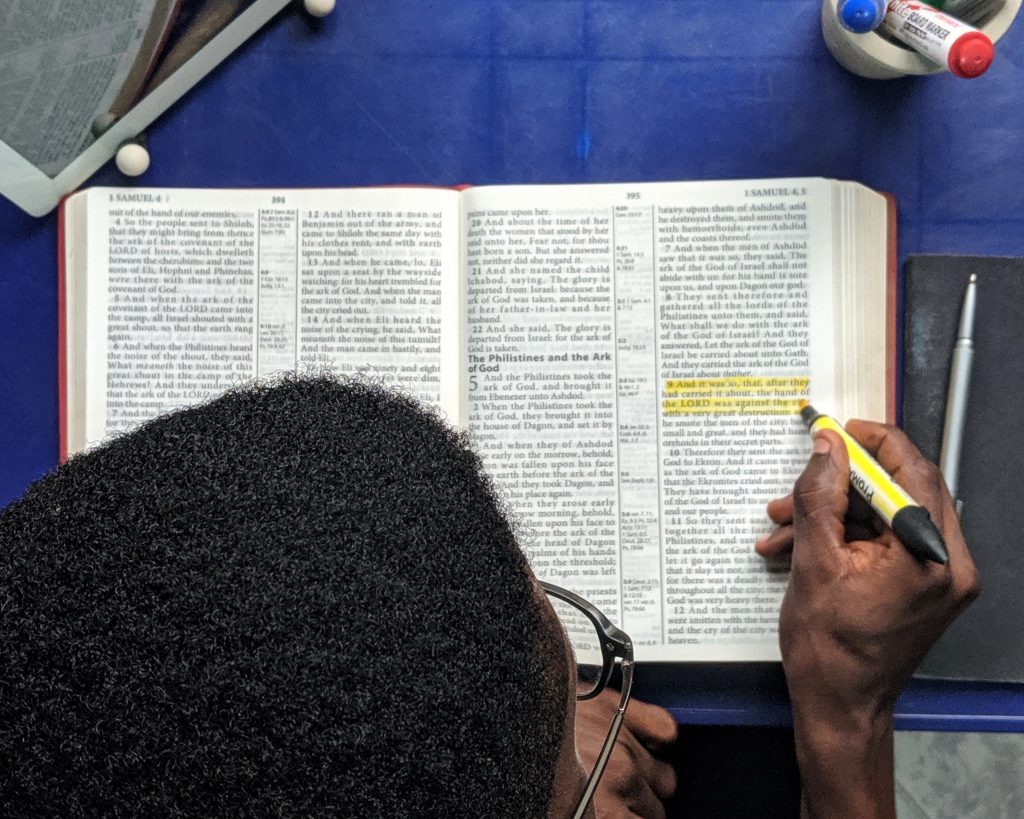
THE LORD IS KING
STUDY SCRIPTURE PSALM 10:12-18
KEY VERSE
“LORD, thou hast heard the desire of the humble: thou will prepare their heart, thou wilt cause thine ear to hear”.
INTRODUCTION
This Psalm show how unfamiliar human beings are to the nature of God.
You should hopefully be aware in your spiritual life that you have your desires and there are passions which affect and influence you.
But note that God has His nature and in this nature there are virtues and desires which determined how He acts.
God therefore has His approaches to human beings and the things that happen in the world and God’s approaches are often vastly different from ours even though we are made in the image and likeness of God.
This Psalm is about oppression, a common experience of human beings. This therefore turns out to be a difficult Text. It poses a difficult question.
It forces us to adjust our prayer life and as one commentator states to keep asking the Lord if our heart is beating at the same pace as God’s heart and if He is interested in the same thing as us.
This should stimulate religious professing Christians as they study the Scriptures and meditate on the life of Jesus for it discloses if the disciples and the nation of Israel cared about the things that bothered Jesus when He was on earth. We clearly see a serious disconnect between the aims of Jesus and those of the people around Him.
We should ask ourselves rightfully the question whether our passions are the same as those of our Lord.
We should examine our way of thinking to see if our passion for justice is the same as the passion Jesus had for justice.
For us the great messy nature of the broken world brings pressures and behaviours we do not like. The conflicting cultures with different languages and ways of life and morals make us have difficulty in understanding the world. We are overwhelmed by this world.
We have some difficulty understanding why and how God loves the world and works continually to redeem it. We can easily forget that God does love the world.
One problem is that we spend most of our time thinking about ourselves and our needs. This shows in the kind of worship songs that are popular and the religious style of appeals to people emphasizing that they only need the kind of ‘faith’ they teach about and one will get health, wealth, power, status, the material things the professing Christians so badly want.
So how can we think about the people in the world, or, is it always me or mine that we care about?
How can we grow our spiritual hearts so that we can engage with the world and engage in it based on the heart of Jesus?
How can we do this in a world of hurt?
How can we show that we know God is good?
Are you the light of the world?
Is God’s plan to deal with the lack of help and the striving of unconcerned rulers and the holders of power a bad Plan?
Or is God’s way the best way forward?
So what happens when we focus on the perceived absence of God?
Note the very interesting situation in which David finds himself. He is a fallible man called on to give us the infallible Word of God. One commentator calls David a broken mouthpiece, to proclaim the glory of God. He certainly is a weak vessel that God is using to display His strength and His glory.
We like David have very limited understanding of reality and we cannot understand or grasp why God is not intervening now, not later in the affairs of men in ways that we prefer.
But David, despite who he is, reflects our natural frustration in the face of evil. He well knows that he has abused power and he has taken a man’s wife and killed the man. He was like a lion crouching and take what he wants. He knows that people all over the place have been abused. But he is frustrated at how God reacts to such events.
We today know full well that people all over our world have been put into slavery to pay off debts which they will never be able to repay given the structures created for them. Women in several countries are routinely sold into brothels and used a sex slaves by those which should be helping them survive and the law enforcement agencies regularly frame and put in prison people for crimes they did not commit.
So we ask ourselves, Does God listen to their cries? As a God of justice who hates injustice, oppression and all sorts of evil, how can we expect people to believe our God is a good God?
How do we explain to these people in the world that there is a Plan of God that leads to redemption? How do we explain that we as Christians are God’s plan to do justice and to rescue the oppressed?
Are we involved in this Plan of God?
Or is it truly that we do not see ourselves that way irrespective of the fact that Jesus declared plainly in Matthew 25 in the Parable of the separation of the Sheep and the Goats that we are God’s Plan?
But this Psalm reflects the fact that with all this the heart of the Psalmist is disturbed. Our hearts are also disturbed when we see the evil people so successful from the perspective of the world. They seem to actively seek out the poor, the helpless and the weak to take advantage of them. They have no shame for they brag about what they are doing. These predators brush God aside. They believe God does not see them, and even if He does, He does not care about what they are doing.
So how are we to cope with the world run by Satan and his devices?
What is to be our perspective and our way forward?
How do we keep our feet firmly planted on the Rock of our salvation?
How are we to have and to show hearts with the passion of the Lord?
How do we show that the Lord is King no matter what the world believes and chooses to believe?
THE TEXT
The Psalm begins by giving us a picture of the depraved heart.
David therefore laments on the wickedness of man and the deplorable actions they undertake. He deals with the consequences of their action.
Now note there are many who will not consider the depraved heart and its actions as something that is to be condemned. The reverse position is held. People who are depraved and do wickedly and immorally are to be lauded. They are the examples held up for us to follow. They are the heroes.
They bring times of troubles with them. They are proud. They boast about what they are doing to satisfy the desires of their twisted heart. The Psalm sums it up:
“He blesses the greedy and renounces the LORD’
The wicked in his proud countenance does not seek God;
God is not in his thoughts”.
They do what God does not like and has a passion for, but instead brush God aside. God is not seen as their Creator and as their Sovereign Lord. They consider themselves to be independent. Charles Spurgeon puts it this way as he considers the masks on the faces of those in the world, those that include professing believers:
“A brazen face and a broken heart never go together… Honesty shines in the face, but villainy peeps out at the eyes”.
The Psalmist at first feels that the only solution to the problem he faces is to have God
Let them be caught in the plots they have devised.
They might be smooth talking and appear to be respectable but they do not care for the commandments of God. They will do some of what they think God wants but it all is twisted to suit their purposes.
The predators sneer at their enemies and declare they will not be in any adversity. So they curse, practice deceit and oppressions and bring trouble and iniquity.
But notice that the wicked know their limitations. Deep down they suspect they are vulnerable and their ground are shaky. So they practice secrecy. They are bullies and so they lie low, and lurk in secret places so that they can entrap the weak. They do not fight openly except when they are discovered and put to open shame. He expects the wicked to fall down
They operate in secret for they think this will ensure that God does not see.
They interpret the nature of God not at Scripture speaks of Him.
For them, God has a weakness.
He forgets and He never sees. He is not the infinite God.
And so this helpless and less than powerful God hides His face.
Note that this is blasphemy.
Blasphemy always gives false comfort. So let us beware.
Verse 12. There is now a call to action by the Psalmist. Since the wicked takes comfort that God does not see him and his actions the solution is for God to raise His hand.
This is a display of God’s power and majesty. God should do this just as He did with King Saul’s unrighteous acts
David knew it was not for him to raise his hand against Saul and so he waited and asked God to raise His hand to correct the situation.
See the prayer in Psalm 9 for God to bring about His righteous judgments.
Would you be so patient and leave vengeance to God? Or do you want to do the vengeance move yourself?
Do you pray to God to not forget the humble? Do you forget to do what God had appointed you to do on the earth while you await His Coming”, working till He comes?
Verse 13. Note that the reason for wickedness is that men renounce God. Evil comes because of unbelief. The knowledge of God is rejected and so a false notion of God replaces the true knowledge of God. This leads to men thinking they are independent and they can therefore create their own rules of living. They feel Rituals they create will satisfy God and He will leave them alone.
They do not remember the warning
“For You do not desire sacrifice, or else I would give it;
You do not delight in burnt offering.
The sacrifices of God are a broken spirit
A broken and a contrite heart
These O God, You will not despise”.
Psalm 51:16-17
They forget it is written:
“As I live, says the Lord
Every knee shall bow to Me,
And every tongue shall confess to God”.
This is quoted in Romans 14 as the Apostle Paul reminds the brethren that each man shall give an account of himself to God.
God will require an account from all of us for the things did in our bodies. All done in darkness will be revealed in the light.
Verse 14. The psalmist now reflect and considers more about reality than before. He accepts that God has seen and that God know all the troubles and griefs that have taken place on the earth. He knows God loves the weak and the helpless, the widows, the fatherless, and the orphans.
That is the passion of God.
Note the prophet Amos in lamenting that Israel did not like correction and there are those that did not desire the Day of the Lord asks:
What good is the day of the Lord to you?
It will be darkness and not light”.
The prophet therefore call for a new behaviour where righteousness flows like a mighty stream.
The psalmist is confident that God will judge and will repay the wicked for all the wickedness they had done. The God of the covenant will show Himself as a father. The weak and the helpless will be proted, avenged, and vindicated. God’s hand will do that as promised and so the helpless can depend on Him.
Verse 15. Since he knows God is the helper of the fatherless, the unprotected in society, the Psalmist then calls on God to clean out the wickedness of the wicked thoroughly. God should destroy all the works of the wicked and the evil men, seek them out, and clean up their situation until no wickedness exists.
Verse 16.
Why is God able to meet such a request? The Lord God is the Almighty God. He is the King of Israel and King of the world. His reign is forever.
God is able. He is so able He can shatter the works of the wicked.
The Psalmist remembers the many victories of God in the past. God removed the Canaanites out of the Land when their cup of iniquity was overflowing.
God had shown mercy to His people and had delivered them from all enemies and He can change the world so that no pagans exist. They can be converted or they can be cut off
Verse 17. The promise of God is that once a person is humbleand have the desire to seek God He will prepare their hearts and cause their ears to hear.
This preparation of the heart is a gift from God. It is one of the blessings of God.
Note also in this the great love of God for those who cannot help themselves. God’s love is amazing. As well, it is deep.
We often do not care for the lowly for we believe they are beneath us and not worth our attention. But God is not like us. He does not see as men see. He does not look at the outward man. He looks at the heart. The Psalmist assures us that God will do justice
But it is hard and difficult when you are helpless to have hope in God. We who belong to God have the task to bring hope to the hopeless.
Note the importance of prayer. When you seek God and pray to Him He knows and hears your secret desires. You do not have to talk to Him in public or depend on anyone to take you to Him.
God responds to prayer. He hears prayer and He answers your petitions. Charles Spurgeon reminds us:
“David does not say, “Thou hast heard the prayers of the humble”. He means that, but he also means a great deal more. Sometimes we have desires that we cannot express; they are too big, too deep; we cannot clothe them in language. At time we have desires which we dare not express; we feel too bowed down, we see too much of our own undesert to be able to venture near the throne of God to utter our desires; but the Lord hears the desires when we cannot or dare not turn it into the actual form of a prayer”.
Verse 18. The psalmist had begun in a feeling of despair, but now he remembers who God is.
But now he remembers that God is a God of justice and He will apply the rules of justice to the wicked, the men of the earth who forget that they are made of dust.
God loves the fatherless and the helpless.
In times of trouble we pray. We pray for God to act quickly.
We act to help the weak doing whatever little we can, knowing that is the Lord who is King that will deal with any untoward situation on earth.
Note that the wicked are called “the men of the earth’. They are men of the earth and not men of heaven. Their citizenship is on earth and not in heven, and so they will perish with the earth.
CONCLUSION
The lament at the seeming distance of God and His allowing evil men to exercise the desire of their evil heart, and redefine what is ‘good’ and what is ‘bad is a universal experience. It is like lipstick is put on a pig.
Remember though that God is the One who defines wickedness. He is immutable and does not change.
Remember also the warning of Matthew 15 that wickedness is in the soul and
“For out of the heart come evil thoughts. Murder, adultery, sexual immorality, theft,false witness, slander”.
So strengthen your heart by awakening to see God as He is. God is King forever. He is always on the throne.
He is always near. There is no time when He is not King. He is always in control.
Your peace and stability comes when you always pray and keep in communion in Him.
INTRODUCTION
This Psalm show how unfamiliar human beings are to the nature of God.
You should hopefully be aware in your spiritual life that you have your desires and there are passions which affect and influence you.
But note that God has His nature and in this nature there are virtues and desires which determined how He acts.
God therefore has His approaches to human beings and the things that happen in the world and God’s approaches are often vastly different from ours even though we are made in the image and likeness of God.
This Psalm is about oppression, a common experience of human beings. This therefore turns out to be a difficult Text. It poses a difficult question.
It forces us to adjust our prayer life and as one commentator states to keep asking the Lord if our heart is beating at the same pace as God’s heart and if He is interested in the same thing as us.
This should stimulate religious professing Christians as they study the Scriptures and meditate on the life of Jesus for it discloses if the disciples and the nation of Israel cared about the things that bothered Jesus when He was on earth. We clearly see a serious disconnect between the aims of Jesus and those of the people around Him.
We should ask ourselves rightfully the question whether our passions are the same as those of our Lord.
We should examine our way of thinking to see if our passion for justice is the same as the passion Jesus had for justice.
For us the great messy nature of the broken world brings pressures and behaviours we do not like. The conflicting cultures with different languages and ways of life and morals make us have difficulty in understanding the world. We are overwhelmed by this world.
We have some difficulty understanding why and how God loves the world and works continually to redeem it. We can easily forget that God does love the world.
One problem is that we spend most of our time thinking about ourselves and our needs. This shows in the kind of worship songs that are popular and the religious style of appeals to people emphasizing that they only need the kind of ‘faith’ they teach about and one will get health, wealth, power, status, the material things the professing Christians so badly want.
So how can we think about the people in the world, or, is it always me or mine that we care about?
How can we grow our spiritual hearts so that we can engage with the world and engage in it based on the heart of Jesus?
How can we do this in a world of hurt?
How can we show that we know God is good?
Are you the light of the world?
Is God’s plan to deal with the lack of help and the striving of unconcerned rulers and the holders of power a bad Plan?
Or is God’s way the best way forward?
So what happens when we focus on the perceived absence of God?
Note the very interesting situation in which David finds himself. He is a fallible man called on to give us the infallible Word of God. One commentator calls David a broken mouthpiece, to proclaim the glory of God. He certainly is a weak vessel that God is using to display His strength and His glory.
We like David have very limited understanding of reality and we cannot understand or grasp why God is not intervening now, not later in the affairs of men in ways that we prefer.
But David, despite who he is, reflects our natural frustration in the face of evil. He well knows that he has abused power and he has taken a man’s wife and killed the man. He was like a lion crouching and take what he wants. He knows that people all over the place have been abused. But he is frustrated at how God reacts to such events.
We today know full well that people all over our world have been put into slavery to pay off debts which they will never be able to repay given the structures created for them. Women in several countries are routinely sold into brothels and used a sex slaves by those which should be helping them survive and the law enforcement agencies regularly frame and put in prison people for crimes they did not commit.
So we ask ourselves, Does God listen to their cries? As a God of justice who hates injustice, oppression and all sorts of evil, how can we expect people to believe our God is a good God?
How do we explain to these people in the world that there is a Plan of God that leads to redemption? How do we explain that we as Christians are God’s plan to do justice and to rescue the oppressed?
Are we involved in this Plan of God?
Or is it truly that we do not see ourselves that way irrespective of the fact that Jesus declared plainly in Matthew 25 in the Parable of the separation of the Sheep and the Goats that we are God’s Plan?
But this Psalm reflects the fact that with all this the heart of the Psalmist is disturbed. Our hearts are also disturbed when we see the evil people so successful from the perspective of the world. They seem to actively seek out the poor, the helpless and the weak to take advantage of them. They have no shame for they brag about what they are doing. These predators brush God aside. They believe God does not see them, and even if He does, He does not care about what they are doing.
So how are we to cope with the world run by Satan and his devices?
What is to be our perspective and our way forward?
How do we keep our feet firmly planted on the Rock of our salvation?
How are we to have and to show hearts with the passion of the Lord?
How do we show that the Lord is King no matter what the world believes and chooses to believe?
THE TEXT
The Psalm begins by giving us a picture of the depraved heart.
David therefore laments on the wickedness of man and the deplorable actions they undertake. He deals with the consequences of their action.
Now note there are many who will not consider the depraved heart and its actions as something that is to be condemned. The reverse position is held. People who are depraved and do wickedly and immorally are to be lauded. They are the examples held up for us to follow. They are the heroes.
They bring times of troubles with them. They are proud. They boast about what they are doing to satisfy the desires of their twisted heart. The Psalm sums it up:
“He blesses the greedy and renounces the LORD’
The wicked in his proud countenance does not seek God;
God is not in his thoughts”.
They do what God does not like and has a passion for, but instead brush God aside. God is not seen as their Creator and as their Sovereign Lord. They consider themselves to be independent. Charles Spurgeon puts it this way as he considers the masks on the faces of those in the world, those that include professing believers:
“A brazen face and a broken heart never go together… Honesty shines in the face, but villainy peeps out at the eyes”.
The Psalmist at first feels that the only solution to the problem he faces is to have God
Let them be caught in the plots they have devised.
They might be smooth talking and appear to be respectable but they do not care for the commandments of God. They will do some of what they think God wants but it all is twisted to suit their purposes.
The predators sneer at their enemies and declare they will not be in any adversity. So they curse, practice deceit and oppressions and bring trouble and iniquity.
But notice that the wicked know their limitations. Deep down they suspect they are vulnerable and their ground are shaky. So they practice secrecy. They are bullies and so they lie low, and lurk in secret places so that they can entrap the weak. They do not fight openly except when they are discovered and put to open shame. He expects the wicked to fall down
They operate in secret for they think this will ensure that God does not see.
They interpret the nature of God not at Scripture speaks of Him.
For them, God has a weakness.
He forgets and He never sees. He is not the infinite God.
And so this helpless and less than powerful God hides His face.
Note that this is blasphemy.
Blasphemy always gives false comfort. So let us beware.
Verse 12. There is now a call to action by the Psalmist. Since the wicked takes comfort that God does not see him and his actions the solution is for God to raise His hand.
This is a display of God’s power and majesty. God should do this just as He did with King Saul’s unrighteous acts
David knew it was not for him to raise his hand against Saul and so he waited and asked God to raise His hand to correct the situation.
See the prayer in Psalm 9 for God to bring about His righteous judgments.
Would you be so patient and leave vengeance to God? Or do you want to do the vengeance move yourself?
Do you pray to God to not forget the humble? Do you forget to do what God had appointed you to do on the earth while you await His Coming”, working till He comes?
Verse 13. Note that the reason for wickedness is that men renounce God. Evil comes because of unbelief. The knowledge of God is rejected and so a false notion of God replaces the true knowledge of God. This leads to men thinking they are independent and they can therefore create their own rules of living. They feel Rituals they create will satisfy God and He will leave them alone.
They do not remember the warning
“For You do not desire sacrifice, or else I would give it;
You do not delight in burnt offering.
The sacrifices of God are a broken spirit
A broken and a contrite heart
These O God, You will not despise”.
Psalm 51:16-17
They forget it is written:
“As I live, says the Lord
Every knee shall bow to Me,
And every tongue shall confess to God”.
This is quoted in Romans 14 as the Apostle Paul reminds the brethren that each man shall give an account of himself to God.
God will require an account from all of us for the things did in our bodies. All done in darkness will be revealed in the light.
Verse 14. The psalmist now reflect and considers more about reality than before. He accepts that God has seen and that God know all the troubles and griefs that have taken place on the earth. He knows God loves the weak and the helpless, the widows, the fatherless, and the orphans.
That is the passion of God.
Note the prophet Amos in lamenting that Israel did not like correction and there are those that did not desire the Day of the Lord asks:
What good is the day of the Lord to you?
It will be darkness and not light”.
The prophet therefore call for a new behaviour where righteousness flows like a mighty stream.
The psalmist is confident that God will judge and will repay the wicked for all the wickedness they had done. The God of the covenant will show Himself as a father. The weak and the helpless will be proted, avenged, and vindicated. God’s hand will do that as promised and so the helpless can depend on Him.
Verse 15. Since he knows God is the helper of the fatherless, the unprotected in society, the Psalmist then calls on God to clean out the wickedness of the wicked thoroughly. God should destroy all the works of the wicked and the evil men, seek them out, and clean up their situation until no wickedness exists.
Verse 16.
Why is God able to meet such a request? The Lord God is the Almighty God. He is the King of Israel and King of the world. His reign is forever.
God is able. He is so able He can shatter the works of the wicked.
The Psalmist remembers the many victories of God in the past. God removed the Canaanites out of the Land when their cup of iniquity was overflowing.
God had shown mercy to His people and had delivered them from all enemies and He can change the world so that no pagans exist. They can be converted or they can be cut off
Verse 17. The promise of God is that once a person is humbleand have the desire to seek God He will prepare their hearts and cause their ears to hear.
This preparation of the heart is a gift from God. It is one of the blessings of God.
Note also in this the great love of God for those who cannot help themselves. God’s love is amazing. As well, it is deep.
We often do not care for the lowly for we believe they are beneath us and not worth our attention. But God is not like us. He does not see as men see. He does not look at the outward man. He looks at the heart. The Psalmist assures us that God will do justice
But it is hard and difficult when you are helpless to have hope in God. We who belong to God have the task to bring hope to the hopeless.
Note the importance of prayer. When you seek God and pray to Him He knows and hears your secret desires. You do not have to talk to Him in public or depend on anyone to take you to Him.
God responds to prayer. He hears prayer and He answers your petitions. Charles Spurgeon reminds us:
“David does not say, “Thou hast heard the prayers of the humble”. He means that, but he also means a great deal more. Sometimes we have desires that we cannot express; they are too big, too deep; we cannot clothe them in language. At time we have desires which we dare not express; we feel too bowed down, we see too much of our own undesert to be able to venture near the throne of God to utter our desires; but the Lord hears the desires when we cannot or dare not turn it into the actual form of a prayer”.
Verse 18. The psalmist had begun in a feeling of despair, but now he remembers who God is.
But now he remembers that God is a God of justice and He will apply the rules of justice to the wicked, the men of the earth who forget that they are made of dust.
God loves the fatherless and the helpless.
In times of trouble we pray. We pray for God to act quickly.
We act to help the weak doing whatever little we can, knowing that is the Lord who is King that will deal with any untoward situation on earth.
Note that the wicked are called “the men of the earth’. They are men of the earth and not men of heaven. Their citizenship is on earth and not in heven, and so they will perish with the earth.
CONCLUSION
The lament at the seeming distance of God and His allowing evil men to exercise the desire of their evil heart, and redefine what is ‘good’ and what is ‘bad is a universal experience. It is like lipstick is put on a pig.
Remember though that God is the One who defines wickedness. He is immutable and does not change.
Remember also the warning of Matthew 15 that wickedness is in the soul and
“For out of the heart come evil thoughts. Murder, adultery, sexual immorality, theft,false witness, slander”.
So strengthen your heart by awakening to see God as He is. God is King forever. He is always on the throne.
He is always near. There is no time when He is not King. He is always in control.
Your peace and stability comes when you always pray and keep in communion in Him.
INTRODUCTION
This Psalm show how unfamiliar human beings are to the nature of God.
You should hopefully be aware in your spiritual life that you have your desires and there are passions which affect and influence you.
But note that God has His nature and in this nature there are virtues and desires which determined how He acts.
God therefore has His approaches to human beings and the things that happen in the world and God’s approaches are often vastly different from ours even though we are made in the image and likeness of God.
This Psalm is about oppression, a common experience of human beings. This therefore turns out to be a difficult Text. It poses a difficult question.
It forces us to adjust our prayer life and as one commentator states to keep asking the Lord if our heart is beating at the same pace as God’s heart and if He is interested in the same thing as us.
This should stimulate religious professing Christians as they study the Scriptures and meditate on the life of Jesus for it discloses if the disciples and the nation of Israel cared about the things that bothered Jesus when He was on earth. We clearly see a serious disconnect between the aims of Jesus and those of the people around Him.
We should ask ourselves rightfully the question whether our passions are the same as those of our Lord.
We should examine our way of thinking to see if our passion for justice is the same as the passion Jesus had for justice.
For us the great messy nature of the broken world brings pressures and behaviours we do not like. The conflicting cultures with different languages and ways of life and morals make us have difficulty in understanding the world. We are overwhelmed by this world.
We have some difficulty understanding why and how God loves the world and works continually to redeem it. We can easily forget that God does love the world.
One problem is that we spend most of our time thinking about ourselves and our needs. This shows in the kind of worship songs that are popular and the religious style of appeals to people emphasizing that they only need the kind of ‘faith’ they teach about and one will get health, wealth, power, status, the material things the professing Christians so badly want.
So how can we think about the people in the world, or, is it always me or mine that we care about?
How can we grow our spiritual hearts so that we can engage with the world and engage in it based on the heart of Jesus?
How can we do this in a world of hurt?
How can we show that we know God is good?
Are you the light of the world?
Is God’s plan to deal with the lack of help and the striving of unconcerned rulers and the holders of power a bad Plan?
Or is God’s way the best way forward?
So what happens when we focus on the perceived absence of God?
Note the very interesting situation in which David finds himself. He is a fallible man called on to give us the infallible Word of God. One commentator calls David a broken mouthpiece, to proclaim the glory of God. He certainly is a weak vessel that God is using to display His strength and His glory.
We like David have very limited understanding of reality and we cannot understand or grasp why God is not intervening now, not later in the affairs of men in ways that we prefer.
But David, despite who he is, reflects our natural frustration in the face of evil. He well knows that he has abused power and he has taken a man’s wife and killed the man. He was like a lion crouching and take what he wants. He knows that people all over the place have been abused. But he is frustrated at how God reacts to such events.
We today know full well that people all over our world have been put into slavery to pay off debts which they will never be able to repay given the structures created for them. Women in several countries are routinely sold into brothels and used a sex slaves by those which should be helping them survive and the law enforcement agencies regularly frame and put in prison people for crimes they did not commit.
So we ask ourselves, Does God listen to their cries? As a God of justice who hates injustice, oppression and all sorts of evil, how can we expect people to believe our God is a good God?
How do we explain to these people in the world that there is a Plan of God that leads to redemption? How do we explain that we as Christians are God’s plan to do justice and to rescue the oppressed?
Are we involved in this Plan of God?
Or is it truly that we do not see ourselves that way irrespective of the fact that Jesus declared plainly in Matthew 25 in the Parable of the separation of the Sheep and the Goats that we are God’s Plan?
But this Psalm reflects the fact that with all this the heart of the Psalmist is disturbed. Our hearts are also disturbed when we see the evil people so successful from the perspective of the world. They seem to actively seek out the poor, the helpless and the weak to take advantage of them. They have no shame for they brag about what they are doing. These predators brush God aside. They believe God does not see them, and even if He does, He does not care about what they are doing.
So how are we to cope with the world run by Satan and his devices?
What is to be our perspective and our way forward?
How do we keep our feet firmly planted on the Rock of our salvation?
How are we to have and to show hearts with the passion of the Lord?
How do we show that the Lord is King no matter what the world believes and chooses to believe?
THE TEXT
The Psalm begins by giving us a picture of the depraved heart.
David therefore laments on the wickedness of man and the deplorable actions they undertake. He deals with the consequences of their action.
Now note there are many who will not consider the depraved heart and its actions as something that is to be condemned. The reverse position is held. People who are depraved and do wickedly and immorally are to be lauded. They are the examples held up for us to follow. They are the heroes.
They bring times of troubles with them. They are proud. They boast about what they are doing to satisfy the desires of their twisted heart. The Psalm sums it up:
“He blesses the greedy and renounces the LORD’
The wicked in his proud countenance does not seek God;
God is not in his thoughts”.
They do what God does not like and has a passion for, but instead brush God aside. God is not seen as their Creator and as their Sovereign Lord. They consider themselves to be independent. Charles Spurgeon puts it this way as he considers the masks on the faces of those in the world, those that include professing believers:
“A brazen face and a broken heart never go together… Honesty shines in the face, but villainy peeps out at the eyes”.
The Psalmist at first feels that the only solution to the problem he faces is to have God
Let them be caught in the plots they have devised.
They might be smooth talking and appear to be respectable but they do not care for the commandments of God. They will do some of what they think God wants but it all is twisted to suit their purposes.
The predators sneer at their enemies and declare they will not be in any adversity. So they curse, practice deceit and oppressions and bring trouble and iniquity.
But notice that the wicked know their limitations. Deep down they suspect they are vulnerable and their ground are shaky. So they practice secrecy. They are bullies and so they lie low, and lurk in secret places so that they can entrap the weak. They do not fight openly except when they are discovered and put to open shame. He expects the wicked to fall down
They operate in secret for they think this will ensure that God does not see.
They interpret the nature of God not at Scripture speaks of Him.
For them, God has a weakness.
He forgets and He never sees. He is not the infinite God.
And so this helpless and less than powerful God hides His face.
Note that this is blasphemy.
Blasphemy always gives false comfort. So let us beware.
Verse 12. There is now a call to action by the Psalmist. Since the wicked takes comfort that God does not see him and his actions the solution is for God to raise His hand.
This is a display of God’s power and majesty. God should do this just as He did with King Saul’s unrighteous acts
David knew it was not for him to raise his hand against Saul and so he waited and asked God to raise His hand to correct the situation.
See the prayer in Psalm 9 for God to bring about His righteous judgments.
Would you be so patient and leave vengeance to God? Or do you want to do the vengeance move yourself?
Do you pray to God to not forget the humble? Do you forget to do what God had appointed you to do on the earth while you await His Coming”, working till He comes?
Verse 13. Note that the reason for wickedness is that men renounce God. Evil comes because of unbelief. The knowledge of God is rejected and so a false notion of God replaces the true knowledge of God. This leads to men thinking they are independent and they can therefore create their own rules of living. They feel Rituals they create will satisfy God and He will leave them alone.
They do not remember the warning
“For You do not desire sacrifice, or else I would give it;
You do not delight in burnt offering.
The sacrifices of God are a broken spirit
A broken and a contrite heart
These O God, You will not despise”.
Psalm 51:16-17
They forget it is written:
“As I live, says the Lord
Every knee shall bow to Me,
And every tongue shall confess to God”.
This is quoted in Romans 14 as the Apostle Paul reminds the brethren that each man shall give an account of himself to God.
God will require an account from all of us for the things did in our bodies. All done in darkness will be revealed in the light.
Verse 14. The psalmist now reflect and considers more about reality than before. He accepts that God has seen and that God know all the troubles and griefs that have taken place on the earth. He knows God loves the weak and the helpless, the widows, the fatherless, and the orphans.
That is the passion of God.
Note the prophet Amos in lamenting that Israel did not like correction and there are those that did not desire the Day of the Lord asks:
What good is the day of the Lord to you?
It will be darkness and not light”.
The prophet therefore call for a new behaviour where righteousness flows like a mighty stream.
The psalmist is confident that God will judge and will repay the wicked for all the wickedness they had done. The God of the covenant will show Himself as a father. The weak and the helpless will be proted, avenged, and vindicated. God’s hand will do that as promised and so the helpless can depend on Him.
Verse 15. Since he knows God is the helper of the fatherless, the unprotected in society, the Psalmist then calls on God to clean out the wickedness of the wicked thoroughly. God should destroy all the works of the wicked and the evil men, seek them out, and clean up their situation until no wickedness exists.
Verse 16.
Why is God able to meet such a request? The Lord God is the Almighty God. He is the King of Israel and King of the world. His reign is forever.
God is able. He is so able He can shatter the works of the wicked.
The Psalmist remembers the many victories of God in the past. God removed the Canaanites out of the Land when their cup of iniquity was overflowing.
God had shown mercy to His people and had delivered them from all enemies and He can change the world so that no pagans exist. They can be converted or they can be cut off
Verse 17. The promise of God is that once a person is humble and have the desire to seek God He will prepare their hearts and cause their ears to hear.
This preparation of the heart is a gift from God. It is one of the blessings of God.
Note also in this the great love of God for those who cannot help themselves. God’s love is amazing. As well, it is deep.
We often do not care for the lowly for we believe they are beneath us and not worth our attention. But God is not like us. He does not see as men see. He does not look at the outward man. He looks at the heart. The Psalmist assures us that God will do justice
But it is hard and difficult when you are helpless to have hope in God. We who belong to God have the task to bring hope to the hopeless.
Note the importance of prayer. When you seek God and pray to Him He knows and hears your secret desires. You do not have to talk to Him in public or depend on anyone to take you to Him.
God responds to prayer. He hears prayer and He answers your petitions. Charles Spurgeon reminds us:
“David does not say, “Thou hast heard the prayers of the humble”. He means that, but he also means a great deal more. Sometimes we have desires that we cannot express; they are too big, too deep; we cannot clothe them in language. At time we have desires which we dare not express; we feel too bowed down, we see too much of our own undesert to be able to venture near the throne of God to utter our desires; but the Lord hears the desires when we cannot or dare not turn it into the actual form of a prayer”.
Verse 18. The psalmist had begun in a feeling of despair, but now he remembers who God is.
But now he remembers that God is a God of justice and He will apply the rules of justice to the wicked, the men of the earth who forget that they are made of dust.
God loves the fatherless and the helpless.
In times of trouble we pray. We pray for God to act quickly.
We act to help the weak doing whatever little we can, knowing that is the Lord who is King that will deal with any untoward situation on earth.
Note that the wicked are called “the men of the earth’. They are men of the earth and not men of heaven. Their citizenship is on earth and not in heven, and so they will perish with the earth.
CONCLUSION
The lament at the seeming distance of God and His allowing evil men to exercise the desire of their evil heart, and redefine what is ‘good’ and what is ‘bad is a universal experience. It is like lipstick is put on a pig.
Remember though that God is the One who defines wickedness. He is immutable and does not change.
Remember also the warning of Matthew 15 that wickedness is in the soul and
“For out of the heart come evil thoughts. Murder, adultery, sexual immorality, theft,false witness, slander”.
So strengthen your heart by awakening to see God as He is. God is King forever. He is always on the throne.
He is always near. There is no time when He is not King. He is always in control.
Your peace and stability comes when you always pray and keep in communion in Him.
INTRODUCTION
This Psalm show how unfamiliar human beings are to the nature of God.
You should hopefully be aware in your spiritual life that you have your desires and there are passions which affect and influence you.
But note that God has His nature and in this nature there are virtues and desires which determined how He acts.
God therefore has His approaches to human beings and the things that happen in the world and God’s approaches are often vastly different from ours even though we are made in the image and likeness of God.
This Psalm is about oppression, a common experience of human beings. This therefore turns out to be a difficult Text. It poses a difficult question.
It forces us to adjust our prayer life and as one commentator states to keep asking the Lord if our heart is beating at the same pace as God’s heart and if He is interested in the same thing as us.
This should stimulate religious professing Christians as they study the Scriptures and meditate on the life of Jesus for it discloses if the disciples and the nation of Israel cared about the things that bothered Jesus when He was on earth. We clearly see a serious disconnect between the aims of Jesus and those of the people around Him.
We should ask ourselves rightfully the question whether our passions are the same as those of our Lord.
We should examine our way of thinking to see if our passion for justice is the same as the passion Jesus had for justice.
For us the great messy nature of the broken world brings pressures and behaviours we do not like. The conflicting cultures with different languages and ways of life and morals make us have difficulty in understanding the world. We are overwhelmed by this world.
We have some difficulty understanding why and how God loves the world and works continually to redeem it. We can easily forget that God does love the world.
One problem is that we spend most of our time thinking about ourselves and our needs. This shows in the kind of worship songs that are popular and the religious style of appeals to people emphasizing that they only need the kind of ‘faith’ they teach about and one will get health, wealth, power, status, the material things the professing Christians so badly want.
So how can we think about the people in the world, or, is it always me or mine that we care about?
How can we grow our spiritual hearts so that we can engage with the world and engage in it based on the heart of Jesus?
How can we do this in a world of hurt?
How can we show that we know God is good?
Are you the light of the world?
Is God’s plan to deal with the lack of help and the striving of unconcerned rulers and the holders of power a bad Plan?
Or is God’s way the best way forward?
So what happens when we focus on the perceived absence of God?
Note the very interesting situation in which David finds himself. He is a fallible man called on to give us the infallible Word of God. One commentator calls David a broken mouthpiece, to proclaim the glory of God. He certainly is a weak vessel that God is using to display His strength and His glory.
We like David have very limited understanding of reality and we cannot understand or grasp why God is not intervening now, not later in the affairs of men in ways that we prefer.
But David, despite who he is, reflects our natural frustration in the face of evil. He well knows that he has abused power and he has taken a man’s wife and killed the man. He was like a lion crouching and take what he wants. He knows that people all over the place have been abused. But he is frustrated at how God reacts to such events.
We today know full well that people all over our world have been put into slavery to pay off debts which they will never be able to repay given the structures created for them. Women in several countries are routinely sold into brothels and used a sex slaves by those which should be helping them survive and the law enforcement agencies regularly frame and put in prison people for crimes they did not commit.
So we ask ourselves, Does God listen to their cries? As a God of justice who hates injustice, oppression and all sorts of evil, how can we expect people to believe our God is a good God?
How do we explain to these people in the world that there is a Plan of God that leads to redemption? How do we explain that we as Christians are God’s plan to do justice and to rescue the oppressed?
Are we involved in this Plan of God?
Or is it truly that we do not see ourselves that way irrespective of the fact that Jesus declared plainly in Matthew 25 in the Parable of the separation of the Sheep and the Goats that we are God’s Plan?
But this Psalm reflects the fact that with all this the heart of the Psalmist is disturbed. Our hearts are also disturbed when we see the evil people so successful from the perspective of the world. They seem to actively seek out the poor, the helpless and the weak to take advantage of them. They have no shame for they brag about what they are doing. These predators brush God aside. They believe God does not see them, and even if He does, He does not care about what they are doing.
So how are we to cope with the world run by Satan and his devices?
What is to be our perspective and our way forward?
How do we keep our feet firmly planted on the Rock of our salvation?
How are we to have and to show hearts with the passion of the Lord?
How do we show that the Lord is King no matter what the world believes and chooses to believe?
THE TEXT
The Psalm begins by giving us a picture of the depraved heart.
David therefore laments on the wickedness of man and the deplorable actions they undertake. He deals with the consequences of their action.
Now note there are many who will not consider the depraved heart and its actions as something that is to be condemned. The reverse position is held. People who are depraved and do wickedly and immorally are to be lauded. They are the examples held up for us to follow. They are the heroes.
They bring times of troubles with them. They are proud. They boast about what they are doing to satisfy the desires of their twisted heart. The Psalm sums it up:
“He blesses the greedy and renounces the LORD’
The wicked in his proud countenance does not seek God;
God is not in his thoughts”.
They do what God does not like and has a passion for, but instead brush God aside. God is not seen as their Creator and as their Sovereign Lord. They consider themselves to be independent. Charles Spurgeon puts it this way as he considers the masks on the faces of those in the world, those that include professing believers:
“A brazen face and a broken heart never go together… Honesty shines in the face, but villainy peeps out at the eyes”.
The Psalmist at first feels that the only solution to the problem he faces is to have God
Let them be caught in the plots they have devised.
They might be smooth talking and appear to be respectable but they do not care for the commandments of God. They will do some of what they think God wants but it all is twisted to suit their purposes.
The predators sneer at their enemies and declare they will not be in any adversity. So they curse, practice deceit and oppressions and bring trouble and iniquity.
But notice that the wicked know their limitations. Deep down they suspect they are vulnerable and their ground are shaky. So they practice secrecy. They are bullies and so they lie low, and lurk in secret places so that they can entrap the weak. They do not fight openly except when they are discovered and put to open shame. He expects the wicked to fall down
They operate in secret for they think this will ensure that God does not see.
They interpret the nature of God not at Scripture speaks of Him.
For them, God has a weakness.
He forgets and He never sees. He is not the infinite God.
And so this helpless and less than powerful God hides His face.
Note that this is blasphemy.
Blasphemy always gives false comfort. So let us beware.
Verse 12. There is now a call to action by the Psalmist. Since the wicked takes comfort that God does not see him and his actions the solution is for God to raise His hand.
This is a display of God’s power and majesty. God should do this just as He did with King Saul’s unrighteous acts
David knew it was not for him to raise his hand against Saul and so he waited and asked God to raise His hand to correct the situation.
See the prayer in Psalm 9 for God to bring about His righteous judgments.
Would you be so patient and leave vengeance to God? Or do you want to do the vengeance move yourself?
Do you pray to God to not forget the humble? Do you forget to do what God had appointed you to do on the earth while you await His Coming”, working till He comes?
Verse 13. Note that the reason for wickedness is that men renounce God. Evil comes because of unbelief. The knowledge of God is rejected and so a false notion of God replaces the true knowledge of God. This leads to men thinking they are independent and they can therefore create their own rules of living. They feel Rituals they create will satisfy God and He will leave them alone.
They do not remember the warning
“For You do not desire sacrifice, or else I would give it;
You do not delight in burnt offering.
The sacrifices of God are a broken spirit
A broken and a contrite heart
These O God, You will not despise”.
Psalm 51:16-17
They forget it is written:
“As I live, says the Lord
Every knee shall bow to Me,
And every tongue shall confess to God”.
This is quoted in Romans 14 as the Apostle Paul reminds the brethren that each man shall give an account of himself to God.
God will require an account from all of us for the things did in our bodies. All done in darkness will be revealed in the light.
Verse 14. The psalmist now reflect and considers more about reality than before. He accepts that God has seen and that God know all the troubles and griefs that have taken place on the earth. He knows God loves the weak and the helpless, the widows, the fatherless, and the orphans.
That is the passion of God.
Note the prophet Amos in lamenting that Israel did not like correction and there are those that did not desire the Day of the Lord asks:
What good is the day of the Lord to you?
It will be darkness and not light”.
The prophet therefore call for a new behaviour where righteousness flows like a mighty stream.
The psalmist is confident that God will judge and will repay the wicked for all the wickedness they had done. The God of the covenant will show Himself as a father. The weak and the helpless will be proted, avenged, and vindicated. God’s hand will do that as promised and so the helpless can depend on Him.
Verse 15. Since he knows God is the helper of the fatherless, the unprotected in society, the Psalmist then calls on God to clean out the wickedness of the wicked thoroughly. God should destroy all the works of the wicked and the evil men, seek them out, and clean up their situation until no wickedness exists.
Verse 16.
Why is God able to meet such a request? The Lord God is the Almighty God. He is the King of Israel and King of the world. His reign is forever.
God is able. He is so able He can shatter the works of the wicked.
The Psalmist remembers the many victories of God in the past. God removed the Canaanites out of the Land when their cup of iniquity was overflowing.
God had shown mercy to His people and had delivered them from all enemies and He can change the world so that no pagans exist. They can be converted or they can be cut off
Verse 17. The promise of God is that once a person is humbleand have the desire to seek God He will prepare their hearts and cause their ears to hear.
This preparation of the heart is a gift from God. It is one of the blessings of God.
Note also in this the great love of God for those who cannot help themselves. God’s love is amazing. As well, it is deep.
We often do not care for the lowly for we believe they are beneath us and not worth our attention. But God is not like us. He does not see as men see. He does not look at the outward man. He looks at the heart. The Psalmist assures us that God will do justice
But it is hard and difficult when you are helpless to have hope in God. We who belong to God have the task to bring hope to the hopeless.
Note the importance of prayer. When you seek God and pray to Him He knows and hears your secret desires. You do not have to talk to Him in public or depend on anyone to take you to Him.
God responds to prayer. He hears prayer and He answers your petitions. Charles Spurgeon reminds us:
“David does not say, “Thou hast heard the prayers of the humble”. He means that, but he also means a great deal more. Sometimes we have desires that we cannot express; they are too big, too deep; we cannot clothe them in language. At time we have desires which we dare not express; we feel too bowed down, we see too much of our own undesert to be able to venture near the throne of God to utter our desires; but the Lord hears the desires when we cannot or dare not turn it into the actual form of a prayer”.
Verse 18. The psalmist had begun in a feeling of despair, but now he remembers who God is.
But now he remembers that God is a God of justice and He will apply the rules of justice to the wicked, the men of the earth who forget that they are made of dust.
God loves the fatherless and the helpless.
In times of trouble we pray. We pray for God to act quickly.
We act to help the weak doing whatever little we can, knowing that is the Lord who is King that will deal with any untoward situation on earth.
Note that the wicked are called “the men of the earth’. They are men of the earth and not men of heaven. Their citizenship is on earth and not in heven, and so they will perish with the earth.
CONCLUSION
The lament at the seeming distance of God and His allowing evil men to exercise the desire of their evil heart, and redefine what is ‘good’ and what is ‘bad is a universal experience. It is like lipstick is put on a pig.
Remember though that God is the One who defines wickedness. He is immutable and does not change.
Remember also the warning of Matthew 15 that wickedness is in the soul and
“For out of the heart come evil thoughts. Murder, adultery, sexual immorality, theft,false witness, slander”.
So strengthen your heart by awakening to see God as He is. God is King forever. He is always on the throne.
He is always near. There is no time when He is not King. He is always in control.
Your peace and stability comes when you always pray and keep in communion in Him.
INTRODUCTION
This Psalm show how unfamiliar human beings are to the nature of God.
You should hopefully be aware in your spiritual life that you have your desires and there are passions which affect and influence you.
But note that God has His nature and in this nature there are virtues and desires which determined how He acts.
God therefore has His approaches to human beings and the things that happen in the world and God’s approaches are often vastly different from ours even though we are made in the image and likeness of God.
This Psalm is about oppression, a common experience of human beings. This therefore turns out to be a difficult Text. It poses a difficult question.
It forces us to adjust our prayer life and as one commentator states to keep asking the Lord if our heart is beating at the same pace as God’s heart and if He is interested in the same thing as us.
This should stimulate religious professing Christians as they study the Scriptures and meditate on the life of Jesus for it discloses if the disciples and the nation of Israel cared about the things that bothered Jesus when He was on earth. We clearly see a serious disconnect between the aims of Jesus and those of the people around Him.
We should ask ourselves rightfully the question whether our passions are the same as those of our Lord.
We should examine our way of thinking to see if our passion for justice is the same as the passion Jesus had for justice.
For us the great messy nature of the broken world brings pressures and behaviours we do not like. The conflicting cultures with different languages and ways of life and morals make us have difficulty in understanding the world. We are overwhelmed by this world.
We have some difficulty understanding why and how God loves the world and works continually to redeem it. We can easily forget that God does love the world.
One problem is that we spend most of our time thinking about ourselves and our needs. This shows in the kind of worship songs that are popular and the religious style of appeals to people emphasizing that they only need the kind of ‘faith’ they teach about and one will get health, wealth, power, status, the material things the professing Christians so badly want.
So how can we think about the people in the world, or, is it always me or mine that we care about?
How can we grow our spiritual hearts so that we can engage with the world and engage in it based on the heart of Jesus?
How can we do this in a world of hurt?
How can we show that we know God is good?
Are you the light of the world?
Is God’s plan to deal with the lack of help and the striving of unconcerned rulers and the holders of power a bad Plan?
Or is God’s way the best way forward?
So what happens when we focus on the perceived absence of God?
Note the very interesting situation in which David finds himself. He is a fallible man called on to give us the infallible Word of God. One commentator calls David a broken mouthpiece, to proclaim the glory of God. He certainly is a weak vessel that God is using to display His strength and His glory.
We like David have very limited understanding of reality and we cannot understand or grasp why God is not intervening now, not later in the affairs of men in ways that we prefer.
But David, despite who he is, reflects our natural frustration in the face of evil. He well knows that he has abused power and he has taken a man’s wife and killed the man. He was like a lion crouching and take what he wants. He knows that people all over the place have been abused. But he is frustrated at how God reacts to such events.
We today know full well that people all over our world have been put into slavery to pay off debts which they will never be able to repay given the structures created for them. Women in several countries are routinely sold into brothels and used a sex slaves by those which should be helping them survive and the law enforcement agencies regularly frame and put in prison people for crimes they did not commit.
So we ask ourselves, Does God listen to their cries? As a God of justice who hates injustice, oppression and all sorts of evil, how can we expect people to believe our God is a good God?
How do we explain to these people in the world that there is a Plan of God that leads to redemption? How do we explain that we as Christians are God’s plan to do justice and to rescue the oppressed?
Are we involved in this Plan of God?
Or is it truly that we do not see ourselves that way irrespective of the fact that Jesus declared plainly in Matthew 25 in the Parable of the separation of the Sheep and the Goats that we are God’s Plan?
But this Psalm reflects the fact that with all this the heart of the Psalmist is disturbed. Our hearts are also disturbed when we see the evil people so successful from the perspective of the world. They seem to actively seek out the poor, the helpless and the weak to take advantage of them. They have no shame for they brag about what they are doing. These predators brush God aside. They believe God does not see them, and even if He does, He does not care about what they are doing.
So how are we to cope with the world run by Satan and his devices?
What is to be our perspective and our way forward?
How do we keep our feet firmly planted on the Rock of our salvation?
How are we to have and to show hearts with the passion of the Lord?
How do we show that the Lord is King no matter what the world believes and chooses to believe?
THE TEXT
The Psalm begins by giving us a picture of the depraved heart.
David therefore laments on the wickedness of man and the deplorable actions they undertake. He deals with the consequences of their action.
Now note there are many who will not consider the depraved heart and its actions as something that is to be condemned. The reverse position is held. People who are depraved and do wickedly and immorally are to be lauded. They are the examples held up for us to follow. They are the heroes.
They bring times of troubles with them. They are proud. They boast about what they are doing to satisfy the desires of their twisted heart. The Psalm sums it up:
“He blesses the greedy and renounces the LORD’
The wicked in his proud countenance does not seek God;
God is not in his thoughts”.
They do what God does not like and has a passion for, but instead brush God aside. God is not seen as their Creator and as their Sovereign Lord. They consider themselves to be independent. Charles Spurgeon puts it this way as he considers the masks on the faces of those in the world, those that include professing believers:
“A brazen face and a broken heart never go together… Honesty shines in the face, but villainy peeps out at the eyes”.
The Psalmist at first feels that the only solution to the problem he faces is to have God
Let them be caught in the plots they have devised.
They might be smooth talking and appear to be respectable but they do not care for the commandments of God. They will do some of what they think God wants but it all is twisted to suit their purposes.
The predators sneer at their enemies and declare they will not be in any adversity. So they curse, practice deceit and oppressions and bring trouble and iniquity.
But notice that the wicked know their limitations. Deep down they suspect they are vulnerable and their ground are shaky. So they practice secrecy. They are bullies and so they lie low, and lurk in secret places so that they can entrap the weak. They do not fight openly except when they are discovered and put to open shame. He expects the wicked to fall down
They operate in secret for they think this will ensure that God does not see.
They interpret the nature of God not at Scripture speaks of Him.
For them, God has a weakness.
He forgets and He never sees. He is not the infinite God.
And so this helpless and less than powerful God hides His face.
Note that this is blasphemy.
Blasphemy always gives false comfort. So let us beware.
Verse 12. There is now a call to action by the Psalmist. Since the wicked takes comfort that God does not see him and his actions the solution is for God to raise His hand.
This is a display of God’s power and majesty. God should do this just as He did with King Saul’s unrighteous acts
David knew it was not for him to raise his hand against Saul and so he waited and asked God to raise His hand to correct the situation.
See the prayer in Psalm 9 for God to bring about His righteous judgments.
Would you be so patient and leave vengeance to God? Or do you want to do the vengeance move yourself?
Do you pray to God to not forget the humble? Do you forget to do what God had appointed you to do on the earth while you await His Coming”, working till He comes?
Verse 13. Note that the reason for wickedness is that men renounce God. Evil comes because of unbelief. The knowledge of God is rejected and so a false notion of God replaces the true knowledge of God. This leads to men thinking they are independent and they can therefore create their own rules of living. They feel Rituals they create will satisfy God and He will leave them alone.
They do not remember the warning
“For You do not desire sacrifice, or else I would give it;
You do not delight in burnt offering.
The sacrifices of God are a broken spirit
A broken and a contrite heart
These O God, You will not despise”.
Psalm 51:16-17
They forget it is written:
“As I live, says the Lord
Every knee shall bow to Me,
And every tongue shall confess to God”.
This is quoted in Romans 14 as the Apostle Paul reminds the brethren that each man shall give an account of himself to God.
God will require an account from all of us for the things did in our bodies. All done in darkness will be revealed in the light.
Verse 14. The psalmist now reflect and considers more about reality than before. He accepts that God has seen and that God know all the troubles and griefs that have taken place on the earth. He knows God loves the weak and the helpless, the widows, the fatherless, and the orphans.
That is the passion of God.
Note the prophet Amos in lamenting that Israel did not like correction and there are those that did not desire the Day of the Lord asks:
What good is the day of the Lord to you?
It will be darkness and not light”.
The prophet therefore call for a new behaviour where righteousness flows like a mighty stream.
The psalmist is confident that God will judge and will repay the wicked for all the wickedness they had done. The God of the covenant will show Himself as a father. The weak and the helpless will be proted, avenged, and vindicated. God’s hand will do that as promised and so the helpless can depend on Him.
Verse 15. Since he knows God is the helper of the fatherless, the unprotected in society, the Psalmist then calls on God to clean out the wickedness of the wicked thoroughly. God should destroy all the works of the wicked and the evil men, seek them out, and clean up their situation until no wickedness exists.
Verse 16.
Why is God able to meet such a request? The Lord God is the Almighty God. He is the King of Israel and King of the world. His reign is forever.
God is able. He is so able He can shatter the works of the wicked.
The Psalmist remembers the many victories of God in the past. God removed the Canaanites out of the Land when their cup of iniquity was overflowing.
God had shown mercy to His people and had delivered them from all enemies and He can change the world so that no pagans exist. They can be converted or they can be cut off
Verse 17. The promise of God is that once a person is humble and have the desire to seek God He will prepare their hearts and cause their ears to hear.
This preparation of the heart is a gift from God. It is one of the blessings of God.
Note also in this the great love of God for those who cannot help themselves. God’s love is amazing. As well, it is deep.
We often do not care for the lowly for we believe they are beneath us and not worth our attention. But God is not like us. He does not see as men see. He does not look at the outward man. He looks at the heart. The Psalmist assures us that God will do justice
But it is hard and difficult when you are helpless to have hope in God. We who belong to God have the task to bring hope to the hopeless.
Note the importance of prayer. When you seek God and pray to Him He knows and hears your secret desires. You do not have to talk to Him in public or depend on anyone to take you to Him.
God responds to prayer. He hears prayer and He answers your petitions. Charles Spurgeon reminds us:
“David does not say, “Thou hast heard the prayers of the humble”. He means that, but he also means a great deal more. Sometimes we have desires that we cannot express; they are too big, too deep; we cannot clothe them in language. At time we have desires which we dare not express; we feel too bowed down, we see too much of our own undesert to be able to venture near the throne of God to utter our desires; but the Lord hears the desires when we cannot or dare not turn it into the actual form of a prayer”.
Verse 18. The psalmist had begun in a feeling of despair, but now he remembers who God is.
But now he remembers that God is a God of justice and He will apply the rules of justice to the wicked, the men of the earth who forget that they are made of dust.
God loves the fatherless and the helpless.
In times of trouble we pray. We pray for God to act quickly.
We act to help the weak doing whatever little we can, knowing that is the Lord who is King that will deal with any untoward situation on earth.
Note that the wicked are called “the men of the earth’. They are men of the earth and not men of heaven. Their citizenship is on earth and not in heven, and so they will perish with the earth.
CONCLUSION
The lament at the seeming distance of God and His allowing evil men to exercise the desire of their evil heart, and redefine what is ‘good’ and what is ‘bad is a universal experience. It is like lipstick is put on a pig.
Remember though that God is the One who defines wickedness. He is immutable and does not change.
Remember also the warning of Matthew 15 that wickedness is in the soul and
“For out of the heart come evil thoughts. Murder, adultery, sexual immorality, theft,false witness, slander”.
So strengthen your heart by awakening to see God as He is. God is King forever. He is always on the throne.
He is always near. There is no time when He is not King. He is always in control.
Your peace and stability comes when you always pray and keep in communion in Him.
INTRODUCTION
This Psalm show how unfamiliar human beings are to the nature of God.
You should hopefully be aware in your spiritual life that you have your desires and there are passions which affect and influence you.
But note that God has His nature and in this nature there are virtues and desires which determined how He acts.
God therefore has His approaches to human beings and the things that happen in the world and God’s approaches are often vastly different from ours even though we are made in the image and likeness of God.
This Psalm is about oppression, a common experience of human beings. This therefore turns out to be a difficult Text. It poses a difficult question.
It forces us to adjust our prayer life and as one commentator states to keep asking the Lord if our heart is beating at the same pace as God’s heart and if He is interested in the same thing as us.
This should stimulate religious professing Christians as they study the Scriptures and meditate on the life of Jesus for it discloses if the disciples and the nation of Israel cared about the things that bothered Jesus when He was on earth. We clearly see a serious disconnect between the aims of Jesus and those of the people around Him.
We should ask ourselves rightfully the question whether our passions are the same as those of our Lord.
We should examine our way of thinking to see if our passion for justice is the same as the passion Jesus had for justice.
For us the great messy nature of the broken world brings pressures and behaviours we do not like. The conflicting cultures with different languages and ways of life and morals make us have difficulty in understanding the world. We are overwhelmed by this world.
We have some difficulty understanding why and how God loves the world and works continually to redeem it. We can easily forget that God does love the world.
One problem is that we spend most of our time thinking about ourselves and our needs. This shows in the kind of worship songs that are popular and the religious style of appeals to people emphasizing that they only need the kind of ‘faith’ they teach about and one will get health, wealth, power, status, the material things the professing Christians so badly want.
So how can we think about the people in the world, or, is it always me or mine that we care about?
How can we grow our spiritual hearts so that we can engage with the world and engage in it based on the heart of Jesus?
How can we do this in a world of hurt?
How can we show that we know God is good?
Are you the light of the world?
Is God’s plan to deal with the lack of help and the striving of unconcerned rulers and the holders of power a bad Plan?
Or is God’s way the best way forward?
So what happens when we focus on the perceived absence of God?
Note the very interesting situation in which David finds himself. He is a fallible man called on to give us the infallible Word of God. One commentator calls David a broken mouthpiece, to proclaim the glory of God. He certainly is a weak vessel that God is using to display His strength and His glory.
We like David have very limited understanding of reality and we cannot understand or grasp why God is not intervening now, not later in the affairs of men in ways that we prefer.
But David, despite who he is, reflects our natural frustration in the face of evil. He well knows that he has abused power and he has taken a man’s wife and killed the man. He was like a lion crouching and take what he wants. He knows that people all over the place have been abused. But he is frustrated at how God reacts to such events.
We today know full well that people all over our world have been put into slavery to pay off debts which they will never be able to repay given the structures created for them. Women in several countries are routinely sold into brothels and used a sex slaves by those which should be helping them survive and the law enforcement agencies regularly frame and put in prison people for crimes they did not commit.
So we ask ourselves, Does God listen to their cries? As a God of justice who hates injustice, oppression and all sorts of evil, how can we expect people to believe our God is a good God?
How do we explain to these people in the world that there is a Plan of God that leads to redemption? How do we explain that we as Christians are God’s plan to do justice and to rescue the oppressed?
Are we involved in this Plan of God?
Or is it truly that we do not see ourselves that way irrespective of the fact that Jesus declared plainly in Matthew 25 in the Parable of the separation of the Sheep and the Goats that we are God’s Plan?
But this Psalm reflects the fact that with all this the heart of the Psalmist is disturbed. Our hearts are also disturbed when we see the evil people so successful from the perspective of the world. They seem to actively seek out the poor, the helpless and the weak to take advantage of them. They have no shame for they brag about what they are doing. These predators brush God aside. They believe God does not see them, and even if He does, He does not care about what they are doing.
So how are we to cope with the world run by Satan and his devices?
What is to be our perspective and our way forward?
How do we keep our feet firmly planted on the Rock of our salvation?
How are we to have and to show hearts with the passion of the Lord?
How do we show that the Lord is King no matter what the world believes and chooses to believe?
THE TEXT
The Psalm begins by giving us a picture of the depraved heart.
David therefore laments on the wickedness of man and the deplorable actions they undertake. He deals with the consequences of their action.
Now note there are many who will not consider the depraved heart and its actions as something that is to be condemned. The reverse position is held. People who are depraved and do wickedly and immorally are to be lauded. They are the examples held up for us to follow. They are the heroes.
They bring times of troubles with them. They are proud. They boast about what they are doing to satisfy the desires of their twisted heart. The Psalm sums it up:
“He blesses the greedy and renounces the LORD’
The wicked in his proud countenance does not seek God;
God is not in his thoughts”.
They do what God does not like and has a passion for, but instead brush God aside. God is not seen as their Creator and as their Sovereign Lord. They consider themselves to be independent. Charles Spurgeon puts it this way as he considers the masks on the faces of those in the world, those that include professing believers:
“A brazen face and a broken heart never go together… Honesty shines in the face, but villainy peeps out at the eyes”.
The Psalmist at first feels that the only solution to the problem he faces is to have God
Let them be caught in the plots they have devised.
They might be smooth talking and appear to be respectable but they do not care for the commandments of God. They will do some of what they think God wants but it all is twisted to suit their purposes.
The predators sneer at their enemies and declare they will not be in any adversity. So they curse, practice deceit and oppressions and bring trouble and iniquity.
But notice that the wicked know their limitations. Deep down they suspect they are vulnerable and their ground are shaky. So they practice secrecy. They are bullies and so they lie low, and lurk in secret places so that they can entrap the weak. They do not fight openly except when they are discovered and put to open shame. He expects the wicked to fall down
They operate in secret for they think this will ensure that God does not see.
They interpret the nature of God not at Scripture speaks of Him.
For them, God has a weakness.
He forgets and He never sees. He is not the infinite God.
And so this helpless and less than powerful God hides His face.
Note that this is blasphemy.
Blasphemy always gives false comfort. So let us beware.
Verse 12. There is now a call to action by the Psalmist. Since the wicked takes comfort that God does not see him and his actions the solution is for God to raise His hand.
This is a display of God’s power and majesty. God should do this just as He did with King Saul’s unrighteous acts
David knew it was not for him to raise his hand against Saul and so he waited and asked God to raise His hand to correct the situation.
See the prayer in Psalm 9 for God to bring about His righteous judgments.
Would you be so patient and leave vengeance to God? Or do you want to do the vengeance move yourself?
Do you pray to God to not forget the humble? Do you forget to do what God had appointed you to do on the earth while you await His Coming”, working till He comes?
Verse 13. Note that the reason for wickedness is that men renounce God. Evil comes because of unbelief. The knowledge of God is rejected and so a false notion of God replaces the true knowledge of God. This leads to men thinking they are independent and they can therefore create their own rules of living. They feel Rituals they create will satisfy God and He will leave them alone.
They do not remember the warning
“For You do not desire sacrifice, or else I would give it;
You do not delight in burnt offering.
The sacrifices of God are a broken spirit
A broken and a contrite heart
These O God, You will not despise”.
Psalm 51:16-17
They forget it is written:
“As I live, says the Lord
Every knee shall bow to Me,
And every tongue shall confess to God”.
This is quoted in Romans 14 as the Apostle Paul reminds the brethren that each man shall give an account of himself to God.
God will require an account from all of us for the things did in our bodies. All done in darkness will be revealed in the light.
Verse 14. The psalmist now reflect and considers more about reality than before. He accepts that God has seen and that God know all the troubles and griefs that have taken place on the earth. He knows God loves the weak and the helpless, the widows, the fatherless, and the orphans.
That is the passion of God.
Note the prophet Amos in lamenting that Israel did not like correction and there are those that did not desire the Day of the Lord asks:
What good is the day of the Lord to you?
It will be darkness and not light”.
The prophet therefore call for a new behaviour where righteousness flows like a mighty stream.
The psalmist is confident that God will judge and will repay the wicked for all the wickedness they had done. The God of the covenant will show Himself as a father. The weak and the helpless will be proted, avenged, and vindicated. God’s hand will do that as promised and so the helpless can depend on Him.
Verse 15. Since he knows God is the helper of the fatherless, the unprotected in society, the Psalmist then calls on God to clean out the wickedness of the wicked thoroughly. God should destroy all the works of the wicked and the evil men, seek them out, and clean up their situation until no wickedness exists.
Verse 16.
Why is God able to meet such a request? The Lord God is the Almighty God. He is the King of Israel and King of the world. His reign is forever.
God is able. He is so able He can shatter the works of the wicked.
The Psalmist remembers the many victories of God in the past. God removed the Canaanites out of the Land when their cup of iniquity was overflowing.
God had shown mercy to His people and had delivered them from all enemies and He can change the world so that no pagans exist. They can be converted or they can be cut off
Verse 17. The promise of God is that once a person is humbleand have the desire to seek God He will prepare their hearts and cause their ears to hear.
This preparation of the heart is a gift from God. It is one of the blessings of God.
Note also in this the great love of God for those who cannot help themselves. God’s love is amazing. As well, it is deep.
We often do not care for the lowly for we believe they are beneath us and not worth our attention. But God is not like us. He does not see as men see. He does not look at the outward man. He looks at the heart. The Psalmist assures us that God will do justice
But it is hard and difficult when you are helpless to have hope in God. We who belong to God have the task to bring hope to the hopeless.
Note the importance of prayer. When you seek God and pray to Him He knows and hears your secret desires. You do not have to talk to Him in public or depend on anyone to take you to Him.
God responds to prayer. He hears prayer and He answers your petitions. Charles Spurgeon reminds us:
“David does not say, “Thou hast heard the prayers of the humble”. He means that, but he also means a great deal more. Sometimes we have desires that we cannot express; they are too big, too deep; we cannot clothe them in language. At time we have desires which we dare not express; we feel too bowed down, we see too much of our own undesert to be able to venture near the throne of God to utter our desires; but the Lord hears the desires when we cannot or dare not turn it into the actual form of a prayer”.
Verse 18. The psalmist had begun in a feeling of despair, but now he remembers who God is.
But now he remembers that God is a God of justice and He will apply the rules of justice to the wicked, the men of the earth who forget that they are made of dust.
God loves the fatherless and the helpless.
In times of trouble we pray. We pray for God to act quickly.
We act to help the weak doing whatever little we can, knowing that is the Lord who is King that will deal with any untoward situation on earth.
Note that the wicked are called “the men of the earth’. They are men of the earth and not men of heaven. Their citizenship is on earth and not in heven, and so they will perish with the earth.
CONCLUSION
The lament at the seeming distance of God and His allowing evil men to exercise the desire of their evil heart, and redefine what is ‘good’ and what is ‘bad is a universal experience. It is like lipstick is put on a pig.
Remember though that God is the One who defines wickedness. He is immutable and does not change.
Remember also the warning of Matthew 15 that wickedness is in the soul and
“For out of the heart come evil thoughts. Murder, adultery, sexual immorality, theft,false witness, slander”.
So strengthen your heart by awakening to see God as He is. God is King forever. He is always on the throne.
He is always near. There is no time when He is not King. He is always in control.
Your peace and stability comes when you always pray and keep in communion in Him.
INTRODUCTION
This Psalm show how unfamiliar human beings are to the nature of God.
You should hopefully be aware in your spiritual life that you have your desires and there are passions which affect and influence you.
But note that God has His nature and in this nature there are virtues and desires which determined how He acts.
God therefore has His approaches to human beings and the things that happen in the world and God’s approaches are often vastly different from ours even though we are made in the image and likeness of God.
This Psalm is about oppression, a common experience of human beings. This therefore turns out to be a difficult Text. It poses a difficult question.
It forces us to adjust our prayer life and as one commentator states to keep asking the Lord if our heart is beating at the same pace as God’s heart and if He is interested in the same thing as us.
This should stimulate religious professing Christians as they study the Scriptures and meditate on the life of Jesus for it discloses if the disciples and the nation of Israel cared about the things that bothered Jesus when He was on earth. We clearly see a serious disconnect between the aims of Jesus and those of the people around Him.
We should ask ourselves rightfully the question whether our passions are the same as those of our Lord.
We should examine our way of thinking to see if our passion for justice is the same as the passion Jesus had for justice.
For us the great messy nature of the broken world brings pressures and behaviours we do not like. The conflicting cultures with different languages and ways of life and morals make us have difficulty in understanding the world. We are overwhelmed by this world.
We have some difficulty understanding why and how God loves the world and works continually to redeem it. We can easily forget that God does love the world.
One problem is that we spend most of our time thinking about ourselves and our needs. This shows in the kind of worship songs that are popular and the religious style of appeals to people emphasizing that they only need the kind of ‘faith’ they teach about and one will get health, wealth, power, status, the material things the professing Christians so badly want.
So how can we think about the people in the world, or, is it always me or mine that we care about?
How can we grow our spiritual hearts so that we can engage with the world and engage in it based on the heart of Jesus?
How can we do this in a world of hurt?
How can we show that we know God is good?
Are you the light of the world?
Is God’s plan to deal with the lack of help and the striving of unconcerned rulers and the holders of power a bad Plan?
Or is God’s way the best way forward?
So what happens when we focus on the perceived absence of God?
Note the very interesting situation in which David finds himself. He is a fallible man called on to give us the infallible Word of God. One commentator calls David a broken mouthpiece, to proclaim the glory of God. He certainly is a weak vessel that God is using to display His strength and His glory.
We like David have very limited understanding of reality and we cannot understand or grasp why God is not intervening now, not later in the affairs of men in ways that we prefer.
But David, despite who he is, reflects our natural frustration in the face of evil. He well knows that he has abused power and he has taken a man’s wife and killed the man. He was like a lion crouching and take what he wants. He knows that people all over the place have been abused. But he is frustrated at how God reacts to such events.
We today know full well that people all over our world have been put into slavery to pay off debts which they will never be able to repay given the structures created for them. Women in several countries are routinely sold into brothels and used a sex slaves by those which should be helping them survive and the law enforcement agencies regularly frame and put in prison people for crimes they did not commit.
So we ask ourselves, Does God listen to their cries? As a God of justice who hates injustice, oppression and all sorts of evil, how can we expect people to believe our God is a good God?
How do we explain to these people in the world that there is a Plan of God that leads to redemption? How do we explain that we as Christians are God’s plan to do justice and to rescue the oppressed?
Are we involved in this Plan of God?
Or is it truly that we do not see ourselves that way irrespective of the fact that Jesus declared plainly in Matthew 25 in the Parable of the separation of the Sheep and the Goats that we are God’s Plan?
But this Psalm reflects the fact that with all this the heart of the Psalmist is disturbed. Our hearts are also disturbed when we see the evil people so successful from the perspective of the world. They seem to actively seek out the poor, the helpless and the weak to take advantage of them. They have no shame for they brag about what they are doing. These predators brush God aside. They believe God does not see them, and even if He does, He does not care about what they are doing.
So how are we to cope with the world run by Satan and his devices?
What is to be our perspective and our way forward?
How do we keep our feet firmly planted on the Rock of our salvation?
How are we to have and to show hearts with the passion of the Lord?
How do we show that the Lord is King no matter what the world believes and chooses to believe?
THE TEXT
The Psalm begins by giving us a picture of the depraved heart.
David therefore laments on the wickedness of man and the deplorable actions they undertake. He deals with the consequences of their action.
Now note there are many who will not consider the depraved heart and its actions as something that is to be condemned. The reverse position is held. People who are depraved and do wickedly and immorally are to be lauded. They are the examples held up for us to follow. They are the heroes.
They bring times of troubles with them. They are proud. They boast about what they are doing to satisfy the desires of their twisted heart. The Psalm sums it up:
“He blesses the greedy and renounces the LORD’
The wicked in his proud countenance does not seek God;
God is not in his thoughts”.
They do what God does not like and has a passion for, but instead brush God aside. God is not seen as their Creator and as their Sovereign Lord. They consider themselves to be independent. Charles Spurgeon puts it this way as he considers the masks on the faces of those in the world, those that include professing believers:
“A brazen face and a broken heart never go together… Honesty shines in the face, but villainy peeps out at the eyes”.
The Psalmist at first feels that the only solution to the problem he faces is to have God
Let them be caught in the plots they have devised.
They might be smooth talking and appear to be respectable but they do not care for the commandments of God. They will do some of what they think God wants but it all is twisted to suit their purposes.
The predators sneer at their enemies and declare they will not be in any adversity. So they curse, practice deceit and oppressions and bring trouble and iniquity.
But notice that the wicked know their limitations. Deep down they suspect they are vulnerable and their ground are shaky. So they practice secrecy. They are bullies and so they lie low, and lurk in secret places so that they can entrap the weak. They do not fight openly except when they are discovered and put to open shame. He expects the wicked to fall down
They operate in secret for they think this will ensure that God does not see.
They interpret the nature of God not at Scripture speaks of Him.
For them, God has a weakness.
He forgets and He never sees. He is not the infinite God.
And so this helpless and less than powerful God hides His face.
Note that this is blasphemy.
Blasphemy always gives false comfort. So let us beware.
Verse 12. There is now a call to action by the Psalmist. Since the wicked takes comfort that God does not see him and his actions the solution is for God to raise His hand.
This is a display of God’s power and majesty. God should do this just as He did with King Saul’s unrighteous acts
David knew it was not for him to raise his hand against Saul and so he waited and asked God to raise His hand to correct the situation.
See the prayer in Psalm 9 for God to bring about His righteous judgments.
Would you be so patient and leave vengeance to God? Or do you want to do the vengeance move yourself?
Do you pray to God to not forget the humble? Do you forget to do what God had appointed you to do on the earth while you await His Coming”, working till He comes?
Verse 13. Note that the reason for wickedness is that men renounce God. Evil comes because of unbelief. The knowledge of God is rejected and so a false notion of God replaces the true knowledge of God. This leads to men thinking they are independent and they can therefore create their own rules of living. They feel Rituals they create will satisfy God and He will leave them alone.
They do not remember the warning
“For You do not desire sacrifice, or else I would give it;
You do not delight in burnt offering.
The sacrifices of God are a broken spirit
A broken and a contrite heart
These O God, You will not despise”.
Psalm 51:16-17
They forget it is written:
“As I live, says the Lord
Every knee shall bow to Me,
And every tongue shall confess to God”.
This is quoted in Romans 14 as the Apostle Paul reminds the brethren that each man shall give an account of himself to God.
God will require an account from all of us for the things did in our bodies. All done in darkness will be revealed in the light.
Verse 14. The psalmist now reflect and considers more about reality than before. He accepts that God has seen and that God know all the troubles and griefs that have taken place on the earth. He knows God loves the weak and the helpless, the widows, the fatherless, and the orphans.
That is the passion of God.
Note the prophet Amos in lamenting that Israel did not like correction and there are those that did not desire the Day of the Lord asks:
What good is the day of the Lord to you?
It will be darkness and not light”.
The prophet therefore call for a new behaviour where righteousness flows like a mighty stream.
The psalmist is confident that God will judge and will repay the wicked for all the wickedness they had done. The God of the covenant will show Himself as a father. The weak and the helpless will be proted, avenged, and vindicated. God’s hand will do that as promised and so the helpless can depend on Him.
Verse 15. Since he knows God is the helper of the fatherless, the unprotected in society, the Psalmist then calls on God to clean out the wickedness of the wicked thoroughly. God should destroy all the works of the wicked and the evil men, seek them out, and clean up their situation until no wickedness exists.
Verse 16.
Why is God able to meet such a request? The Lord God is the Almighty God. He is the King of Israel and King of the world. His reign is forever.
God is able. He is so able He can shatter the works of the wicked.
The Psalmist remembers the many victories of God in the past. God removed the Canaanites out of the Land when their cup of iniquity was overflowing.
God had shown mercy to His people and had delivered them from all enemies and He can change the world so that no pagans exist. They can be converted or they can be cut off
Verse 17. The promise of God is that once a person is humble and have the desire to seek God He will prepare their hearts and cause their ears to hear.
This preparation of the heart is a gift from God. It is one of the blessings of God.
Note also in this the great love of God for those who cannot help themselves. God’s love is amazing. As well, it is deep.
We often do not care for the lowly for we believe they are beneath us and not worth our attention. But God is not like us. He does not see as men see. He does not look at the outward man. He looks at the heart. The Psalmist assures us that God will do justice
But it is hard and difficult when you are helpless to have hope in God. We who belong to God have the task to bring hope to the hopeless.
Note the importance of prayer. When you seek God and pray to Him He knows and hears your secret desires. You do not have to talk to Him in public or depend on anyone to take you to Him.
God responds to prayer. He hears prayer and He answers your petitions. Charles Spurgeon reminds us:
“David does not say, “Thou hast heard the prayers of the humble”. He means that, but he also means a great deal more. Sometimes we have desires that we cannot express; they are too big, too deep; we cannot clothe them in language. At time we have desires which we dare not express; we feel too bowed down, we see too much of our own undesert to be able to venture near the throne of God to utter our desires; but the Lord hears the desires when we cannot or dare not turn it into the actual form of a prayer”.
Verse 18. The psalmist had begun in a feeling of despair, but now he remembers who God is.
But now he remembers that God is a God of justice and He will apply the rules of justice to the wicked, the men of the earth who forget that they are made of dust.
God loves the fatherless and the helpless.
In times of trouble we pray. We pray for God to act quickly.
We act to help the weak doing whatever little we can, knowing that is the Lord who is King that will deal with any untoward situation on earth.
Note that the wicked are called “the men of the earth’. They are men of the earth and not men of heaven. Their citizenship is on earth and not in heven, and so they will perish with the earth.
CONCLUSION
The lament at the seeming distance of God and His allowing evil men to exercise the desire of their evil heart, and redefine what is ‘good’ and what is ‘bad is a universal experience. It is like lipstick is put on a pig.
Remember though that God is the One who defines wickedness. He is immutable and does not change.
Remember also the warning of Matthew 15 that wickedness is in the soul and
“For out of the heart come evil thoughts. Murder, adultery, sexual immorality, theft,false witness, slander”.
So strengthen your heart by awakening to see God as He is. God is King forever. He is always on the throne.
He is always near. There is no time when He is not King. He is always in control.
Your peace and stability comes when you always pray and keep in communion in Him.
INTRODUCTION
This Psalm show how unfamiliar human beings are to the nature of God.
You should hopefully be aware in your spiritual life that you have your desires and there are passions which affect and influence you.
But note that God has His nature and in this nature there are virtues and desires which determined how He acts.
God therefore has His approaches to human beings and the things that happen in the world and God’s approaches are often vastly different from ours even though we are made in the image and likeness of God.
This Psalm is about oppression, a common experience of human beings. This therefore turns out to be a difficult Text. It poses a difficult question.
It forces us to adjust our prayer life and as one commentator states to keep asking the Lord if our heart is beating at the same pace as God’s heart and if He is interested in the same thing as us.
This should stimulate religious professing Christians as they study the Scriptures and meditate on the life of Jesus for it discloses if the disciples and the nation of Israel cared about the things that bothered Jesus when He was on earth. We clearly see a serious disconnect between the aims of Jesus and those of the people around Him.
We should ask ourselves rightfully the question whether our passions are the same as those of our Lord.
We should examine our way of thinking to see if our passion for justice is the same as the passion Jesus had for justice.
For us the great messy nature of the broken world brings pressures and behaviours we do not like. The conflicting cultures with different languages and ways of life and morals make us have difficulty in understanding the world. We are overwhelmed by this world.
We have some difficulty understanding why and how God loves the world and works continually to redeem it. We can easily forget that God does love the world.
One problem is that we spend most of our time thinking about ourselves and our needs. This shows in the kind of worship songs that are popular and the religious style of appeals to people emphasizing that they only need the kind of ‘faith’ they teach about and one will get health, wealth, power, status, the material things the professing Christians so badly want.
So how can we think about the people in the world, or, is it always me or mine that we care about?
How can we grow our spiritual hearts so that we can engage with the world and engage in it based on the heart of Jesus?
How can we do this in a world of hurt?
How can we show that we know God is good?
Are you the light of the world?
Is God’s plan to deal with the lack of help and the striving of unconcerned rulers and the holders of power a bad Plan?
Or is God’s way the best way forward?
So what happens when we focus on the perceived absence of God?
Note the very interesting situation in which David finds himself. He is a fallible man called on to give us the infallible Word of God. One commentator calls David a broken mouthpiece, to proclaim the glory of God. He certainly is a weak vessel that God is using to display His strength and His glory.
We like David have very limited understanding of reality and we cannot understand or grasp why God is not intervening now, not later in the affairs of men in ways that we prefer.
But David, despite who he is, reflects our natural frustration in the face of evil. He well knows that he has abused power and he has taken a man’s wife and killed the man. He was like a lion crouching and take what he wants. He knows that people all over the place have been abused. But he is frustrated at how God reacts to such events.
We today know full well that people all over our world have been put into slavery to pay off debts which they will never be able to repay given the structures created for them. Women in several countries are routinely sold into brothels and used a sex slaves by those which should be helping them survive and the law enforcement agencies regularly frame and put in prison people for crimes they did not commit.
So we ask ourselves, Does God listen to their cries? As a God of justice who hates injustice, oppression and all sorts of evil, how can we expect people to believe our God is a good God?
How do we explain to these people in the world that there is a Plan of God that leads to redemption? How do we explain that we as Christians are God’s plan to do justice and to rescue the oppressed?
Are we involved in this Plan of God?
Or is it truly that we do not see ourselves that way irrespective of the fact that Jesus declared plainly in Matthew 25 in the Parable of the separation of the Sheep and the Goats that we are God’s Plan?
But this Psalm reflects the fact that with all this the heart of the Psalmist is disturbed. Our hearts are also disturbed when we see the evil people so successful from the perspective of the world. They seem to actively seek out the poor, the helpless and the weak to take advantage of them. They have no shame for they brag about what they are doing. These predators brush God aside. They believe God does not see them, and even if He does, He does not care about what they are doing.
So how are we to cope with the world run by Satan and his devices?
What is to be our perspective and our way forward?
How do we keep our feet firmly planted on the Rock of our salvation?
How are we to have and to show hearts with the passion of the Lord?
How do we show that the Lord is King no matter what the world believes and chooses to believe?
THE TEXT
The Psalm begins by giving us a picture of the depraved heart.
David therefore laments on the wickedness of man and the deplorable actions they undertake. He deals with the consequences of their action.
Now note there are many who will not consider the depraved heart and its actions as something that is to be condemned. The reverse position is held. People who are depraved and do wickedly and immorally are to be lauded. They are the examples held up for us to follow. They are the heroes.
They bring times of troubles with them. They are proud. They boast about what they are doing to satisfy the desires of their twisted heart. The Psalm sums it up:
“He blesses the greedy and renounces the LORD’
The wicked in his proud countenance does not seek God;
God is not in his thoughts”.
They do what God does not like and has a passion for, but instead brush God aside. God is not seen as their Creator and as their Sovereign Lord. They consider themselves to be independent. Charles Spurgeon puts it this way as he considers the masks on the faces of those in the world, those that include professing believers:
“A brazen face and a broken heart never go together… Honesty shines in the face, but villainy peeps out at the eyes”.
The Psalmist at first feels that the only solution to the problem he faces is to have God
Let them be caught in the plots they have devised.
They might be smooth talking and appear to be respectable but they do not care for the commandments of God. They will do some of what they think God wants but it all is twisted to suit their purposes.
The predators sneer at their enemies and declare they will not be in any adversity. So they curse, practice deceit and oppressions and bring trouble and iniquity.
But notice that the wicked know their limitations. Deep down they suspect they are vulnerable and their ground are shaky. So they practice secrecy. They are bullies and so they lie low, and lurk in secret places so that they can entrap the weak. They do not fight openly except when they are discovered and put to open shame. He expects the wicked to fall down
They operate in secret for they think this will ensure that God does not see.
They interpret the nature of God not at Scripture speaks of Him.
For them, God has a weakness.
He forgets and He never sees. He is not the infinite God.
And so this helpless and less than powerful God hides His face.
Note that this is blasphemy.
Blasphemy always gives false comfort. So let us beware.
Verse 12. There is now a call to action by the Psalmist. Since the wicked takes comfort that God does not see him and his actions the solution is for God to raise His hand.
This is a display of God’s power and majesty. God should do this just as He did with King Saul’s unrighteous acts
David knew it was not for him to raise his hand against Saul and so he waited and asked God to raise His hand to correct the situation.
See the prayer in Psalm 9 for God to bring about His righteous judgments.
Would you be so patient and leave vengeance to God? Or do you want to do the vengeance move yourself?
Do you pray to God to not forget the humble? Do you forget to do what God had appointed you to do on the earth while you await His Coming”, working till He comes?
Verse 13. Note that the reason for wickedness is that men renounce God. Evil comes because of unbelief. The knowledge of God is rejected and so a false notion of God replaces the true knowledge of God. This leads to men thinking they are independent and they can therefore create their own rules of living. They feel Rituals they create will satisfy God and He will leave them alone.
They do not remember the warning
“For You do not desire sacrifice, or else I would give it;
You do not delight in burnt offering.
The sacrifices of God are a broken spirit
A broken and a contrite heart
These O God, You will not despise”.
Psalm 51:16-17
They forget it is written:
“As I live, says the Lord
Every knee shall bow to Me,
And every tongue shall confess to God”.
This is quoted in Romans 14 as the Apostle Paul reminds the brethren that each man shall give an account of himself to God.
God will require an account from all of us for the things did in our bodies. All done in darkness will be revealed in the light.
Verse 14. The psalmist now reflect and considers more about reality than before. He accepts that God has seen and that God know all the troubles and griefs that have taken place on the earth. He knows God loves the weak and the helpless, the widows, the fatherless, and the orphans.
That is the passion of God.
Note the prophet Amos in lamenting that Israel did not like correction and there are those that did not desire the Day of the Lord asks:
What good is the day of the Lord to you?
It will be darkness and not light”.
The prophet therefore call for a new behaviour where righteousness flows like a mighty stream.
The psalmist is confident that God will judge and will repay the wicked for all the wickedness they had done. The God of the covenant will show Himself as a father. The weak and the helpless will be proted, avenged, and vindicated. God’s hand will do that as promised and so the helpless can depend on Him.
Verse 15. Since he knows God is the helper of the fatherless, the unprotected in society, the Psalmist then calls on God to clean out the wickedness of the wicked thoroughly. God should destroy all the works of the wicked and the evil men, seek them out, and clean up their situation until no wickedness exists.
Verse 16.
Why is God able to meet such a request? The Lord God is the Almighty God. He is the King of Israel and King of the world. His reign is forever.
God is able. He is so able He can shatter the works of the wicked.
The Psalmist remembers the many victories of God in the past. God removed the Canaanites out of the Land when their cup of iniquity was overflowing.
God had shown mercy to His people and had delivered them from all enemies and He can change the world so that no pagans exist. They can be converted or they can be cut off
Verse 17. The promise of God is that once a person is humbleand have the desire to seek God He will prepare their hearts and cause their ears to hear.
This preparation of the heart is a gift from God. It is one of the blessings of God.
Note also in this the great love of God for those who cannot help themselves. God’s love is amazing. As well, it is deep.
We often do not care for the lowly for we believe they are beneath us and not worth our attention. But God is not like us. He does not see as men see. He does not look at the outward man. He looks at the heart. The Psalmist assures us that God will do justice
But it is hard and difficult when you are helpless to have hope in God. We who belong to God have the task to bring hope to the hopeless.
Note the importance of prayer. When you seek God and pray to Him He knows and hears your secret desires. You do not have to talk to Him in public or depend on anyone to take you to Him.
God responds to prayer. He hears prayer and He answers your petitions. Charles Spurgeon reminds us:
“David does not say, “Thou hast heard the prayers of the humble”. He means that, but he also means a great deal more. Sometimes we have desires that we cannot express; they are too big, too deep; we cannot clothe them in language. At time we have desires which we dare not express; we feel too bowed down, we see too much of our own undesert to be able to venture near the throne of God to utter our desires; but the Lord hears the desires when we cannot or dare not turn it into the actual form of a prayer”.
Verse 18. The psalmist had begun in a feeling of despair, but now he remembers who God is.
But now he remembers that God is a God of justice and He will apply the rules of justice to the wicked, the men of the earth who forget that they are made of dust.
God loves the fatherless and the helpless.
In times of trouble we pray. We pray for God to act quickly.
We act to help the weak doing whatever little we can, knowing that is the Lord who is King that will deal with any untoward situation on earth.
Note that the wicked are called “the men of the earth’. They are men of the earth and not men of heaven. Their citizenship is on earth and not in heven, and so they will perish with the earth.
CONCLUSION
The lament at the seeming distance of God and His allowing evil men to exercise the desire of their evil heart, and redefine what is ‘good’ and what is ‘bad is a universal experience. It is like lipstick is put on a pig.
Remember though that God is the One who defines wickedness. He is immutable and does not change.
Remember also the warning of Matthew 15 that wickedness is in the soul and
“For out of the heart come evil thoughts. Murder, adultery, sexual immorality, theft,false witness, slander”.
So strengthen your heart by awakening to see God as He is. God is King forever. He is always on the throne.
He is always near. There is no time when He is not King. He is always in control.
Your peace and stability comes when you always pray and keep in communion in Him.
INTRODUCTION
This Psalm show how unfamiliar human beings are to the nature of God.
You should hopefully be aware in your spiritual life that you have your desires and there are passions which affect and influence you.
But note that God has His nature and in this nature there are virtues and desires which determined how He acts.
God therefore has His approaches to human beings and the things that happen in the world and God’s approaches are often vastly different from ours even though we are made in the image and likeness of God.
This Psalm is about oppression, a common experience of human beings. This therefore turns out to be a difficult Text. It poses a difficult question.
It forces us to adjust our prayer life and as one commentator states to keep asking the Lord if our heart is beating at the same pace as God’s heart and if He is interested in the same thing as us.
This should stimulate religious professing Christians as they study the Scriptures and meditate on the life of Jesus for it discloses if the disciples and the nation of Israel cared about the things that bothered Jesus when He was on earth. We clearly see a serious disconnect between the aims of Jesus and those of the people around Him.
We should ask ourselves rightfully the question whether our passions are the same as those of our Lord.
We should examine our way of thinking to see if our passion for justice is the same as the passion Jesus had for justice.
For us the great messy nature of the broken world brings pressures and behaviours we do not like. The conflicting cultures with different languages and ways of life and morals make us have difficulty in understanding the world. We are overwhelmed by this world.
We have some difficulty understanding why and how God loves the world and works continually to redeem it. We can easily forget that God does love the world.
One problem is that we spend most of our time thinking about ourselves and our needs. This shows in the kind of worship songs that are popular and the religious style of appeals to people emphasizing that they only need the kind of ‘faith’ they teach about and one will get health, wealth, power, status, the material things the professing Christians so badly want.
So how can we think about the people in the world, or, is it always me or mine that we care about?
How can we grow our spiritual hearts so that we can engage with the world and engage in it based on the heart of Jesus?
How can we do this in a world of hurt?
How can we show that we know God is good?
Are you the light of the world?
Is God’s plan to deal with the lack of help and the striving of unconcerned rulers and the holders of power a bad Plan?
Or is God’s way the best way forward?
So what happens when we focus on the perceived absence of God?
Note the very interesting situation in which David finds himself. He is a fallible man called on to give us the infallible Word of God. One commentator calls David a broken mouthpiece, to proclaim the glory of God. He certainly is a weak vessel that God is using to display His strength and His glory.
We like David have very limited understanding of reality and we cannot understand or grasp why God is not intervening now, not later in the affairs of men in ways that we prefer.
But David, despite who he is, reflects our natural frustration in the face of evil. He well knows that he has abused power and he has taken a man’s wife and killed the man. He was like a lion crouching and take what he wants. He knows that people all over the place have been abused. But he is frustrated at how God reacts to such events.
We today know full well that people all over our world have been put into slavery to pay off debts which they will never be able to repay given the structures created for them. Women in several countries are routinely sold into brothels and used a sex slaves by those which should be helping them survive and the law enforcement agencies regularly frame and put in prison people for crimes they did not commit.
So we ask ourselves, Does God listen to their cries? As a God of justice who hates injustice, oppression and all sorts of evil, how can we expect people to believe our God is a good God?
How do we explain to these people in the world that there is a Plan of God that leads to redemption? How do we explain that we as Christians are God’s plan to do justice and to rescue the oppressed?
Are we involved in this Plan of God?
Or is it truly that we do not see ourselves that way irrespective of the fact that Jesus declared plainly in Matthew 25 in the Parable of the separation of the Sheep and the Goats that we are God’s Plan?
But this Psalm reflects the fact that with all this the heart of the Psalmist is disturbed. Our hearts are also disturbed when we see the evil people so successful from the perspective of the world. They seem to actively seek out the poor, the helpless and the weak to take advantage of them. They have no shame for they brag about what they are doing. These predators brush God aside. They believe God does not see them, and even if He does, He does not care about what they are doing.
So how are we to cope with the world run by Satan and his devices?
What is to be our perspective and our way forward?
How do we keep our feet firmly planted on the Rock of our salvation?
How are we to have and to show hearts with the passion of the Lord?
How do we show that the Lord is King no matter what the world believes and chooses to believe?
THE TEXT
The Psalm begins by giving us a picture of the depraved heart.
David therefore laments on the wickedness of man and the deplorable actions they undertake. He deals with the consequences of their action.
Now note there are many who will not consider the depraved heart and its actions as something that is to be condemned. The reverse position is held. People who are depraved and do wickedly and immorally are to be lauded. They are the examples held up for us to follow. They are the heroes.
They bring times of troubles with them. They are proud. They boast about what they are doing to satisfy the desires of their twisted heart. The Psalm sums it up:
“He blesses the greedy and renounces the LORD’
The wicked in his proud countenance does not seek God;
God is not in his thoughts”.
They do what God does not like and has a passion for, but instead brush God aside. God is not seen as their Creator and as their Sovereign Lord. They consider themselves to be independent. Charles Spurgeon puts it this way as he considers the masks on the faces of those in the world, those that include professing believers:
“A brazen face and a broken heart never go together… Honesty shines in the face, but villainy peeps out at the eyes”.
The Psalmist at first feels that the only solution to the problem he faces is to have God
Let them be caught in the plots they have devised.
They might be smooth talking and appear to be respectable but they do not care for the commandments of God. They will do some of what they think God wants but it all is twisted to suit their purposes.
The predators sneer at their enemies and declare they will not be in any adversity. So they curse, practice deceit and oppressions and bring trouble and iniquity.
But notice that the wicked know their limitations. Deep down they suspect they are vulnerable and their ground are shaky. So they practice secrecy. They are bullies and so they lie low, and lurk in secret places so that they can entrap the weak. They do not fight openly except when they are discovered and put to open shame. He expects the wicked to fall down
They operate in secret for they think this will ensure that God does not see.
They interpret the nature of God not at Scripture speaks of Him.
For them, God has a weakness.
He forgets and He never sees. He is not the infinite God.
And so this helpless and less than powerful God hides His face.
Note that this is blasphemy.
Blasphemy always gives false comfort. So let us beware.
Verse 12. There is now a call to action by the Psalmist. Since the wicked takes comfort that God does not see him and his actions the solution is for God to raise His hand.
This is a display of God’s power and majesty. God should do this just as He did with King Saul’s unrighteous acts
David knew it was not for him to raise his hand against Saul and so he waited and asked God to raise His hand to correct the situation.
See the prayer in Psalm 9 for God to bring about His righteous judgments.
Would you be so patient and leave vengeance to God? Or do you want to do the vengeance move yourself?
Do you pray to God to not forget the humble? Do you forget to do what God had appointed you to do on the earth while you await His Coming”, working till He comes?
Verse 13. Note that the reason for wickedness is that men renounce God. Evil comes because of unbelief. The knowledge of God is rejected and so a false notion of God replaces the true knowledge of God. This leads to men thinking they are independent and they can therefore create their own rules of living. They feel Rituals they create will satisfy God and He will leave them alone.
They do not remember the warning
“For You do not desire sacrifice, or else I would give it;
You do not delight in burnt offering.
The sacrifices of God are a broken spirit
A broken and a contrite heart
These O God, You will not despise”.
Psalm 51:16-17
They forget it is written:
“As I live, says the Lord
Every knee shall bow to Me,
And every tongue shall confess to God”.
This is quoted in Romans 14 as the Apostle Paul reminds the brethren that each man shall give an account of himself to God.
God will require an account from all of us for the things did in our bodies. All done in darkness will be revealed in the light.
Verse 14. The psalmist now reflect and considers more about reality than before. He accepts that God has seen and that God know all the troubles and griefs that have taken place on the earth. He knows God loves the weak and the helpless, the widows, the fatherless, and the orphans.
That is the passion of God.
Note the prophet Amos in lamenting that Israel did not like correction and there are those that did not desire the Day of the Lord asks:
What good is the day of the Lord to you?
It will be darkness and not light”.
The prophet therefore call for a new behaviour where righteousness flows like a mighty stream.
The psalmist is confident that God will judge and will repay the wicked for all the wickedness they had done. The God of the covenant will show Himself as a father. The weak and the helpless will be proted, avenged, and vindicated. God’s hand will do that as promised and so the helpless can depend on Him.
Verse 15. Since he knows God is the helper of the fatherless, the unprotected in society, the Psalmist then calls on God to clean out the wickedness of the wicked thoroughly. God should destroy all the works of the wicked and the evil men, seek them out, and clean up their situation until no wickedness exists.
Verse 16.
Why is God able to meet such a request? The Lord God is the Almighty God. He is the King of Israel and King of the world. His reign is forever.
God is able. He is so able He can shatter the works of the wicked.
The Psalmist remembers the many victories of God in the past. God removed the Canaanites out of the Land when their cup of iniquity was overflowing.
God had shown mercy to His people and had delivered them from all enemies and He can change the world so that no pagans exist. They can be converted or they can be cut off
Verse 17. The promise of God is that once a person is humble and have the desire to seek God He will prepare their hearts and cause their ears to hear.
This preparation of the heart is a gift from God. It is one of the blessings of God.
Note also in this the great love of God for those who cannot help themselves. God’s love is amazing. As well, it is deep.
We often do not care for the lowly for we believe they are beneath us and not worth our attention. But God is not like us. He does not see as men see. He does not look at the outward man. He looks at the heart. The Psalmist assures us that God will do justice
But it is hard and difficult when you are helpless to have hope in God. We who belong to God have the task to bring hope to the hopeless.
Note the importance of prayer. When you seek God and pray to Him He knows and hears your secret desires. You do not have to talk to Him in public or depend on anyone to take you to Him.
God responds to prayer. He hears prayer and He answers your petitions. Charles Spurgeon reminds us:
“David does not say, “Thou hast heard the prayers of the humble”. He means that, but he also means a great deal more. Sometimes we have desires that we cannot express; they are too big, too deep; we cannot clothe them in language. At time we have desires which we dare not express; we feel too bowed down, we see too much of our own undesert to be able to venture near the throne of God to utter our desires; but the Lord hears the desires when we cannot or dare not turn it into the actual form of a prayer”.
Verse 18. The psalmist had begun in a feeling of despair, but now he remembers who God is.
But now he remembers that God is a God of justice and He will apply the rules of justice to the wicked, the men of the earth who forget that they are made of dust.
God loves the fatherless and the helpless.
In times of trouble we pray. We pray for God to act quickly.
We act to help the weak doing whatever little we can, knowing that is the Lord who is King that will deal with any untoward situation on earth.
Note that the wicked are called “the men of the earth’. They are men of the earth and not men of heaven. Their citizenship is on earth and not in heven, and so they will perish with the earth.
CONCLUSION
The lament at the seeming distance of God and His allowing evil men to exercise the desire of their evil heart, and redefine what is ‘good’ and what is ‘bad is a universal experience. It is like lipstick is put on a pig.
Remember though that God is the One who defines wickedness. He is immutable and does not change.
Remember also the warning of Matthew 15 that wickedness is in the soul and
“For out of the heart come evil thoughts. Murder, adultery, sexual immorality, theft,false witness, slander”.
So strengthen your heart by awakening to see God as He is. God is King forever. He is always on the throne.
He is always near. There is no time when He is not King. He is always in control.
Your peace and stability comes when you always pray and keep in communion in Him.
INTRODUCTION
This Psalm show how unfamiliar human beings are to the nature of God.
You should hopefully be aware in your spiritual life that you have your desires and there are passions which affect and influence you.
But note that God has His nature and in this nature there are virtues and desires which determined how He acts.
God therefore has His approaches to human beings and the things that happen in the world and God’s approaches are often vastly different from ours even though we are made in the image and likeness of God.
This Psalm is about oppression, a common experience of human beings. This therefore turns out to be a difficult Text. It poses a difficult question.
It forces us to adjust our prayer life and as one commentator states to keep asking the Lord if our heart is beating at the same pace as God’s heart and if He is interested in the same thing as us.
This should stimulate religious professing Christians as they study the Scriptures and meditate on the life of Jesus for it discloses if the disciples and the nation of Israel cared about the things that bothered Jesus when He was on earth. We clearly see a serious disconnect between the aims of Jesus and those of the people around Him.
We should ask ourselves rightfully the question whether our passions are the same as those of our Lord.
We should examine our way of thinking to see if our passion for justice is the same as the passion Jesus had for justice.
For us the great messy nature of the broken world brings pressures and behaviours we do not like. The conflicting cultures with different languages and ways of life and morals make us have difficulty in understanding the world. We are overwhelmed by this world.
We have some difficulty understanding why and how God loves the world and works continually to redeem it. We can easily forget that God does love the world.
One problem is that we spend most of our time thinking about ourselves and our needs. This shows in the kind of worship songs that are popular and the religious style of appeals to people emphasizing that they only need the kind of ‘faith’ they teach about and one will get health, wealth, power, status, the material things the professing Christians so badly want.
So how can we think about the people in the world, or, is it always me or mine that we care about?
How can we grow our spiritual hearts so that we can engage with the world and engage in it based on the heart of Jesus?
How can we do this in a world of hurt?
How can we show that we know God is good?
Are you the light of the world?
Is God’s plan to deal with the lack of help and the striving of unconcerned rulers and the holders of power a bad Plan?
Or is God’s way the best way forward?
So what happens when we focus on the perceived absence of God?
Note the very interesting situation in which David finds himself. He is a fallible man called on to give us the infallible Word of God. One commentator calls David a broken mouthpiece, to proclaim the glory of God. He certainly is a weak vessel that God is using to display His strength and His glory.
We like David have very limited understanding of reality and we cannot understand or grasp why God is not intervening now, not later in the affairs of men in ways that we prefer.
But David, despite who he is, reflects our natural frustration in the face of evil. He well knows that he has abused power and he has taken a man’s wife and killed the man. He was like a lion crouching and take what he wants. He knows that people all over the place have been abused. But he is frustrated at how God reacts to such events.
We today know full well that people all over our world have been put into slavery to pay off debts which they will never be able to repay given the structures created for them. Women in several countries are routinely sold into brothels and used a sex slaves by those which should be helping them survive and the law enforcement agencies regularly frame and put in prison people for crimes they did not commit.
So we ask ourselves, Does God listen to their cries? As a God of justice who hates injustice, oppression and all sorts of evil, how can we expect people to believe our God is a good God?
How do we explain to these people in the world that there is a Plan of God that leads to redemption? How do we explain that we as Christians are God’s plan to do justice and to rescue the oppressed?
Are we involved in this Plan of God?
Or is it truly that we do not see ourselves that way irrespective of the fact that Jesus declared plainly in Matthew 25 in the Parable of the separation of the Sheep and the Goats that we are God’s Plan?
But this Psalm reflects the fact that with all this the heart of the Psalmist is disturbed. Our hearts are also disturbed when we see the evil people so successful from the perspective of the world. They seem to actively seek out the poor, the helpless and the weak to take advantage of them. They have no shame for they brag about what they are doing. These predators brush God aside. They believe God does not see them, and even if He does, He does not care about what they are doing.
So how are we to cope with the world run by Satan and his devices?
What is to be our perspective and our way forward?
How do we keep our feet firmly planted on the Rock of our salvation?
How are we to have and to show hearts with the passion of the Lord?
How do we show that the Lord is King no matter what the world believes and chooses to believe?
THE TEXT
The Psalm begins by giving us a picture of the depraved heart.
David therefore laments on the wickedness of man and the deplorable actions they undertake. He deals with the consequences of their action.
Now note there are many who will not consider the depraved heart and its actions as something that is to be condemned. The reverse position is held. People who are depraved and do wickedly and immorally are to be lauded. They are the examples held up for us to follow. They are the heroes.
They bring times of troubles with them. They are proud. They boast about what they are doing to satisfy the desires of their twisted heart. The Psalm sums it up:
“He blesses the greedy and renounces the LORD’
The wicked in his proud countenance does not seek God;
God is not in his thoughts”.
They do what God does not like and has a passion for, but instead brush God aside. God is not seen as their Creator and as their Sovereign Lord. They consider themselves to be independent. Charles Spurgeon puts it this way as he considers the masks on the faces of those in the world, those that include professing believers:
“A brazen face and a broken heart never go together… Honesty shines in the face, but villainy peeps out at the eyes”.
The Psalmist at first feels that the only solution to the problem he faces is to have God
Let them be caught in the plots they have devised.
They might be smooth talking and appear to be respectable but they do not care for the commandments of God. They will do some of what they think God wants but it all is twisted to suit their purposes.
The predators sneer at their enemies and declare they will not be in any adversity. So they curse, practice deceit and oppressions and bring trouble and iniquity.
But notice that the wicked know their limitations. Deep down they suspect they are vulnerable and their ground are shaky. So they practice secrecy. They are bullies and so they lie low, and lurk in secret places so that they can entrap the weak. They do not fight openly except when they are discovered and put to open shame. He expects the wicked to fall down
They operate in secret for they think this will ensure that God does not see.
They interpret the nature of God not at Scripture speaks of Him.
For them, God has a weakness.
He forgets and He never sees. He is not the infinite God.
And so this helpless and less than powerful God hides His face.
Note that this is blasphemy.
Blasphemy always gives false comfort. So let us beware.
Verse 12. There is now a call to action by the Psalmist. Since the wicked takes comfort that God does not see him and his actions the solution is for God to raise His hand.
This is a display of God’s power and majesty. God should do this just as He did with King Saul’s unrighteous acts
David knew it was not for him to raise his hand against Saul and so he waited and asked God to raise His hand to correct the situation.
See the prayer in Psalm 9 for God to bring about His righteous judgments.
Would you be so patient and leave vengeance to God? Or do you want to do the vengeance move yourself?
Do you pray to God to not forget the humble? Do you forget to do what God had appointed you to do on the earth while you await His Coming”, working till He comes?
Verse 13. Note that the reason for wickedness is that men renounce God. Evil comes because of unbelief. The knowledge of God is rejected and so a false notion of God replaces the true knowledge of God. This leads to men thinking they are independent and they can therefore create their own rules of living. They feel Rituals they create will satisfy God and He will leave them alone.
They do not remember the warning
“For You do not desire sacrifice, or else I would give it;
You do not delight in burnt offering.
The sacrifices of God are a broken spirit
A broken and a contrite heart
These O God, You will not despise”.
Psalm 51:16-17
They forget it is written:
“As I live, says the Lord
Every knee shall bow to Me,
And every tongue shall confess to God”.
This is quoted in Romans 14 as the Apostle Paul reminds the brethren that each man shall give an account of himself to God.
God will require an account from all of us for the things did in our bodies. All done in darkness will be revealed in the light.
Verse 14. The psalmist now reflect and considers more about reality than before. He accepts that God has seen and that God know all the troubles and griefs that have taken place on the earth. He knows God loves the weak and the helpless, the widows, the fatherless, and the orphans.
That is the passion of God.
Note the prophet Amos in lamenting that Israel did not like correction and there are those that did not desire the Day of the Lord asks:
What good is the day of the Lord to you?
It will be darkness and not light”.
The prophet therefore call for a new behaviour where righteousness flows like a mighty stream.
The psalmist is confident that God will judge and will repay the wicked for all the wickedness they had done. The God of the covenant will show Himself as a father. The weak and the helpless will be proted, avenged, and vindicated. God’s hand will do that as promised and so the helpless can depend on Him.
Verse 15. Since he knows God is the helper of the fatherless, the unprotected in society, the Psalmist then calls on God to clean out the wickedness of the wicked thoroughly. God should destroy all the works of the wicked and the evil men, seek them out, and clean up their situation until no wickedness exists.
Verse 16.
Why is God able to meet such a request? The Lord God is the Almighty God. He is the King of Israel and King of the world. His reign is forever.
God is able. He is so able He can shatter the works of the wicked.
The Psalmist remembers the many victories of God in the past. God removed the Canaanites out of the Land when their cup of iniquity was overflowing.
God had shown mercy to His people and had delivered them from all enemies and He can change the world so that no pagans exist. They can be converted or they can be cut off
Verse 17. The promise of God is that once a person is humbleand have the desire to seek God He will prepare their hearts and cause their ears to hear.
This preparation of the heart is a gift from God. It is one of the blessings of God.
Note also in this the great love of God for those who cannot help themselves. God’s love is amazing. As well, it is deep.
We often do not care for the lowly for we believe they are beneath us and not worth our attention. But God is not like us. He does not see as men see. He does not look at the outward man. He looks at the heart. The Psalmist assures us that God will do justice
But it is hard and difficult when you are helpless to have hope in God. We who belong to God have the task to bring hope to the hopeless.
Note the importance of prayer. When you seek God and pray to Him He knows and hears your secret desires. You do not have to talk to Him in public or depend on anyone to take you to Him.
God responds to prayer. He hears prayer and He answers your petitions. Charles Spurgeon reminds us:
“David does not say, “Thou hast heard the prayers of the humble”. He means that, but he also means a great deal more. Sometimes we have desires that we cannot express; they are too big, too deep; we cannot clothe them in language. At time we have desires which we dare not express; we feel too bowed down, we see too much of our own undesert to be able to venture near the throne of God to utter our desires; but the Lord hears the desires when we cannot or dare not turn it into the actual form of a prayer”.
Verse 18. The psalmist had begun in a feeling of despair, but now he remembers who God is.
But now he remembers that God is a God of justice and He will apply the rules of justice to the wicked, the men of the earth who forget that they are made of dust.
God loves the fatherless and the helpless.
In times of trouble we pray. We pray for God to act quickly.
We act to help the weak doing whatever little we can, knowing that is the Lord who is King that will deal with any untoward situation on earth.
Note that the wicked are called “the men of the earth’. They are men of the earth and not men of heaven. Their citizenship is on earth and not in heven, and so they will perish with the earth.
CONCLUSION
The lament at the seeming distance of God and His allowing evil men to exercise the desire of their evil heart, and redefine what is ‘good’ and what is ‘bad is a universal experience. It is like lipstick is put on a pig.
Remember though that God is the One who defines wickedness. He is immutable and does not change.
Remember also the warning of Matthew 15 that wickedness is in the soul and
“For out of the heart come evil thoughts. Murder, adultery, sexual immorality, theft,false witness, slander”.
So strengthen your heart by awakening to see God as He is. God is King forever. He is always on the throne.
He is always near. There is no time when He is not King. He is always in control.
Your peace and stability comes when you always pray and keep in communion in Him.
INTRODUCTION
This Psalm show how unfamiliar human beings are to the nature of God.
You should hopefully be aware in your spiritual life that you have your desires and there are passions which affect and influence you.
But note that God has His nature and in this nature there are virtues and desires which determined how He acts.
God therefore has His approaches to human beings and the things that happen in the world and God’s approaches are often vastly different from ours even though we are made in the image and likeness of God.
This Psalm is about oppression, a common experience of human beings. This therefore turns out to be a difficult Text. It poses a difficult question.
It forces us to adjust our prayer life and as one commentator states to keep asking the Lord if our heart is beating at the same pace as God’s heart and if He is interested in the same thing as us.
This should stimulate religious professing Christians as they study the Scriptures and meditate on the life of Jesus for it discloses if the disciples and the nation of Israel cared about the things that bothered Jesus when He was on earth. We clearly see a serious disconnect between the aims of Jesus and those of the people around Him.
We should ask ourselves rightfully the question whether our passions are the same as those of our Lord.
We should examine our way of thinking to see if our passion for justice is the same as the passion Jesus had for justice.
For us the great messy nature of the broken world brings pressures and behaviours we do not like. The conflicting cultures with different languages and ways of life and morals make us have difficulty in understanding the world. We are overwhelmed by this world.
We have some difficulty understanding why and how God loves the world and works continually to redeem it. We can easily forget that God does love the world.
One problem is that we spend most of our time thinking about ourselves and our needs. This shows in the kind of worship songs that are popular and the religious style of appeals to people emphasizing that they only need the kind of ‘faith’ they teach about and one will get health, wealth, power, status, the material things the professing Christians so badly want.
So how can we think about the people in the world, or, is it always me or mine that we care about?
How can we grow our spiritual hearts so that we can engage with the world and engage in it based on the heart of Jesus?
How can we do this in a world of hurt?
How can we show that we know God is good?
Are you the light of the world?
Is God’s plan to deal with the lack of help and the striving of unconcerned rulers and the holders of power a bad Plan?
Or is God’s way the best way forward?
So what happens when we focus on the perceived absence of God?
Note the very interesting situation in which David finds himself. He is a fallible man called on to give us the infallible Word of God. One commentator calls David a broken mouthpiece, to proclaim the glory of God. He certainly is a weak vessel that God is using to display His strength and His glory.
We like David have very limited understanding of reality and we cannot understand or grasp why God is not intervening now, not later in the affairs of men in ways that we prefer.
But David, despite who he is, reflects our natural frustration in the face of evil. He well knows that he has abused power and he has taken a man’s wife and killed the man. He was like a lion crouching and take what he wants. He knows that people all over the place have been abused. But he is frustrated at how God reacts to such events.
We today know full well that people all over our world have been put into slavery to pay off debts which they will never be able to repay given the structures created for them. Women in several countries are routinely sold into brothels and used a sex slaves by those which should be helping them survive and the law enforcement agencies regularly frame and put in prison people for crimes they did not commit.
So we ask ourselves, Does God listen to their cries? As a God of justice who hates injustice, oppression and all sorts of evil, how can we expect people to believe our God is a good God?
How do we explain to these people in the world that there is a Plan of God that leads to redemption? How do we explain that we as Christians are God’s plan to do justice and to rescue the oppressed?
Are we involved in this Plan of God?
Or is it truly that we do not see ourselves that way irrespective of the fact that Jesus declared plainly in Matthew 25 in the Parable of the separation of the Sheep and the Goats that we are God’s Plan?
But this Psalm reflects the fact that with all this the heart of the Psalmist is disturbed. Our hearts are also disturbed when we see the evil people so successful from the perspective of the world. They seem to actively seek out the poor, the helpless and the weak to take advantage of them. They have no shame for they brag about what they are doing. These predators brush God aside. They believe God does not see them, and even if He does, He does not care about what they are doing.
So how are we to cope with the world run by Satan and his devices?
What is to be our perspective and our way forward?
How do we keep our feet firmly planted on the Rock of our salvation?
How are we to have and to show hearts with the passion of the Lord?
How do we show that the Lord is King no matter what the world believes and chooses to believe?
THE TEXT
The Psalm begins by giving us a picture of the depraved heart.
David therefore laments on the wickedness of man and the deplorable actions they undertake. He deals with the consequences of their action.
Now note there are many who will not consider the depraved heart and its actions as something that is to be condemned. The reverse position is held. People who are depraved and do wickedly and immorally are to be lauded. They are the examples held up for us to follow. They are the heroes.
They bring times of troubles with them. They are proud. They boast about what they are doing to satisfy the desires of their twisted heart. The Psalm sums it up:
“He blesses the greedy and renounces the LORD’
The wicked in his proud countenance does not seek God;
God is not in his thoughts”.
They do what God does not like and has a passion for, but instead brush God aside. God is not seen as their Creator and as their Sovereign Lord. They consider themselves to be independent. Charles Spurgeon puts it this way as he considers the masks on the faces of those in the world, those that include professing believers:
“A brazen face and a broken heart never go together… Honesty shines in the face, but villainy peeps out at the eyes”.
The Psalmist at first feels that the only solution to the problem he faces is to have God
Let them be caught in the plots they have devised.
They might be smooth talking and appear to be respectable but they do not care for the commandments of God. They will do some of what they think God wants but it all is twisted to suit their purposes.
The predators sneer at their enemies and declare they will not be in any adversity. So they curse, practice deceit and oppressions and bring trouble and iniquity.
But notice that the wicked know their limitations. Deep down they suspect they are vulnerable and their ground are shaky. So they practice secrecy. They are bullies and so they lie low, and lurk in secret places so that they can entrap the weak. They do not fight openly except when they are discovered and put to open shame. He expects the wicked to fall down
They operate in secret for they think this will ensure that God does not see.
They interpret the nature of God not at Scripture speaks of Him.
For them, God has a weakness.
He forgets and He never sees. He is not the infinite God.
And so this helpless and less than powerful God hides His face.
Note that this is blasphemy.
Blasphemy always gives false comfort. So let us beware.
Verse 12. There is now a call to action by the Psalmist. Since the wicked takes comfort that God does not see him and his actions the solution is for God to raise His hand.
This is a display of God’s power and majesty. God should do this just as He did with King Saul’s unrighteous acts
David knew it was not for him to raise his hand against Saul and so he waited and asked God to raise His hand to correct the situation.
See the prayer in Psalm 9 for God to bring about His righteous judgments.
Would you be so patient and leave vengeance to God? Or do you want to do the vengeance move yourself?
Do you pray to God to not forget the humble? Do you forget to do what God had appointed you to do on the earth while you await His Coming”, working till He comes?
Verse 13. Note that the reason for wickedness is that men renounce God. Evil comes because of unbelief. The knowledge of God is rejected and so a false notion of God replaces the true knowledge of God. This leads to men thinking they are independent and they can therefore create their own rules of living. They feel Rituals they create will satisfy God and He will leave them alone.
They do not remember the warning
“For You do not desire sacrifice, or else I would give it;
You do not delight in burnt offering.
The sacrifices of God are a broken spirit
A broken and a contrite heart
These O God, You will not despise”.
Psalm 51:16-17
They forget it is written:
“As I live, says the Lord
Every knee shall bow to Me,
And every tongue shall confess to God”.
This is quoted in Romans 14 as the Apostle Paul reminds the brethren that each man shall give an account of himself to God.
God will require an account from all of us for the things did in our bodies. All done in darkness will be revealed in the light.
Verse 14. The psalmist now reflect and considers more about reality than before. He accepts that God has seen and that God know all the troubles and griefs that have taken place on the earth. He knows God loves the weak and the helpless, the widows, the fatherless, and the orphans.
That is the passion of God.
Note the prophet Amos in lamenting that Israel did not like correction and there are those that did not desire the Day of the Lord asks:
What good is the day of the Lord to you?
It will be darkness and not light”.
The prophet therefore call for a new behaviour where righteousness flows like a mighty stream.
The psalmist is confident that God will judge and will repay the wicked for all the wickedness they had done. The God of the covenant will show Himself as a father. The weak and the helpless will be proted, avenged, and vindicated. God’s hand will do that as promised and so the helpless can depend on Him.
Verse 15. Since he knows God is the helper of the fatherless, the unprotected in society, the Psalmist then calls on God to clean out the wickedness of the wicked thoroughly. God should destroy all the works of the wicked and the evil men, seek them out, and clean up their situation until no wickedness exists.
Verse 16.
Why is God able to meet such a request? The Lord God is the Almighty God. He is the King of Israel and King of the world. His reign is forever.
God is able. He is so able He can shatter the works of the wicked.
The Psalmist remembers the many victories of God in the past. God removed the Canaanites out of the Land when their cup of iniquity was overflowing.
God had shown mercy to His people and had delivered them from all enemies and He can change the world so that no pagans exist. They can be converted or they can be cut off
Verse 17. The promise of God is that once a person is humble and have the desire to seek God He will prepare their hearts and cause their ears to hear.
This preparation of the heart is a gift from God. It is one of the blessings of God.
Note also in this the great love of God for those who cannot help themselves. God’s love is amazing. As well, it is deep.
We often do not care for the lowly for we believe they are beneath us and not worth our attention. But God is not like us. He does not see as men see. He does not look at the outward man. He looks at the heart. The Psalmist assures us that God will do justice
But it is hard and difficult when you are helpless to have hope in God. We who belong to God have the task to bring hope to the hopeless.
Note the importance of prayer. When you seek God and pray to Him He knows and hears your secret desires. You do not have to talk to Him in public or depend on anyone to take you to Him.
God responds to prayer. He hears prayer and He answers your petitions. Charles Spurgeon reminds us:
“David does not say, “Thou hast heard the prayers of the humble”. He means that, but he also means a great deal more. Sometimes we have desires that we cannot express; they are too big, too deep; we cannot clothe them in language. At time we have desires which we dare not express; we feel too bowed down, we see too much of our own undesert to be able to venture near the throne of God to utter our desires; but the Lord hears the desires when we cannot or dare not turn it into the actual form of a prayer”.
Verse 18. The psalmist had begun in a feeling of despair, but now he remembers who God is.
But now he remembers that God is a God of justice and He will apply the rules of justice to the wicked, the men of the earth who forget that they are made of dust.
God loves the fatherless and the helpless.
In times of trouble we pray. We pray for God to act quickly.
We act to help the weak doing whatever little we can, knowing that is the Lord who is King that will deal with any untoward situation on earth.
Note that the wicked are called “the men of the earth’. They are men of the earth and not men of heaven. Their citizenship is on earth and not in heven, and so they will perish with the earth.
CONCLUSION
The lament at the seeming distance of God and His allowing evil men to exercise the desire of their evil heart, and redefine what is ‘good’ and what is ‘bad is a universal experience. It is like lipstick is put on a pig.
Remember though that God is the One who defines wickedness. He is immutable and does not change.
Remember also the warning of Matthew 15 that wickedness is in the soul and
“For out of the heart come evil thoughts. Murder, adultery, sexual immorality, theft,false witness, slander”.
So strengthen your heart by awakening to see God as He is. God is King forever. He is always on the throne.
He is always near. There is no time when He is not King. He is always in control.
Your peace and stability comes when you always pray and keep in communion in Him.
INTRODUCTION
This Psalm show how unfamiliar human beings are to the nature of God.
You should hopefully be aware in your spiritual life that you have your desires and there are passions which affect and influence you.
But note that God has His nature and in this nature there are virtues and desires which determined how He acts.
God therefore has His approaches to human beings and the things that happen in the world and God’s approaches are often vastly different from ours even though we are made in the image and likeness of God.
This Psalm is about oppression, a common experience of human beings. This therefore turns out to be a difficult Text. It poses a difficult question.
It forces us to adjust our prayer life and as one commentator states to keep asking the Lord if our heart is beating at the same pace as God’s heart and if He is interested in the same thing as us.
This should stimulate religious professing Christians as they study the Scriptures and meditate on the life of Jesus for it discloses if the disciples and the nation of Israel cared about the things that bothered Jesus when He was on earth. We clearly see a serious disconnect between the aims of Jesus and those of the people around Him.
We should ask ourselves rightfully the question whether our passions are the same as those of our Lord.
We should examine our way of thinking to see if our passion for justice is the same as the passion Jesus had for justice.
For us the great messy nature of the broken world brings pressures and behaviours we do not like. The conflicting cultures with different languages and ways of life and morals make us have difficulty in understanding the world. We are overwhelmed by this world.
We have some difficulty understanding why and how God loves the world and works continually to redeem it. We can easily forget that God does love the world.
One problem is that we spend most of our time thinking about ourselves and our needs. This shows in the kind of worship songs that are popular and the religious style of appeals to people emphasizing that they only need the kind of ‘faith’ they teach about and one will get health, wealth, power, status, the material things the professing Christians so badly want.
So how can we think about the people in the world, or, is it always me or mine that we care about?
How can we grow our spiritual hearts so that we can engage with the world and engage in it based on the heart of Jesus?
How can we do this in a world of hurt?
How can we show that we know God is good?
Are you the light of the world?
Is God’s plan to deal with the lack of help and the striving of unconcerned rulers and the holders of power a bad Plan?
Or is God’s way the best way forward?
So what happens when we focus on the perceived absence of God?
Note the very interesting situation in which David finds himself. He is a fallible man called on to give us the infallible Word of God. One commentator calls David a broken mouthpiece, to proclaim the glory of God. He certainly is a weak vessel that God is using to display His strength and His glory.
We like David have very limited understanding of reality and we cannot understand or grasp why God is not intervening now, not later in the affairs of men in ways that we prefer.
But David, despite who he is, reflects our natural frustration in the face of evil. He well knows that he has abused power and he has taken a man’s wife and killed the man. He was like a lion crouching and take what he wants. He knows that people all over the place have been abused. But he is frustrated at how God reacts to such events.
We today know full well that people all over our world have been put into slavery to pay off debts which they will never be able to repay given the structures created for them. Women in several countries are routinely sold into brothels and used a sex slaves by those which should be helping them survive and the law enforcement agencies regularly frame and put in prison people for crimes they did not commit.
So we ask ourselves, Does God listen to their cries? As a God of justice who hates injustice, oppression and all sorts of evil, how can we expect people to believe our God is a good God?
How do we explain to these people in the world that there is a Plan of God that leads to redemption? How do we explain that we as Christians are God’s plan to do justice and to rescue the oppressed?
Are we involved in this Plan of God?
Or is it truly that we do not see ourselves that way irrespective of the fact that Jesus declared plainly in Matthew 25 in the Parable of the separation of the Sheep and the Goats that we are God’s Plan?
But this Psalm reflects the fact that with all this the heart of the Psalmist is disturbed. Our hearts are also disturbed when we see the evil people so successful from the perspective of the world. They seem to actively seek out the poor, the helpless and the weak to take advantage of them. They have no shame for they brag about what they are doing. These predators brush God aside. They believe God does not see them, and even if He does, He does not care about what they are doing.
So how are we to cope with the world run by Satan and his devices?
What is to be our perspective and our way forward?
How do we keep our feet firmly planted on the Rock of our salvation?
How are we to have and to show hearts with the passion of the Lord?
How do we show that the Lord is King no matter what the world believes and chooses to believe?
THE TEXT
The Psalm begins by giving us a picture of the depraved heart.
David therefore laments on the wickedness of man and the deplorable actions they undertake. He deals with the consequences of their action.
Now note there are many who will not consider the depraved heart and its actions as something that is to be condemned. The reverse position is held. People who are depraved and do wickedly and immorally are to be lauded. They are the examples held up for us to follow. They are the heroes.
They bring times of troubles with them. They are proud. They boast about what they are doing to satisfy the desires of their twisted heart. The Psalm sums it up:
“He blesses the greedy and renounces the LORD’
The wicked in his proud countenance does not seek God;
God is not in his thoughts”.
They do what God does not like and has a passion for, but instead brush God aside. God is not seen as their Creator and as their Sovereign Lord. They consider themselves to be independent. Charles Spurgeon puts it this way as he considers the masks on the faces of those in the world, those that include professing believers:
“A brazen face and a broken heart never go together… Honesty shines in the face, but villainy peeps out at the eyes”.
The Psalmist at first feels that the only solution to the problem he faces is to have God
Let them be caught in the plots they have devised.
They might be smooth talking and appear to be respectable but they do not care for the commandments of God. They will do some of what they think God wants but it all is twisted to suit their purposes.
The predators sneer at their enemies and declare they will not be in any adversity. So they curse, practice deceit and oppressions and bring trouble and iniquity.
But notice that the wicked know their limitations. Deep down they suspect they are vulnerable and their ground are shaky. So they practice secrecy. They are bullies and so they lie low, and lurk in secret places so that they can entrap the weak. They do not fight openly except when they are discovered and put to open shame. He expects the wicked to fall down
They operate in secret for they think this will ensure that God does not see.
They interpret the nature of God not at Scripture speaks of Him.
For them, God has a weakness.
He forgets and He never sees. He is not the infinite God.
And so this helpless and less than powerful God hides His face.
Note that this is blasphemy.
Blasphemy always gives false comfort. So let us beware.
Verse 12. There is now a call to action by the Psalmist. Since the wicked takes comfort that God does not see him and his actions the solution is for God to raise His hand.
This is a display of God’s power and majesty. God should do this just as He did with King Saul’s unrighteous acts
David knew it was not for him to raise his hand against Saul and so he waited and asked God to raise His hand to correct the situation.
See the prayer in Psalm 9 for God to bring about His righteous judgments.
Would you be so patient and leave vengeance to God? Or do you want to do the vengeance move yourself?
Do you pray to God to not forget the humble? Do you forget to do what God had appointed you to do on the earth while you await His Coming”, working till He comes?
Verse 13. Note that the reason for wickedness is that men renounce God. Evil comes because of unbelief. The knowledge of God is rejected and so a false notion of God replaces the true knowledge of God. This leads to men thinking they are independent and they can therefore create their own rules of living. They feel Rituals they create will satisfy God and He will leave them alone.
They do not remember the warning
“For You do not desire sacrifice, or else I would give it;
You do not delight in burnt offering.
The sacrifices of God are a broken spirit
A broken and a contrite heart
These O God, You will not despise”.
Psalm 51:16-17
They forget it is written:
“As I live, says the Lord
Every knee shall bow to Me,
And every tongue shall confess to God”.
This is quoted in Romans 14 as the Apostle Paul reminds the brethren that each man shall give an account of himself to God.
God will require an account from all of us for the things did in our bodies. All done in darkness will be revealed in the light.
Verse 14. The psalmist now reflect and considers more about reality than before. He accepts that God has seen and that God know all the troubles and griefs that have taken place on the earth. He knows God loves the weak and the helpless, the widows, the fatherless, and the orphans.
That is the passion of God.
Note the prophet Amos in lamenting that Israel did not like correction and there are those that did not desire the Day of the Lord asks:
What good is the day of the Lord to you?
It will be darkness and not light”.
The prophet therefore call for a new behaviour where righteousness flows like a mighty stream.
The psalmist is confident that God will judge and will repay the wicked for all the wickedness they had done. The God of the covenant will show Himself as a father. The weak and the helpless will be proted, avenged, and vindicated. God’s hand will do that as promised and so the helpless can depend on Him.
Verse 15. Since he knows God is the helper of the fatherless, the unprotected in society, the Psalmist then calls on God to clean out the wickedness of the wicked thoroughly. God should destroy all the works of the wicked and the evil men, seek them out, and clean up their situation until no wickedness exists.
Verse 16.
Why is God able to meet such a request? The Lord God is the Almighty God. He is the King of Israel and King of the world. His reign is forever.
God is able. He is so able He can shatter the works of the wicked.
The Psalmist remembers the many victories of God in the past. God removed the Canaanites out of the Land when their cup of iniquity was overflowing.
God had shown mercy to His people and had delivered them from all enemies and He can change the world so that no pagans exist. They can be converted or they can be cut off
Verse 17. The promise of God is that once a person is humbleand have the desire to seek God He will prepare their hearts and cause their ears to hear.
This preparation of the heart is a gift from God. It is one of the blessings of God.
Note also in this the great love of God for those who cannot help themselves. God’s love is amazing. As well, it is deep.
We often do not care for the lowly for we believe they are beneath us and not worth our attention. But God is not like us. He does not see as men see. He does not look at the outward man. He looks at the heart. The Psalmist assures us that God will do justice
But it is hard and difficult when you are helpless to have hope in God. We who belong to God have the task to bring hope to the hopeless.
Note the importance of prayer. When you seek God and pray to Him He knows and hears your secret desires. You do not have to talk to Him in public or depend on anyone to take you to Him.
God responds to prayer. He hears prayer and He answers your petitions. Charles Spurgeon reminds us:
“David does not say, “Thou hast heard the prayers of the humble”. He means that, but he also means a great deal more. Sometimes we have desires that we cannot express; they are too big, too deep; we cannot clothe them in language. At time we have desires which we dare not express; we feel too bowed down, we see too much of our own undesert to be able to venture near the throne of God to utter our desires; but the Lord hears the desires when we cannot or dare not turn it into the actual form of a prayer”.
Verse 18. The psalmist had begun in a feeling of despair, but now he remembers who God is.
But now he remembers that God is a God of justice and He will apply the rules of justice to the wicked, the men of the earth who forget that they are made of dust.
God loves the fatherless and the helpless.
In times of trouble we pray. We pray for God to act quickly.
We act to help the weak doing whatever little we can, knowing that is the Lord who is King that will deal with any untoward situation on earth.
Note that the wicked are called “the men of the earth’. They are men of the earth and not men of heaven. Their citizenship is on earth and not in heven, and so they will perish with the earth.
CONCLUSION
The lament at the seeming distance of God and His allowing evil men to exercise the desire of their evil heart, and redefine what is ‘good’ and what is ‘bad is a universal experience. It is like lipstick is put on a pig.
Remember though that God is the One who defines wickedness. He is immutable and does not change.
Remember also the warning of Matthew 15 that wickedness is in the soul and
“For out of the heart come evil thoughts. Murder, adultery, sexual immorality, theft,false witness, slander”.
So strengthen your heart by awakening to see God as He is. God is King forever. He is always on the throne.
He is always near. There is no time when He is not King. He is always in control.
Your peace and stability comes when you always pray and keep in communion in Him.
INTRODUCTION
This Psalm show how unfamiliar human beings are to the nature of God.
You should hopefully be aware in your spiritual life that you have your desires and there are passions which affect and influence you.
But note that God has His nature and in this nature there are virtues and desires which determined how He acts.
God therefore has His approaches to human beings and the things that happen in the world and God’s approaches are often vastly different from ours even though we are made in the image and likeness of God.
This Psalm is about oppression, a common experience of human beings. This therefore turns out to be a difficult Text. It poses a difficult question.
It forces us to adjust our prayer life and as one commentator states to keep asking the Lord if our heart is beating at the same pace as God’s heart and if He is interested in the same thing as us.
This should stimulate religious professing Christians as they study the Scriptures and meditate on the life of Jesus for it discloses if the disciples and the nation of Israel cared about the things that bothered Jesus when He was on earth. We clearly see a serious disconnect between the aims of Jesus and those of the people around Him.
We should ask ourselves rightfully the question whether our passions are the same as those of our Lord.
We should examine our way of thinking to see if our passion for justice is the same as the passion Jesus had for justice.
For us the great messy nature of the broken world brings pressures and behaviours we do not like. The conflicting cultures with different languages and ways of life and morals make us have difficulty in understanding the world. We are overwhelmed by this world.
We have some difficulty understanding why and how God loves the world and works continually to redeem it. We can easily forget that God does love the world.
One problem is that we spend most of our time thinking about ourselves and our needs. This shows in the kind of worship songs that are popular and the religious style of appeals to people emphasizing that they only need the kind of ‘faith’ they teach about and one will get health, wealth, power, status, the material things the professing Christians so badly want.
So how can we think about the people in the world, or, is it always me or mine that we care about?
How can we grow our spiritual hearts so that we can engage with the world and engage in it based on the heart of Jesus?
How can we do this in a world of hurt?
How can we show that we know God is good?
Are you the light of the world?
Is God’s plan to deal with the lack of help and the striving of unconcerned rulers and the holders of power a bad Plan?
Or is God’s way the best way forward?
So what happens when we focus on the perceived absence of God?
Note the very interesting situation in which David finds himself. He is a fallible man called on to give us the infallible Word of God. One commentator calls David a broken mouthpiece, to proclaim the glory of God. He certainly is a weak vessel that God is using to display His strength and His glory.
We like David have very limited understanding of reality and we cannot understand or grasp why God is not intervening now, not later in the affairs of men in ways that we prefer.
But David, despite who he is, reflects our natural frustration in the face of evil. He well knows that he has abused power and he has taken a man’s wife and killed the man. He was like a lion crouching and take what he wants. He knows that people all over the place have been abused. But he is frustrated at how God reacts to such events.
We today know full well that people all over our world have been put into slavery to pay off debts which they will never be able to repay given the structures created for them. Women in several countries are routinely sold into brothels and used a sex slaves by those which should be helping them survive and the law enforcement agencies regularly frame and put in prison people for crimes they did not commit.
So we ask ourselves, Does God listen to their cries? As a God of justice who hates injustice, oppression and all sorts of evil, how can we expect people to believe our God is a good God?
How do we explain to these people in the world that there is a Plan of God that leads to redemption? How do we explain that we as Christians are God’s plan to do justice and to rescue the oppressed?
Are we involved in this Plan of God?
Or is it truly that we do not see ourselves that way irrespective of the fact that Jesus declared plainly in Matthew 25 in the Parable of the separation of the Sheep and the Goats that we are God’s Plan?
But this Psalm reflects the fact that with all this the heart of the Psalmist is disturbed. Our hearts are also disturbed when we see the evil people so successful from the perspective of the world. They seem to actively seek out the poor, the helpless and the weak to take advantage of them. They have no shame for they brag about what they are doing. These predators brush God aside. They believe God does not see them, and even if He does, He does not care about what they are doing.
So how are we to cope with the world run by Satan and his devices?
What is to be our perspective and our way forward?
How do we keep our feet firmly planted on the Rock of our salvation?
How are we to have and to show hearts with the passion of the Lord?
How do we show that the Lord is King no matter what the world believes and chooses to believe?
THE TEXT
The Psalm begins by giving us a picture of the depraved heart.
David therefore laments on the wickedness of man and the deplorable actions they undertake. He deals with the consequences of their action.
Now note there are many who will not consider the depraved heart and its actions as something that is to be condemned. The reverse position is held. People who are depraved and do wickedly and immorally are to be lauded. They are the examples held up for us to follow. They are the heroes.
They bring times of troubles with them. They are proud. They boast about what they are doing to satisfy the desires of their twisted heart. The Psalm sums it up:
“He blesses the greedy and renounces the LORD’
The wicked in his proud countenance does not seek God;
God is not in his thoughts”.
They do what God does not like and has a passion for, but instead brush God aside. God is not seen as their Creator and as their Sovereign Lord. They consider themselves to be independent. Charles Spurgeon puts it this way as he considers the masks on the faces of those in the world, those that include professing believers:
“A brazen face and a broken heart never go together… Honesty shines in the face, but villainy peeps out at the eyes”.
The Psalmist at first feels that the only solution to the problem he faces is to have God
Let them be caught in the plots they have devised.
They might be smooth talking and appear to be respectable but they do not care for the commandments of God. They will do some of what they think God wants but it all is twisted to suit their purposes.
The predators sneer at their enemies and declare they will not be in any adversity. So they curse, practice deceit and oppressions and bring trouble and iniquity.
But notice that the wicked know their limitations. Deep down they suspect they are vulnerable and their ground are shaky. So they practice secrecy. They are bullies and so they lie low, and lurk in secret places so that they can entrap the weak. They do not fight openly except when they are discovered and put to open shame. He expects the wicked to fall down
They operate in secret for they think this will ensure that God does not see.
They interpret the nature of God not at Scripture speaks of Him.
For them, God has a weakness.
He forgets and He never sees. He is not the infinite God.
And so this helpless and less than powerful God hides His face.
Note that this is blasphemy.
Blasphemy always gives false comfort. So let us beware.
Verse 12. There is now a call to action by the Psalmist. Since the wicked takes comfort that God does not see him and his actions the solution is for God to raise His hand.
This is a display of God’s power and majesty. God should do this just as He did with King Saul’s unrighteous acts
David knew it was not for him to raise his hand against Saul and so he waited and asked God to raise His hand to correct the situation.
See the prayer in Psalm 9 for God to bring about His righteous judgments.
Would you be so patient and leave vengeance to God? Or do you want to do the vengeance move yourself?
Do you pray to God to not forget the humble? Do you forget to do what God had appointed you to do on the earth while you await His Coming”, working till He comes?
Verse 13. Note that the reason for wickedness is that men renounce God. Evil comes because of unbelief. The knowledge of God is rejected and so a false notion of God replaces the true knowledge of God. This leads to men thinking they are independent and they can therefore create their own rules of living. They feel Rituals they create will satisfy God and He will leave them alone.
They do not remember the warning
“For You do not desire sacrifice, or else I would give it;
You do not delight in burnt offering.
The sacrifices of God are a broken spirit
A broken and a contrite heart
These O God, You will not despise”.
Psalm 51:16-17
They forget it is written:
“As I live, says the Lord
Every knee shall bow to Me,
And every tongue shall confess to God”.
This is quoted in Romans 14 as the Apostle Paul reminds the brethren that each man shall give an account of himself to God.
God will require an account from all of us for the things did in our bodies. All done in darkness will be revealed in the light.
Verse 14. The psalmist now reflect and considers more about reality than before. He accepts that God has seen and that God know all the troubles and griefs that have taken place on the earth. He knows God loves the weak and the helpless, the widows, the fatherless, and the orphans.
That is the passion of God.
Note the prophet Amos in lamenting that Israel did not like correction and there are those that did not desire the Day of the Lord asks:
What good is the day of the Lord to you?
It will be darkness and not light”.
The prophet therefore call for a new behaviour where righteousness flows like a mighty stream.
The psalmist is confident that God will judge and will repay the wicked for all the wickedness they had done. The God of the covenant will show Himself as a father. The weak and the helpless will be proted, avenged, and vindicated. God’s hand will do that as promised and so the helpless can depend on Him.
Verse 15. Since he knows God is the helper of the fatherless, the unprotected in society, the Psalmist then calls on God to clean out the wickedness of the wicked thoroughly. God should destroy all the works of the wicked and the evil men, seek them out, and clean up their situation until no wickedness exists.
Verse 16.
Why is God able to meet such a request? The Lord God is the Almighty God. He is the King of Israel and King of the world. His reign is forever.
God is able. He is so able He can shatter the works of the wicked.
The Psalmist remembers the many victories of God in the past. God removed the Canaanites out of the Land when their cup of iniquity was overflowing.
God had shown mercy to His people and had delivered them from all enemies and He can change the world so that no pagans exist. They can be converted or they can be cut off
Verse 17. The promise of God is that once a person is humble and have the desire to seek God He will prepare their hearts and cause their ears to hear.
This preparation of the heart is a gift from God. It is one of the blessings of God.
Note also in this the great love of God for those who cannot help themselves. God’s love is amazing. As well, it is deep.
We often do not care for the lowly for we believe they are beneath us and not worth our attention. But God is not like us. He does not see as men see. He does not look at the outward man. He looks at the heart. The Psalmist assures us that God will do justice
But it is hard and difficult when you are helpless to have hope in God. We who belong to God have the task to bring hope to the hopeless.
Note the importance of prayer. When you seek God and pray to Him He knows and hears your secret desires. You do not have to talk to Him in public or depend on anyone to take you to Him.
God responds to prayer. He hears prayer and He answers your petitions. Charles Spurgeon reminds us:
“David does not say, “Thou hast heard the prayers of the humble”. He means that, but he also means a great deal more. Sometimes we have desires that we cannot express; they are too big, too deep; we cannot clothe them in language. At time we have desires which we dare not express; we feel too bowed down, we see too much of our own undesert to be able to venture near the throne of God to utter our desires; but the Lord hears the desires when we cannot or dare not turn it into the actual form of a prayer”.
Verse 18. The psalmist had begun in a feeling of despair, but now he remembers who God is.
But now he remembers that God is a God of justice and He will apply the rules of justice to the wicked, the men of the earth who forget that they are made of dust.
God loves the fatherless and the helpless.
In times of trouble we pray. We pray for God to act quickly.
We act to help the weak doing whatever little we can, knowing that is the Lord who is King that will deal with any untoward situation on earth.
Note that the wicked are called “the men of the earth’. They are men of the earth and not men of heaven. Their citizenship is on earth and not in heven, and so they will perish with the earth.
CONCLUSION
The lament at the seeming distance of God and His allowing evil men to exercise the desire of their evil heart, and redefine what is ‘good’ and what is ‘bad is a universal experience. It is like lipstick is put on a pig.
Remember though that God is the One who defines wickedness. He is immutable and does not change.
Remember also the warning of Matthew 15 that wickedness is in the soul and
“For out of the heart come evil thoughts. Murder, adultery, sexual immorality, theft,false witness, slander”.
So strengthen your heart by awakening to see God as He is. God is King forever. He is always on the throne.
He is always near. There is no time when He is not King. He is always in control.
Your peace and stability comes when you always pray and keep in communion in Him.
INTRODUCTION
This Psalm show how unfamiliar human beings are to the nature of God.
You should hopefully be aware in your spiritual life that you have your desires and there are passions which affect and influence you.
But note that God has His nature and in this nature there are virtues and desires which determined how He acts.
God therefore has His approaches to human beings and the things that happen in the world and God’s approaches are often vastly different from ours even though we are made in the image and likeness of God.
This Psalm is about oppression, a common experience of human beings. This therefore turns out to be a difficult Text. It poses a difficult question.
It forces us to adjust our prayer life and as one commentator states to keep asking the Lord if our heart is beating at the same pace as God’s heart and if He is interested in the same thing as us.
This should stimulate religious professing Christians as they study the Scriptures and meditate on the life of Jesus for it discloses if the disciples and the nation of Israel cared about the things that bothered Jesus when He was on earth. We clearly see a serious disconnect between the aims of Jesus and those of the people around Him.
We should ask ourselves rightfully the question whether our passions are the same as those of our Lord.
We should examine our way of thinking to see if our passion for justice is the same as the passion Jesus had for justice.
For us the great messy nature of the broken world brings pressures and behaviours we do not like. The conflicting cultures with different languages and ways of life and morals make us have difficulty in understanding the world. We are overwhelmed by this world.
We have some difficulty understanding why and how God loves the world and works continually to redeem it. We can easily forget that God does love the world.
One problem is that we spend most of our time thinking about ourselves and our needs. This shows in the kind of worship songs that are popular and the religious style of appeals to people emphasizing that they only need the kind of ‘faith’ they teach about and one will get health, wealth, power, status, the material things the professing Christians so badly want.
So how can we think about the people in the world, or, is it always me or mine that we care about?
How can we grow our spiritual hearts so that we can engage with the world and engage in it based on the heart of Jesus?
How can we do this in a world of hurt?
How can we show that we know God is good?
Are you the light of the world?
Is God’s plan to deal with the lack of help and the striving of unconcerned rulers and the holders of power a bad Plan?
Or is God’s way the best way forward?
So what happens when we focus on the perceived absence of God?
Note the very interesting situation in which David finds himself. He is a fallible man called on to give us the infallible Word of God. One commentator calls David a broken mouthpiece, to proclaim the glory of God. He certainly is a weak vessel that God is using to display His strength and His glory.
We like David have very limited understanding of reality and we cannot understand or grasp why God is not intervening now, not later in the affairs of men in ways that we prefer.
But David, despite who he is, reflects our natural frustration in the face of evil. He well knows that he has abused power and he has taken a man’s wife and killed the man. He was like a lion crouching and take what he wants. He knows that people all over the place have been abused. But he is frustrated at how God reacts to such events.
We today know full well that people all over our world have been put into slavery to pay off debts which they will never be able to repay given the structures created for them. Women in several countries are routinely sold into brothels and used a sex slaves by those which should be helping them survive and the law enforcement agencies regularly frame and put in prison people for crimes they did not commit.
So we ask ourselves, Does God listen to their cries? As a God of justice who hates injustice, oppression and all sorts of evil, how can we expect people to believe our God is a good God?
How do we explain to these people in the world that there is a Plan of God that leads to redemption? How do we explain that we as Christians are God’s plan to do justice and to rescue the oppressed?
Are we involved in this Plan of God?
Or is it truly that we do not see ourselves that way irrespective of the fact that Jesus declared plainly in Matthew 25 in the Parable of the separation of the Sheep and the Goats that we are God’s Plan?
But this Psalm reflects the fact that with all this the heart of the Psalmist is disturbed. Our hearts are also disturbed when we see the evil people so successful from the perspective of the world. They seem to actively seek out the poor, the helpless and the weak to take advantage of them. They have no shame for they brag about what they are doing. These predators brush God aside. They believe God does not see them, and even if He does, He does not care about what they are doing.
So how are we to cope with the world run by Satan and his devices?
What is to be our perspective and our way forward?
How do we keep our feet firmly planted on the Rock of our salvation?
How are we to have and to show hearts with the passion of the Lord?
How do we show that the Lord is King no matter what the world believes and chooses to believe?
THE TEXT
The Psalm begins by giving us a picture of the depraved heart.
David therefore laments on the wickedness of man and the deplorable actions they undertake. He deals with the consequences of their action.
Now note there are many who will not consider the depraved heart and its actions as something that is to be condemned. The reverse position is held. People who are depraved and do wickedly and immorally are to be lauded. They are the examples held up for us to follow. They are the heroes.
They bring times of troubles with them. They are proud. They boast about what they are doing to satisfy the desires of their twisted heart. The Psalm sums it up:
“He blesses the greedy and renounces the LORD’
The wicked in his proud countenance does not seek God;
God is not in his thoughts”.
They do what God does not like and has a passion for, but instead brush God aside. God is not seen as their Creator and as their Sovereign Lord. They consider themselves to be independent. Charles Spurgeon puts it this way as he considers the masks on the faces of those in the world, those that include professing believers:
“A brazen face and a broken heart never go together… Honesty shines in the face, but villainy peeps out at the eyes”.
The Psalmist at first feels that the only solution to the problem he faces is to have God
Let them be caught in the plots they have devised.
They might be smooth talking and appear to be respectable but they do not care for the commandments of God. They will do some of what they think God wants but it all is twisted to suit their purposes.
The predators sneer at their enemies and declare they will not be in any adversity. So they curse, practice deceit and oppressions and bring trouble and iniquity.
But notice that the wicked know their limitations. Deep down they suspect they are vulnerable and their ground are shaky. So they practice secrecy. They are bullies and so they lie low, and lurk in secret places so that they can entrap the weak. They do not fight openly except when they are discovered and put to open shame. He expects the wicked to fall down
They operate in secret for they think this will ensure that God does not see.
They interpret the nature of God not at Scripture speaks of Him.
For them, God has a weakness.
He forgets and He never sees. He is not the infinite God.
And so this helpless and less than powerful God hides His face.
Note that this is blasphemy.
Blasphemy always gives false comfort. So let us beware.
Verse 12. There is now a call to action by the Psalmist. Since the wicked takes comfort that God does not see him and his actions the solution is for God to raise His hand.
This is a display of God’s power and majesty. God should do this just as He did with King Saul’s unrighteous acts
David knew it was not for him to raise his hand against Saul and so he waited and asked God to raise His hand to correct the situation.
See the prayer in Psalm 9 for God to bring about His righteous judgments.
Would you be so patient and leave vengeance to God? Or do you want to do the vengeance move yourself?
Do you pray to God to not forget the humble? Do you forget to do what God had appointed you to do on the earth while you await His Coming”, working till He comes?
Verse 13. Note that the reason for wickedness is that men renounce God. Evil comes because of unbelief. The knowledge of God is rejected and so a false notion of God replaces the true knowledge of God. This leads to men thinking they are independent and they can therefore create their own rules of living. They feel Rituals they create will satisfy God and He will leave them alone.
They do not remember the warning
“For You do not desire sacrifice, or else I would give it;
You do not delight in burnt offering.
The sacrifices of God are a broken spirit
A broken and a contrite heart
These O God, You will not despise”.
Psalm 51:16-17
They forget it is written:
“As I live, says the Lord
Every knee shall bow to Me,
And every tongue shall confess to God”.
This is quoted in Romans 14 as the Apostle Paul reminds the brethren that each man shall give an account of himself to God.
God will require an account from all of us for the things did in our bodies. All done in darkness will be revealed in the light.
Verse 14. The psalmist now reflect and considers more about reality than before. He accepts that God has seen and that God know all the troubles and griefs that have taken place on the earth. He knows God loves the weak and the helpless, the widows, the fatherless, and the orphans.
That is the passion of God.
Note the prophet Amos in lamenting that Israel did not like correction and there are those that did not desire the Day of the Lord asks:
What good is the day of the Lord to you?
It will be darkness and not light”.
The prophet therefore call for a new behaviour where righteousness flows like a mighty stream.
The psalmist is confident that God will judge and will repay the wicked for all the wickedness they had done. The God of the covenant will show Himself as a father. The weak and the helpless will be proted, avenged, and vindicated. God’s hand will do that as promised and so the helpless can depend on Him.
Verse 15. Since he knows God is the helper of the fatherless, the unprotected in society, the Psalmist then calls on God to clean out the wickedness of the wicked thoroughly. God should destroy all the works of the wicked and the evil men, seek them out, and clean up their situation until no wickedness exists.
Verse 16.
Why is God able to meet such a request? The Lord God is the Almighty God. He is the King of Israel and King of the world. His reign is forever.
God is able. He is so able He can shatter the works of the wicked.
The Psalmist remembers the many victories of God in the past. God removed the Canaanites out of the Land when their cup of iniquity was overflowing.
God had shown mercy to His people and had delivered them from all enemies and He can change the world so that no pagans exist. They can be converted or they can be cut off
Verse 17. The promise of God is that once a person is humbleand have the desire to seek God He will prepare their hearts and cause their ears to hear.
This preparation of the heart is a gift from God. It is one of the blessings of God.
Note also in this the great love of God for those who cannot help themselves. God’s love is amazing. As well, it is deep.
We often do not care for the lowly for we believe they are beneath us and not worth our attention. But God is not like us. He does not see as men see. He does not look at the outward man. He looks at the heart. The Psalmist assures us that God will do justice
But it is hard and difficult when you are helpless to have hope in God. We who belong to God have the task to bring hope to the hopeless.
Note the importance of prayer. When you seek God and pray to Him He knows and hears your secret desires. You do not have to talk to Him in public or depend on anyone to take you to Him.
God responds to prayer. He hears prayer and He answers your petitions. Charles Spurgeon reminds us:
“David does not say, “Thou hast heard the prayers of the humble”. He means that, but he also means a great deal more. Sometimes we have desires that we cannot express; they are too big, too deep; we cannot clothe them in language. At time we have desires which we dare not express; we feel too bowed down, we see too much of our own undesert to be able to venture near the throne of God to utter our desires; but the Lord hears the desires when we cannot or dare not turn it into the actual form of a prayer”.
Verse 18. The psalmist had begun in a feeling of despair, but now he remembers who God is.
But now he remembers that God is a God of justice and He will apply the rules of justice to the wicked, the men of the earth who forget that they are made of dust.
God loves the fatherless and the helpless.
In times of trouble we pray. We pray for God to act quickly.
We act to help the weak doing whatever little we can, knowing that is the Lord who is King that will deal with any untoward situation on earth.
Note that the wicked are called “the men of the earth’. They are men of the earth and not men of heaven. Their citizenship is on earth and not in heven, and so they will perish with the earth.
CONCLUSION
The lament at the seeming distance of God and His allowing evil men to exercise the desire of their evil heart, and redefine what is ‘good’ and what is ‘bad is a universal experience. It is like lipstick is put on a pig.
Remember though that God is the One who defines wickedness. He is immutable and does not change.
Remember also the warning of Matthew 15 that wickedness is in the soul and
“For out of the heart come evil thoughts. Murder, adultery, sexual immorality, theft,false witness, slander”.
So strengthen your heart by awakening to see God as He is. God is King forever. He is always on the throne.
He is always near. There is no time when He is not King. He is always in control.
Your peace and stability comes when you always pray and keep in communion in Him.