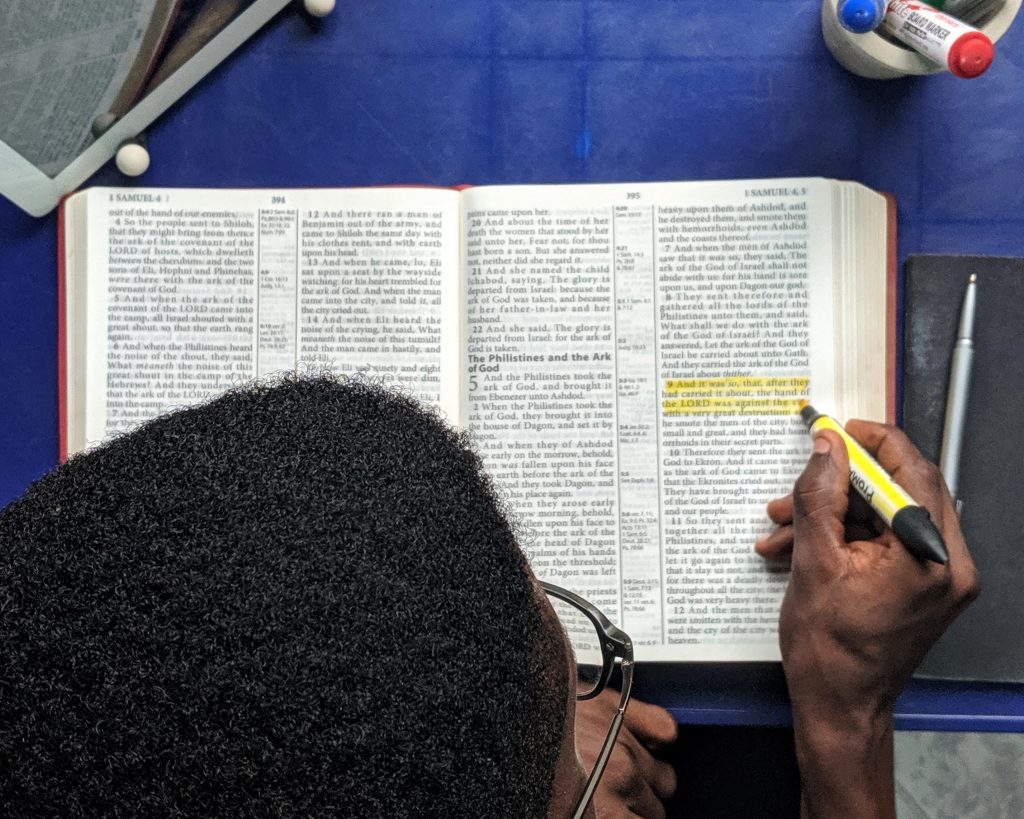
David’s Coronation and Capture of Jerusalem
Study Scripture: 2 Samuel 5:1 – 12
Background Scripture: 2 Samuel 5:1 – 12
Lesson #13 November 28, 2026
Key Verse
And David realized that the LORD had appointed him as king over Israel, and that He had exalted his kingdom for the sake of His people Israel.
2 Samuel 5 : 12
INTRODUCTION
Our Lesson Study is extremely important for us who profess to be believers for it poses in front of us the question of who gets the credit for whatever position we are in.
We have to ask ourselves who we are and the nature of the God that we serve. When we do that we will consider carefully who we are when we occupy a certain position.
We will then be able to ask ourselves what the purpose is for our position.
Those are the question that David faced when he was now at this situation where his anointing by the prophet Samuel came to its fulfilment.
David had been anointed as the future King of Israel by the prophet Samuel while he was a very young man, put aside as not a very important person by his father and his brothers.
But it had taken a very long time for the intention of God to come to fruition for David patiently awaited the death of King Saul and his three sons even though he knew that God had rejected Saul as King (1 Samuel 15) because he disobeyed the Lord. That the obedience was what had led the Lord to direct Samuel to anoint the young boy David as King in a secret anointing which is recorded in 1 Samuel 16:1-13.
David now began a chequered career serving King Saul in the Royal court, marrying one of Saul’s daughter Michel, killing Goliath the extremely large and powerful military champion of the Philistines, which caused King Saul to become murderously jealous for the women greeted the young David at his homecoming after this fight by shouting, “Saul has slain his 1000s, but David his 10,000 (1 Samuel 18:6).David was called on to calm the mental agonies that King Saul was going through by his skilful playing of music, and serving King Saul faithfully in the royal court and being loyal to him despite King Saul’s obvious antagonism which was of course worsened by the fact that his son Jonathan who Saul expected to succeed him to the throne had become David’s firm friend who was quite willing to support David in whatever venture he would go into. This Jonathan did despite the violent opposition of his father King Saul.
Saul obviously knew that David would be the future King instead of his son Jonathan and so Saul attempted for years to kill David. David lived for many wilderness years running away from Saul, living on the run, hiding in caves. He assembled a faithful group of men around him and his family had to come and live with him for shelter. David’s life on the run was very difficult but he remained faithful to Saul and refused to kill Saul when he could have done so.
David had both opportunity and reason to kill Saul but he refused and despite great provocation he mourned the deaths of Saul and his son Jonathan (2 Samuel 1).
It is easy to misread David but his personality is shown by how he dealt with an Amalekite that thought he was doing David a favour and bringing him good news when he reported that he had killed a mortally wounded Saul. This was a lie for Saul had committed suicide but this Amalekite embellished the story to impress David. But David executed this Amalekite for what David considered a heinous offense for that man should not have put out his hand to slay King Saul God’s anointed.
Then David had to deal with a similar case where two sons of Zeruiah killed Abner, the strongman who had propped up the reign of King Saul’s remaining son Ish-bosheth who had survived his father and brothers. Abner was King Saul’s general and he made this son Ishbosheth King of Israel the north part of the promised land (2:8-11),
But Abner was not successful in the fight with Judah and he had defected to David and persuaded the elders of Israel to support David as King of the united nation of Israel.
Ish-bosheth was killed by Rechab and Baanah who thought that David would support them for they had rid David of a rival, and made it easier for David to win over the northern tribes instead of defeating them in battle, But instead of thanking them David rewarded them by ordering their execution and made a public display of them so that everyone would know how he felt about this killing of Ishbosheth.
Abner, the strongman general who had supported the family of Saul who ruled over the northern tribes, had approached David to make a deal to have the kingdom turned over to David but before that agreement could be executed Abner was killed by Joab David’s general who was jealous of him and who wanted revenge for Abner’s killing Joab’s brothers.
And so in this leadership vacuum in the northern tribes of Israel, the elders of Israel had to come to David to persuade him to take over the throne of the Northern kingdom and as well occupy the throne of Judah where he had previously been anointed as the King of Judah. In this alliance ruled by David there would be a United Kingdom of Israel.
David’s personality is shown because there was another potential rival Mephibosheth his friend Jonathan’s son and Saul’s grandson, but he was crippled and so could not pose a threat to David. Because of David’s friendship and promise to Jonathan to look after his family David took Mephibosheth into the royal court and looked after him.
We are therefore now examining the life of of David whose personality made him the ideal candidate for kingship and supported his coronation. David had been crowned king in Hebron, ruling there for 7 years. Now he was approached by the elders of the Northern tribes who wanted to crown him as King, for despite the brilliant leadership of Abner in the resulting conflict which lasted a long time the House of David was getting stronger and stronger and Saul’s house was getting weaker and weaker.
Now that Abner was gone and Ishbosheth had died the Northern tribes had no choice but to come to David.
The elders of the northern tribes knew that David had refused to seize the kingdom when Saul, Abner, or Ishbosheth had been murdered and so now all Israel came to David in peace.
The elders of the Northern kingdom knew that the Philistines were a constant threat and the military campaigns of Saul did not succeed in quelling their attacks. It was only David that seemed to have had a great success in defending the people of Israel. So they came to him.
Now they had long known that David had been anointed to be King of Israel, and they all knew that God had rejected Saul as king of the nation. But they still persisted in supporting the house of Saul and it was only circumstances that made them turn to David. These people knew about what God intended for David but they still insisted on going in their own direction for their own purposes.
It sounds a lot like what we do today!
THE TEXT
2 Samuel 5
Verse 1: The tribe of Judah had already decided to follow David as King, at this time for about seven years now. Now the rest of the tribes of Israel would look to David as King as Ishbosheth was murdered by his own men. Even though David had not wished for this to be the way to unite Israel, he did use murder to reunify the nation.
The diplomatic approach of the elders is quite revealing
Upon meeting with David at Hebron, which was about 19 miles south southeast of Jerusalem and 27 miles northeast of Beersheba there was a very interesting encounter which is very instructive for how professing people of God behave. Notice what they said to David:
“Then all the tribes of Israel came to David at Hebron and spoke, saying, “Indeed we are your own bone and your flesh.
“Also in times past when Saul was king over us, you were the one who led Israel out and brought them in; and the Lord said to you, You shall shepherd my people Israel, and be ruler over Israel”.
Note where this meeting and the covenant and the subsequent and feasting between all the tribes now took place. This was the place where Abraham made his home after he separated from Lot.
He built an altar to the Lord there, according to Genesis 13: 18. And when Sarah died he buried her in the cave of Machpelah at Hebron Genesis 23:1-20
The elders allnowledged that David was not a stranger, or unqualified by the law to be king. They all knew that David was the son of Jesse, and obviously he was of Jewish decent. For significant periods of time while on the run from King Saul, David lived among the Philistines, not becoming one of them entirely, but lived among them. The elders of Israel knew this, but put that away and embraced David as one of their own.
In reality David was from Bethlehem of Judah and so his tribal affiliation was with Judah in the South not Israel in the north, but since they all descended from Abraham, Isaac, and Jacob they had little reason to be divided.
Their petition to David was clear, they wished him to be the one to lead them; to put all past animosities or indifferences aside, to have pity on them, to protect them and guide them into a better future.
Verse 2. In the second appeal by the elders they stressed military leadership for David while in the court of Saul had performed military duties. Part of the motivation for them accepting David was based on the way how he treated them, the rest of Israel, when they were still following Saul. David still made it his mission to protect all of Israel from any foreign invaders that might have given them trouble, even though it was the role of their current king, Saul.
When David was anointed King by Samuel, but not recognized by all of Israel, he did perform duties that showed that he was a good leader, as his actions by slaying Goliath and working in the court of Saul benefited the entire nation and not just Judah. Judah was the only tribe that first and at the present recognized him as king.
David demonstrated that he was faithful in a few things, so that he could be entrusted with more. This kind of service allowed the rest of Israel to except him after some time.
The third appeal of the elders showed they had saved the best for the last. If David wanted to ignore the other appeals he could not ignore this one. They pointed out God decided from years ago that David would be the one to lead His people on Earth.
David was called by God to be the shepherd or ruler of Israel. This would apply at this time.
Note that shepherds have some characteristics that David showed as a leader.
Note that these are characteristics that religious leaders are supposed to have, for they are supposed to be shepherds. Shepherds are supposed to be trustworthy and have a tender care for those in their charge. But sadly they only occasionally behave in that way according to Jeremiah 10: 21, 23:1-4 and 25:34- 38, Ezekiel 34:1-10, and Zechariah 10:3 and 11:4- 17.
Note also that the Good Shepherd is the name given to Jesus who came from the line of David according to Luke 2: 4 and John 10:11.
Do not forget or ignore the fact also these are characteristics or some of the characteristics in general that every Christian should possess.
- A leader must belong to God’s people in heritage and heart.
- A leader must demonstrate capability to lead.
- A leader must have an evident call from God.
The flashiness of today’s society sometimes governs who we look to for guidance and leadership. Over the entire history of God’s people, He did not choose people to lead who were flashy, but those that were ground in foundations that when tested, they held strong and did not fall apart.
Likewise God builds those who He chooses as leaders in a similar fashion.
As His children, we too should choose our leaders carefully under that type of scrutiny.
David would lead and feed the people. Saul wasn’t that kind of king. He was flashy and took resources that should have been used to nurture and protect the people of Israel and used it for his own desires.
Verse 3: Judah already stood with David. The rest of Israel came to David in Hebron, where it was a great assembly (1 Chronicles 12 :23 – 40). This was likely a group led by the elders of Israel.
The armies that were gathered together were large. It is told in related Scriptures that the number landed in about 340 000 soldiers that were present in Hebron.
All the soldiers came to pledge themselves now to David as king. The elders pledged themselves to David as king.
It is noteworthy that the elders called David a “prince”, a word which they had also applied to Saul. They were a apparently pointing out that if David was a prince over Israel, then the covenant keeping LORD was the King over Israel and the King over the Prince of Israel.
David himself was pledging to them that he would protect them and lead them the way a true leader would do.
In this event, the people chose David, after they had once chosen Saul.
God had chosen David, anointed him to do His will, and David accepted that appointment.
God was the witness for both parties.
This was the third time that David was anointed King. His advances were gradual, so that his faith might be tried and that he might gain experience.
Note the procedures as well as the attributes of leadership that we should also look for in leaders in today’s Christian churches.
This is a good model because David’s kingdom typified that of the Messiah, which was to come to its height by degrees.
The elders acted for the tribes and David made a covenant with them before the LORD. Clearly then, the LORD was the divine witness and this was not to be treated as a private arrangement.
It is important to note that this Royal covenant between David and the elders of Israel is not the same as the Davidic covenant in which the Lord promised David an enduring house and a throne. That Davidic covenant is found in 2 Samuel 7.
Verses 4 & 5. The life of David had many similarities to certain aspects of Jesus’ life. David is a type of Christ. In this sense a general account of his reign and age is given in this verse.
It is told to us that David was thirty years old when he began to reign upon the death of Saul. David was anointed by Samuel when he was about 15 years of age, and he did not take the throne until 30.
David spent at least 15 years in preparation for the throne of Israel. As a comparison, at this age, the Levites were first appointed to begin their administration (Num. 4:3).
About that age the promised Son of David entered upon His public ministry (Lu. 3:23). In this time, men came to their full maturity of strength and judgment.
Note this is not to say that age 30 is a universal requirement for ministry or leadership and one should not draw that conclusion for that is not what the Bible is saying.
David reigned in all some forty years and six months, of which seven years and a half was in Hebron and thirty-three years in Jerusalem.
When preparing to do God’s work, the preparation time cannot always be that long. The age of the prophets that were called by God to ministry varied. Samuel was a very young boy when called to be a prophet. Jeremiah was also quite young when called to be a prophet.
We also know that one of the great kings of Judah the young Josiah was called when he was very young.
Some were obviously older when called to be prophet and ministers of God. But note that age is important. With age one expects that experience would be a great teacher. It teaches many things like patience and in that time we are able to grow in knowledge and wisdom to do God’s work.
Hebron is a well known city in the history of Israel. It is known to be the priest’s city. But Jerusalem was to be more so, and to be the holy city.
Verse 6. It is now very important for us to recognize what this Chapter is teaching us when it refers to David as King of Israel. This is a royal anointing which fulfills what God intended when Samuel anointed David in the distant past.
This is critically important for we must remember that the figure of David is right behind everything about Christianity. When the Lord Jesus is born the angel Gabriel announced the birth of the Lord Jesus Christ in Luke 1 commenting
“He will be great, he will be called the son of the highest, and the Lord God will give him the throne of his father, David. And he will reign over the house of Jacob forever and of his kingdom there shall be no end”.
In addition, in the book of Revelation note carefully what Jesus calls Himself and what He tells us about Himself:
“ I am Alpha and Omega, the beginning and the end, the first and the last.
Blessed are they that that do his commandments that they may have right to the tree of life, and may enter in through through the gates into the city.
For without our dogs, and sorcerers, and Whoremongers,, and murderers and idolaters and whosoever loveth and maketh a lie
I Jesus have sent mine angel to testify unto you these things in the churches.
I am the root and the offspring of David, and the bright and morning star”.
It is therefore very important for us to look at the figure of David which is behind everything in Christianity. We see through David the person and the covenant that God made with him and this is of extreme significance for us. It is through this royal anointing that David comes to the throne of Israel and that event is of great importance for the history of the world.
It is also extremely important to look at what this Scripture is saying about what David did when he went out with his men to Jerusalem which was a small Canaanite city in the centre of Israel.
Some 400 years after God commanded Israel to take the whole land, this city was still in Canaanite hands. This is the background of the land. David wanted this place to be the military and national capital of Israel and he built his house with the help of Hiram on Zion which is the area right next to the now existing major portion of Jerusalem. David will live in the stronghold of Zion. It is in the stronghold of Zion where the Kings lived and carried out the ministry given to them.
So the choice of Jerusalem as a capital is of extreme importance because the Word of God tells us that about that city and about the events in the Bible which ultimately will gather around the city of Jerusalem.
This is a city where God apparently instructed that sacrifices should be made for the sustenance of the nation of Israel. It is where there would be beginning of the Golden Age of the history of Israel when David and Solomon ruled.
It is where the extraordinary sacrifice of the suffering and the death of the Lord and Saviour Jesus Christ was made.
But let us not forget that David would likely be thinking that Abraham had offered up Isaac at Mount Moriah which is right there in Jerusalem. So David would think that this is an ideal place to have his kingdom but when he comes to it. But the Jebusites hold this citadel and thought that the city was impregnable. He badly needed this city to be under the control of Israel.
Note also the extended meaning of the name Jerusalem, for the name was used to refer to the New Jerusalem, which is the city coming down from heaven.
This linking of David and Jerusalem stresses again the importance of David and Jerusalem
David’s thought is that once he is crowned he should turns to deal with the citadel Jerusalem. This fortified citadel is controlled by a Canaanite people, who really should not be allowed to live within Israel and particularly right in that city. For aliens to occupy the stronghold in the heart of the country would obviously have a great effect on the intensely patriotic and brave David who would not accept that such a thing was possible
Let us look again at the theological importance of this citadel. In the early days this city Jerusalem was called Salem, the place of which Melchizedec was king.
We should all remember that the Book of Hebrews stresses that the Lord Jesus is a High Priest after the order of Melchizedek and He appears in Genesis 14 and in 1 verse in Psalm 110 written by David, “Thou art a priest forever after the order of Melchizedek”.
We note that when Melchizedek met Abram, Melchizedek is called King of Salem and Salem is the old name for Jerusalem. One writer looks into the mind of David and comments on the connection between Melchizedek, Jerusalem and the Lord Jesus Christ:
“So Melchizedek had a priesthood of God Most High, in Salem, or in Salem inclusive evidently of the stronghold of Zion. So when David conquered Jerusalem, the priesthood that belonged to Melchizedek, evidently was regarded as now belonging to him. And so, in the case of David we have one who is both king and the inheritor of the priesthood of the Most High God.
Now, the Lord Jesus, we know, is a king and a priest High Priest after the order of Melchizedek, but also one who has the throne of David.
And so, evidently the figure of the King/ priest is the result, ultimately, at least in David’s thinking, of the taking of the old kingdom of Salem, where the high priesthood of Melchizedek existed.
So isn’t it interesting that this little event has such significance for the ministry of the Lord Jesus and the 7th, particularly, of the 7th chapter of the Epistle to the Hebrews?”
Jerusalem, as seems probable from Ps. 76:2, was famous in Abraham’s time. In Joshua’s time he found it the chief city of the south part of Canaan.
It fell to Benjamin’s lot (Jos.18:28), but joined close to Judah’s (Jos. 15:8). The children of Judah had taken it (Jdg.1:8), but the children of Benjamin suffered the Jebusites to dwell among them (Jdg.1:21), and they grew into a large nation that they became the dominant group, and so it became the city of Jebusites (Jdg. 19:11).
The very first exploit David did after he was anointed king over all Israel was to gain Jerusalem out of the hand of the Jebusites, which had once belonged to Benjamin.
He could not really attempt this until the tribe of Benjamin was under his rule, since before this they were pledged to the house of Saul.
The nations around were clearly paying attention to the proceedings in Israel. The Jebusites perhaps knew that upon David’s coronation and securement of power, he would look to take all the lands that were Israel unto himself, as promised by God.
Because of its location, Jerusalem was an easily defended city. It was strongly fortified and deemed so impregnable that the blind and lame were sent to man the battlements, in derisive mockery of the Hebrew king’s attack. The depth and the steepness of the valley of Gihon, and the lofty walls of the ancient Canaanite fortress was legendary. This made the Jebusites overconfident and quick to mock David and his troops.
The background behind this was from a previous encounter with David. Note:
In the protection of their gods, which David, in contempt, had called the blind and the lame, for they have eyes and see not, feet and walk not. “But,” say they, “these are the guardians of our city, and except thou take these away (which thou canst never do) thou canst not come in hither.” Some think they were constellated images of brass set up in the recess of the fort, and entrusted with the custody of the place. They called their idols their Mauzzim, or strong-holds (Dan. 11:38) and as such relied on them. The name of the Lord is our strong tower, and his arm is strong, his eyes are piercing… In the strength of their fortifications, which they thought were made so impregnable by nature or art, or both, that the blind and the lame were sufficient to defend them against the most powerful assailant. The strong-hold of Zion they especially depended on, as that which could not be forced. Probably they set blind and lame people, invalids or maimed soldiers, to make their appearance upon the walls, in scorn of David and his men, judging them an equal match for him. Though there remain but wounded men among them, yet they should serve to beat back the besiegers. Compare Jer. 37:10. Note, The enemies of God’s people are often very confident of their own strength and most secure when their day to fall draws nigh.
[Matthew Henry]
Verse 7. Despite the difficulty, David and his men took the city. Whatever the exact tactics that was used, David and his men persisted through difficult circumstances to defeat an overconfident enemy.
The pride and insolence demonstrated by the Jebusites seemed to have animated David instead of giving him pause to the attack.
Note a side lesson for believers today undergoing struggles,
On the same principle, King Jesus conquers old strongholds when he becomes king over our lives. Territory that should have been given to Him long ago is now conquered. “I want to say to you in the name of the Lord Jesus that there is no habit that has gone so deep but that the power of the blood of Jesus can go deeper, and there is no entrenchment of sin that has gone so far but the power of the risen Lord, by His Holy Spirit, can go further.” [Redpath]
Verse 8. When David and his 600 men approach the citadel of Zion to smite the Jebusites who considered their city impregnable David directed the assaults through what is translated as the “water shaft” which may have been a channel used to bring water from the spring into the stronghold of Zion. 1 Chronicles 11:6 tells us that David challenged his men to go up the shaft and lead the conquest of the city and we are told the fact that Joab led the successful attack through the “water shaft” and became undisputed chief and army commander.
One scholar describes the language in this Text.
“The “lame and blind” language repeats the terms used in the defenders taunts. The BSB
main text describes them as despised by David, while its footnote permits “enemies of David”. The compressed Hebrew leaves the precise force and referent uncertain. It may continue the Jebusites’ boast about supposed defenders, or it may derisively characterize the Jebusite enemy. We can say confidently that the words belong to the conflict with the Jebusites; we can not use them to establish David’s attitude toward every disabled person.
The proverb about not entering the house or palace records a saying generated by the battle. It is not presented as a mosaic statue and must not be used to demean physical weakness. David’s later treatment of lame Mephibosheth directly demonstrate that the saying did not function as a permanent ban on disabled people from David’s presence”.
Verses 9-10. David now lives in the captured fortress or stronghold and called it the City of David David fortified it and apparently the Hebrew indicates that he made supporting terraces, apparently a filled or terraced structure associated with the city’s defences. Clearly therefore David occupied himself in a major effort to improve and expand the city of Jerusalem.
We are told in 1 Kings 9: 15 that King Solomon conscripted a lot of labour to build the “Millo” which probably involved additional construction or reconstruction work.
But we are told that David grew stronger and stronger and the LORD the God of Hosts were with him. One writer therefore comments:
“Now Saul and his sons are dead, and David is well on his way to becoming the greatest king in Israel’s history.
In Verse 10 “for Yahweh, the God of armies, was with him”.
This is the reason for David’s success—not its personal ability or courage—not luck. This is the theme that we have heard before (1 Samuel 18: 12, 14:2; 2 Samuel 3:1”
The divine presence sustained David through his many persecutions and through the years of wars between Judah and the other tribes and rival houses.
The presence of God did not make David self-sufficient.
Every success he had was dependent on the Lord.
Verses 11- 12. Hiram the king of tyre responded to David’s successes and everything that had happened. He knew that David was now a great success and the upcoming nation of Israel was something to be reckoned with. So he supplied David with envoys, valuable cedar woods, carpenters and stonemasons so that David’s palace would be magnificent. This meant that David’s palace would show stability and the foreign recognition that had eluded David. David was no longer a fugitive living in caves and wilderness strongholds.
David knew the reason for his success. He knew that the Lord of the covenant had established him and exalted his kingdom for the sake of Israel. David had not been exalted for his personal sake. David the king existed for the people that God had entrusted to him.
This will now prepare David for the Davidic kingdom that will be presented and promised in Chapter 7. That covenant promise will promise David a royal house, many children and descendants, a throne and a kingdom.
But for now God will establish David personally as king over the united nation of Israel.
CONCLUSION
What lessons can we learn from this Lesson Study? There are many.
It is clear as one writer says,
-That position, influence and resources are trusts from God not declarations that the recipient is more valuable than others.
-Authority must serve the people for whose good it was given
-The King of Israel must be a shepherd for the people of God. The royal authority given is for protection but it also involves accountability because Israel remains the possession of the Lord.
– The lesson highlights God’s faithfulness in fulfilling His promises to the saints.
– The word of God will survive. David is anointed as king over all Israel after a long delay and after the many years had elapsed from Samuel’s anointing.
-There is opposition and long delays but the Word of God will come to pass. It came to pass and David was established as the chosen ruler.
So we know that delay never nullifies the choice of God.
- The role of those appointed is quite clear and it is emphasized that seeking God’s wisdom is most important for believers are warned not to lean on their own understanding but to trust God’s guidance in all decisions.
- David has growing power and success and he attributes that directly to God’s presence with him. He looks at the establishment of the city of David as representing God’s blessing. This looks forward to or foreshadows Jerusalem’s future significance as the spiritual centre not only of Israel but of the entire world.
- Note carefully that David gets to the throne because he is appointed by God and therefore he knows that this appointment does not excuse human violence. So David does not approve of the murders committed against the house of Saul. David reaches the throne and God fulfilled His word without requiring lawless shortcuts, stresses one commentator.
- Jerusalem becomes the centre of royalty now that Zion has been captured. Zion gives the united Kingdom a fortified capital and prepares for Jerusalem’s later sanctuary and its significance for the Kingdom of God.
- One cannot stress too much that the presence of the Lord is the cause for David’s greatness. He grows stronger because the Lord God of hosts, the Lord of the armies, Yahweh, is with him. He does not succeed because of political ability. David therefore knows he is not independent of God.
- It is also made clear that David is established and his kingdom exalted for the sake of Israel. Israel is not exalted for the sake of royal self-glory.
- Of course it is made even clearer in the section of Chapter 5 outside of our Study Text that victory requires present dependence for God uses different strategies against the same enemy in the same region.
So what can we advise?
Look deeply at yourself and your life experiences. Know where you came from and what happened to you before you became spiritually mature.
Do not think that your story is your story for it is the story of God for God wrote it. You did not write it. As a matter of fact you could not have written it.
What has happened is that you found yourself in the story being carried along and caught up as one writer says in the artistry of God. So you cannot take credit for who you are or for where you are.
So look at yourself and look at the chapters in your life story that you did not plan, to the connections that you could never have made on your own, and the passions you could not have imagined you would have.
So credit God. Credit the LORD.
Never forget at the same time that God raised you up for the sake of others. When David was raised up Chapter 5 tells us that he inquired two times of the Lord when he faced a powerful and destructive enemy. The two situations David faced seemed to be identical but God answered David differently each time. So note the last lesson that chapter 5 gives us.
One writer comments:
“If the Lord gives us a foolproof formula that worked every time, we’d depend on the formula and not on him; our inquiries would become cursory, and our relationships with him would molder.
Might we even take credit for figuring out the formula? Thank God that in many cases we don’t know what to do! For if we did, we wouldn’t turn to him”.
So do not exploit your position for YOUR own sakes.
“Do nothing from selfish ambition or deceit, but in humility count others more significant than yourselves”. Philippians 2:3.
The LORD raises us up for the sake of others. Therefore credit the LORD and ask the LORD”.