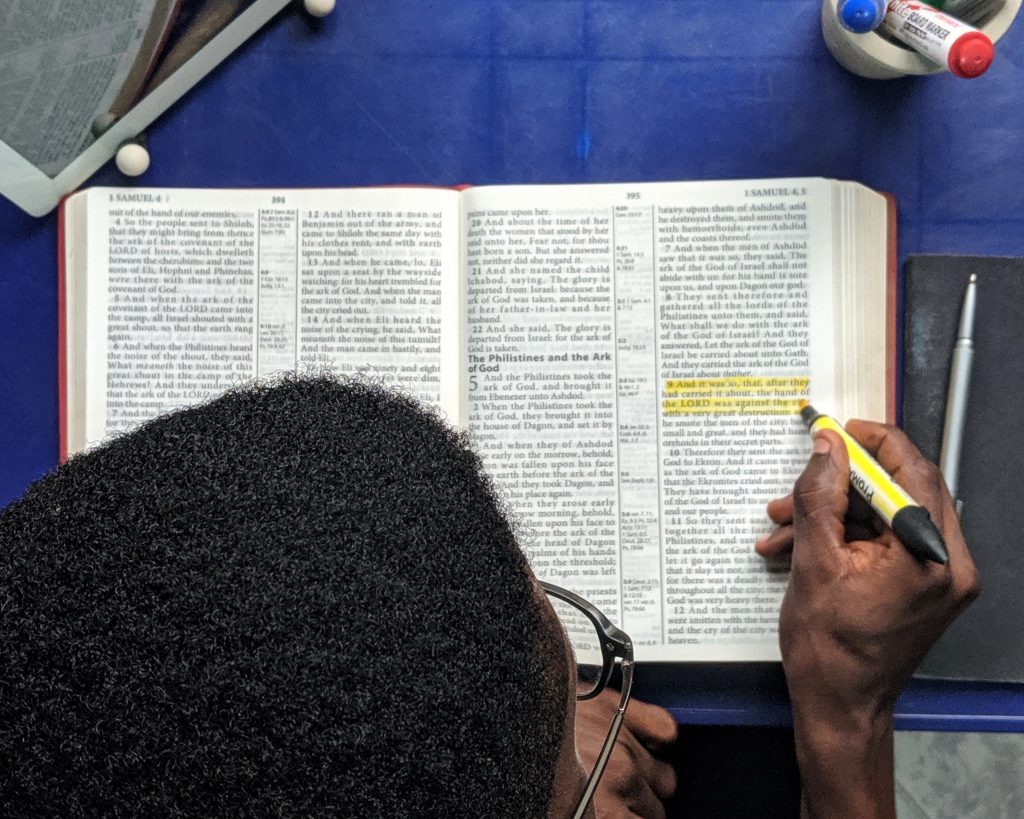
GOD’S COMPLICATED PROMISE
The Conquest of Northern Canaan and the God Who Keeps His Word
Study Scripture: Joshua 11:6–9, 16–23
Background Scripture: Joshua 6; 8:26; 10:28–43; 11:1–23; Deuteronomy 7:1–26
Devotional Reading: Psalm 108
Lesson 3 · September 19, 2026
“For it was of the LORD to harden their hearts, that they should come against Israel in battle, that he might destroy them utterly, and that they might have no favour, but that he might destroy them, as the LORD commanded Moses.”
Joshua 11:20, King James Version[1]
CONTENTS
INTRODUCTION……………………………………………………………………………………………… 3
HISTORICAL BACKGROUND: THE LONG PATIENCE OF GOD……… 3
THE WORD BEFORE THE BATTLE (JOSHUA 11:6–9)……………………………. 4
THE WHOLE LAND, THE HARDENED HEART (JOSHUA 11:16–23)….. 7
MAJOR THEMES……………………………………………………………………………………………….. 8
PRACTICAL APPLICATION…………………………………………………………………………… 9
CONCLUSION…………………………………………………………………………………………………. 10
INTRODUCTION
Few chapters in the book of Joshua ask harder questions of a modern reader than chapter eleven. It is a chapter of war — of a coalition of kings gathered at the waters of Merom, and of the completeness with which the Lord dealt with that army once battle was joined. Buried inside that hard history, though, is a warning meant for every generation of believers, our own included: the promises of God are not complicated, but the people who receive them very often make them so.
That is the burden of this lesson. The Israelites who finished the conquest of Canaan under Joshua were not the generation that had left Egypt. Their parents had watched the sea part and had eaten manna morning after morning for forty years, and still they had tempted God in the wilderness and died there, never entering the land He had sworn to give them. The generation that took Canaan under Joshua was largely a generation of young men and women not yet twenty years old, who had grown up watching their elders forfeit a promise through simple unbelief. They knew, because they had lived it, what happens when the people of God decide they know better than His instructions.
That is the lesson Paul had in mind centuries later, when he told the Corinthian church that the history of Israel had happened to them “for ensamples,” written down “for our admonition, upon whom the ends of the world are come” (1 Corinthians 10:11). The same warning stands over every congregation that reads this chapter today. Professing believers, and even whole nations that call themselves Christian, still drift from the plain commandments of God and still wonder afterward why they find themselves in trouble from which there seems to be no way out. Joshua offers a different pattern: a man who did exactly what God told him to do, and who trusted God for a victory he could not have won on his own.
Joshua 11 opens near the far edge of that pattern. Israel had already taken Jericho and Ai, the two cities that had barred the way into Canaan for centuries. A southern coalition had attacked Gibeon, and the Lord had given Joshua a stunning victory over the kings and cities of the south. When word of that defeat reached Hazor, the leading power of northern Canaan, its king assembled a coalition larger and better equipped than anything Israel had yet faced. This was the last great test of the conquest, and it is where our study opens.
HISTORICAL BACKGROUND: THE LONG PATIENCE OF GOD
Before the battle at Merom can be understood, we need to understand why it took so long to arrive. The land of Canaan had not simply been sitting empty, waiting for Israel to claim it. Four hundred years earlier, God had told Abraham that his descendants would be strangers in a foreign land, and that they would not receive Canaan as an inheritance until “the iniquity of the Amorites” had reached its full measure (Genesis 15:16). That delay was not an oversight. It was mercy. God gave the nations of Canaan four centuries in which they might have repented — four centuries in which the Amorites, the Hittites, the Perizzites, and every other tribe named in this chapter could have turned from their idolatry and been spared, just as Rahab of Jericho was spared when she believed the report of what the Lord had done and hid the spies of Israel in her home.
Rahab is proof that the judgment on Canaan was never a judgment of bloodline. She had heard the same reports that hardened the hearts of her neighbors, and she answered them with faith instead of defiance. The writer of Hebrews later placed her name in the great roll call of the faithful (Hebrews 11:31), not because she deserved special favor, but because she believed when everyone around her refused to. The Gibeonites, whom we meet in Joshua 9, reached the same shelter by a more roundabout road. They disguised themselves as travelers from a distant country and tricked Israel into a covenant of protection — a covenant Israel entered into without first asking counsel of the Lord (Joshua 9:14–15). God was not pleased with how that treaty was made, yet He honored it once it was made, and the Gibeonites lived. Two very different responses, built on two very different amounts of information, and in both cases faith — however imperfect — was met with mercy.
What Hazor and the northern kings show us instead is what happens when four hundred years of patience meet a heart that will not soften. They had heard of the God of Israel, as Rahab had, and as the Gibeonites had, and they chose defiance. The day of forbearance was drawing to a close. This is not a small point for a modern reader to sit with. We are often comfortable assuming that the mercy of God has no limit in time, that obedience may be put off indefinitely because grace will always be there tomorrow. Joshua 11 does not deny the mercy of God — it insists that mercy and justice are not opposites in His character but companions, and that the same God who waits four hundred years before He acts will, in the end, act completely.
By the time Joshua 11 opens, Israel had already renewed its covenant after the failure at Ai and seen that city finally fall (Joshua 8). A coalition of five southern kings had attacked Gibeon for making peace with Israel, and the Lord had answered with one of the most astonishing episodes in the entire conquest: the sun stood still over Gibeon so that Israel might finish the battle in the daylight (Joshua 10:12–15). Word of these defeats traveled north, and it reached Jabin, king of Hazor, the leading power of the region. Jabin sent to Jobab king of Madon, to the kings of Shimron and Achshaph, and to the Canaanite, Amorite, Hittite, Perizzite, Jebusite, and Hivite peoples scattered through the hill country and the plains. “They went out, they and all their hosts with them, much people, even as the sand that is upon the sea shore in multitude, with horses and chariots very many” (Joshua 11:4). This was no longer a local skirmish. It was the largest, best-equipped force Israel had yet faced in the conquest of Canaan, and it gathered at the waters of Merom for one purpose — to stop Israel before Israel could take the north.
THE WORD BEFORE THE BATTLE (JOSHUA 11:6–9)
“And the LORD said unto Joshua, Be not afraid because of them: for to morrow about this time will I deliver them up all slain before Israel: thou shalt hough their horses, and burn their chariots with fire.” — Joshua 11:6
Before Joshua ever moved against that coalition, the Lord had already spoken. The command came before the danger had even been faced, which is characteristic of how God deals with His people throughout Scripture. He does not wait until fear has taken root before He speaks comfort; He speaks first, so that fear has less ground to grow in. Israel had no comparable force of chariots. The enemy possessed every apparent military advantage — numbers, horses, fortified alliances, and a coordinated strategy — and Israel’s decisive advantage was none of these things. It was the word of the Lord.
The instruction to hamstring the horses and burn the chariots was not incidental. Chariots were the most feared weapon of the ancient Near East, and a coalition this size represented technology Israel could not match and, more importantly, was never meant to rely on. Centuries later Moses would restrict the kings of Israel from multiplying horses to themselves (Deuteronomy 17:16), and the psalmist would write, “Some trust in chariots, and some in horses: but we will remember the name of the LORD our God” (Psalm 20:7). The lesson Israel was meant to carry away from Merom was not simply that God could win a battle. It was that Israel must never transfer its trust to a military power it had defeated. The temptation to keep the enemy’s weapons — to hold on to a little of the world’s method just in case God’s method should fail — was removed before it could take root. God did not want Joshua building an arsenal out of the wreckage of Canaan’s army; He wanted Israel to have confidence in the Lord alone.
That same temptation has not gone anywhere. Every generation of believers finds some version of the chariot and horse — some tool of self-sufficiency it is tempted to trust once God has already secured the victory. Modern readers who feel anxious about the pace of technological change, or about threats that once seemed unimaginable, might take the same lesson Israel took at Merom: the Lord who dismantled the greatest military technology of the ancient world is not overmatched by anything the modern world can produce. Scripture assures believers that God will bring history to its appointed close in His own way and His own time, and that assurance is meant to steady the heart, not to excuse carelessness.
With the word of the Lord already secured, Joshua moved with speed and surprise. “So Joshua came, and all the people of war with him, against them by the waters of Merom suddenly; and they fell upon them” (Joshua 11:7). The armies of Israel had learned, from Jericho onward, that the size and sophistication of an enemy is never the deciding factor when the Lord fights for His people. “And the LORD delivered them into the hand of Israel, who smote them, and chased them unto great Zidon, and unto Misrephothmaim, and unto the valley of Mizpeh eastward; and they smote them, until they left them none remaining” (Joshua 11:8). Israel obeyed exactly what had been commanded: “Joshua did unto them as the LORD bade him: he houghed their horses, and burnt their chariots with fire” (Joshua 11:9). No lightning fell this time, and the sun did not stand still as it had at Gibeon. God had already equipped His people, and obedience, not another miracle, carried the day.
One detail from the ancient world adds an unexpected footnote to this rout. Later historians recorded a tradition that some of the fleeing Canaanites made their way across North Africa to the region of ancient Tingis, near modern Tangier, where they were said to have set up two pillars bearing a Phoenician inscription remembering their flight — that they were the ones who had fled from the face of Joshua, the son of Nun.[2] Whatever its precise historical value, the tradition captures something true about how thoroughly this defeat was remembered: centuries after Merom, Joshua’s name was still spoken with dread on a foreign coastline.
HAZOR AND THE WEIGHT OF COMPLETE OBEDIENCE (JOSHUA 11:10–15)
From Merom, Joshua turned back to deal with the source of the coalition. “And Joshua at that time turned back, and took Hazor, and smote the king thereof with the sword: for Hazor beforetime was the head of all those kingdoms” (Joshua 11:10). Hazor was not simply one city among many. Archaeological study of the site has confirmed a heavily fortified city with extensive international trade contacts, consistent with its reputation as the leading power of the region during this period.[3] It was the political and military center that had organized the entire northern resistance, and its fall broke the back of that resistance completely. “They smote all the souls that were therein with the edge of the sword, utterly destroying them: there was not any left to breathe: and he burnt Hazor with fire” (Joshua 11:11). Of all the northern cities taken in this campaign, only Hazor was burned — the third and final city, after Jericho and Ai, to be destroyed by fire in the whole conquest. Every other city Israel captured, it inhabited rather than leveled, exactly as God had promised Moses His people would live in cities they had not built (Deuteronomy 6:10–11).
Before sympathy for the Canaanites gets ahead of the text, Scripture is careful to record that judgment did not fall on people who had no opportunity to respond. They knew what had happened at Jericho and at the Jordan (Joshua 2:9–11; 9:24–25), and they could have chosen the path Rahab chose, or the path the Gibeonites chose, or the path the men of Shechem would later choose. Instead they hardened themselves. This is where the theology of this chapter widens beyond one ancient campaign into something Scripture teaches consistently: individuals, rulers, communities, and whole societies can be guilty before God, and God has judged corporate wickedness before — at Sodom and Gomorrah (Genesis 19), in the flood that covered the whole earth (Genesis 7), among the Midianites (Numbers 31), and later within the northern kingdom of Israel itself, which was carried into exile for the very idolatry it had once been sent to remove from Canaan (2 Kings 17). Scripture does not tell us the eternal destiny of any one Canaanite; it does tell us plainly that their earthly life was taken, and that “the Judge of all the earth” does what is right (Genesis 18:25). God is just, merciful, and righteous, and whatever we cannot fully see behind the judgments of history, we can trust the character of the One who executes them.
The chapter also draws attention to the chain of obedience that ran through the entire campaign. “As the LORD commanded Moses his servant, so did Moses command Joshua, and so did Joshua; he left nothing undone of all that the LORD commanded Moses” (Joshua 11:15). This single verse is the theological spine of the whole chapter. God commanded Moses, Moses commanded Joshua, and Joshua carried the mission through to its completion without leaving anything undone, not because the enemy was small, but because obedience to God does not calculate its cost against the size of the opposition. That kind of obedience — complete, unhurried by fear, indifferent to how the odds appear — is precisely what this lesson asks of every believer who reads it centuries later.
THE WHOLE LAND, THE HARDENED HEART (JOSHUA 11:16–23)
The closing verses of the chapter step back to survey everything Joshua’s campaign had accomplished. “So Joshua took all that land, the hills, and all the south country, and all the land of Goshen, and the valley, and the plain, and the mountain of Israel, and the valley of the same… and all their kings he took, and smote them, and slew them” (Joshua 11:16–17). This was no brief campaign. “Joshua made war a long time with all those kings” (Joshua 11:18) — scholars estimate the whole conquest spanned somewhere between five and seven years, a figure drawn from comparing Caleb’s age when the spies were first sent out (Joshua 14:7) with his age when the land was finally divided (Joshua 14:10). The promises of God do not exempt His people from long obedience. They guarantee the outcome; they do not shorten the road.
“For it was of the LORD to harden their hearts, that they should come against Israel in battle, that he might destroy them utterly, and that they might have no favour, but that he might destroy them, as the LORD commanded Moses.” — Joshua 11:20
Verse nineteen makes an observation easy to miss: “There was not a city that made peace with the children of Israel, save the Hivites the inhabitants of Gibeon: all other they took in battle.” Only one city chose the path of peace, and every other city chose resistance — not because peace was unavailable, but because their hearts, hardened by generations of idolatry, would not bend toward it. This brings us to the key verse of the lesson.
This is one of the harder doctrines in Scripture, and it deserves to be handled honestly rather than softened. The hardening described here follows the pattern already established in the hardening of Pharaoh’s heart in Egypt (Exodus 4:21) — a judicial hardening, in the phrase of the old commentator John Trapp, that God visits upon a heart already given over to sin, sealing a rebellion the person has already chosen rather than manufacturing one that was not there.[4] Paul describes the same principle in Romans, warning that when people persist in dishonoring God, He “gave them up” to the desires their own hearts had already chosen (Romans 1:24–28). God’s hardening is never the cause of anyone’s wickedness; it is the confirmation of a wickedness already settled and unrepented. And this hardening was never unique to Canaan — Scripture is clear that God deals the same way with any heart that has grown hard against Him, in any generation, just as His grace can soften any heart that turns toward Him.
The chapter closes with two further notes that stand just outside our printed Study Scripture but complete the picture of Joshua’s obedience. Joshua went on to destroy the Anakim, a people of unusual size and strength whose reputation alone had once terrified the ten faithless spies a generation earlier (Numbers 13:33), leaving none of them in the territory of Israel except a remnant that fled to Gaza, Gath, and Ashdod (Joshua 11:21–22). And finally: “So Joshua took the whole land, according to all that the LORD said unto Moses; and Joshua gave it for an inheritance unto Israel according to their divisions by their tribes. And the land rested from war” (Joshua 11:23). Taking “the whole land” did not mean every last village had been physically occupied — that slower work of settling individual towns was left to each tribe — but it meant that Canaanite power was broken, its dominion overthrown, and Israel’s claim to the land secured on nothing but the strength of God’s own pledge. And the land had rest.
That rest, precious as it was, was not the final rest God had in mind for His people. The writer of Hebrews tells us plainly that Joshua’s rest was not the true rest promised to the people of God — “there remaineth therefore a rest to the people of God” still to come, secured not by Joshua but by the greater obedience of Jesus Christ (Hebrews 4:8–9). Everything Joshua accomplished through faithful, costly obedience was a shadow pointing toward a Savior who would finish an even greater work — leaving nothing undone, just as Joshua had, but doing it once for all.
MAJOR THEMES
God’s sovereignty and human obedience are not competitors. One classic reflection on this chapter draws out four things Joshua’s obedience displays: his subjection to the divine will as one under authority who must do as he is bidden; his self-denial in setting aside his own inclination to comply with God’s command; his confidence in the power of God, which allowed him to despise the chariots and horses that others trusted in (Psalm 20:7; 33:17); and his care to keep that same confidence alive in the people, by taking from them what they would have been tempted to trust too much — cutting off, as it were, a right hand they might have leaned on instead of God.[5] Joshua’s obedience never diminished God’s sovereignty, and God’s sovereignty never made Joshua’s obedience unnecessary. The Lord promised the victory; Joshua still had to march to Merom, fight with strategy and courage, and hamstring the horses with his own hands. Sovereignty and obedience worked together throughout the entire campaign, and they still do.
Trust belongs to the Lord, not to the tools of the age. Every generation is handed its own version of the chariot and the horse — some visible source of strength that looks more dependable, in the moment, than the promises of God. Israel was told, plainly and repeatedly, not to transfer its confidence to a power it had already watched God defeat. That warning is not a relic of ancient warfare. It is a standing instruction to any believer inclined to measure security by resources, technology, or strategy rather than by the character of the Lord who has already proven Himself faithful.
Guilt, like grace, can be corporate. Joshua 11 will not let a modern reader flatten sin into a purely private matter. Individuals sin, but so do families, cities, and nations, and God has judged corporate wickedness openly and repeatedly across Scripture — the days of Noah, the cities of the plain, Midian, and later the northern kingdom of Israel, sent into exile for exactly the idolatry Canaan had once been judged for. This is sobering for any nation, including one that names the name of Christ, that begins to drift from the plain commandments of God while assuming His mercy has no end.
Obedience that leaves nothing undone is costly, and it is worth it. Twice this chapter tells us that Joshua left nothing undone of all that the Lord commanded (Joshua 11:15, echoed again at 11:20). That kind of thoroughness took years, not days, and it asked more of Joshua than a single dramatic act of courage. It asked for sustained, unglamorous faithfulness across a campaign most of us would have been tempted to declare finished long before it actually was.
PRACTICAL APPLICATION
This chapter puts a short set of questions to every reader, and they are worth sitting with rather than rushing past. What battle in your life right now feels too large to win — a conflict, a diagnosis, a financial strain, a besetting sin that keeps returning like an army that will not stay defeated? Are you willing to trust God’s way of fighting it, even when that way looks nothing like the strategy the world would recommend? And if the battle has gone on longer than you expected, are you growing weary in a fight God never promised would be short — and if so, what is feeding that fatigue?
The honest answer for most believers is that we would rather have Merom settled in a single afternoon than in five to seven years. But the pattern of Scripture is patience matched to a promise, not a promise that erases the need for patience. God is sovereign over every battle His people face, and that sovereignty is meant to give confidence to move forward rather than an excuse to sit still. Obedience — real, costly, sustained obedience — is still the path to the victory God has already secured, and perseverance through a long fight is not a sign that God has withdrawn His hand; it is very often the shape His faithfulness takes.
It is worth adding a word of caution here, because this chapter is easy to misapply. The fact that God gave the Canaanites over to hardness after generations of unrepented sin does not mean every hardship a believer meets is evidence of personal sin. Scripture itself corrects that assumption in the book of Job, written precisely to show that God sometimes allows difficulty not to punish His children but to refine them and reveal to them what they could not otherwise see about their own hearts. When the Canaanites of our own lives — old patterns, old fears, old temptations — seem to gain the upper hand again after we thought we had left them behind, that is not proof that God has abandoned us. He does not withdraw His help from His people because of their failures; He remains present, nurturing, disciplining, and shaping them into the children He intends them to become.
CONCLUSION
God has already dealt sin its decisive blow. Scripture assures us that Satan himself will one day be bound completely and cast into the bottomless pit (Revelation 20:1–3), and that same God who sent Joshua into battle at Merom with the words, “Be not afraid because of them,” sends His people out today with no smaller an assurance. The Israelites who once refused to enter Canaan because they feared the Anakim never understood, in that moment, that God would furnish exactly the strength needed to meet that very fear at last. That is the pattern this whole chapter leaves with us: God manages the battles of His people, He asks them to submit to how He orders those battles rather than insisting on fighting the hardest enemy first, and He proportions every trial to the strength He has already supplied for it.
Man’s strength, by contrast, is a breath — here today and gone as quickly as it came. The wisdom of this chapter is not to build confidence in what is temporary but to rest in what is not. The conquest under Joshua did not require every last village to be personally occupied before it could be called complete; the power of Canaan was broken, its dominion overthrown, and Israel possessed the land on nothing sturdier than the pledge of the Lord who had promised it. That same pledge stands behind every believer who has come to God in salvation, received a new heart, and been given the Holy Spirit. Old enemies may from time to time regain a foothold. That should not happen, and it should not be permitted to continue — but when it does, it is never proof that God has withdrawn His help. He is still present, still faithful, still shaping His people into what He intends them to be. The old hymn puts it best: “Glorious things of thee are spoken, Zion, city of our God.” He whose word cannot be broken has called His people His own, and there is nothing complicated about that promise — only the patience it takes to walk it out, one long, obedie
[1]Scripture quotations in this exposition follow the King James Version throughout, consistent with this series’ translation standard. The source manuscript rendered several verses (notably Joshua 11:6 and 11:20) in modern paraphrase rather than the KJV; those quotations have been corrected here to the Authorized Version.
[2]This tradition is recorded in Adam Clarke’s Commentary on the Holy Bible, citing the Byzantine historian Procopius, History of the Vandal Wars, book 2, chapter 10. The source manuscript attributed the quotation simply to “Clark.”
[3]See Richard S. Hess, Joshua: An Introduction and Commentary, Tyndale Old Testament Commentaries (Downers Grove, IL: IVP Academic, 1996). The exact wording of the source manuscript’s quotation could not be verified and is represented here in paraphrase.
[4]The description of divine hardening as “judicial hardening” is commonly associated with the seventeenth-century commentator John Trapp. The source manuscript’s wording could not be independently verified and is represented here in paraphrase.