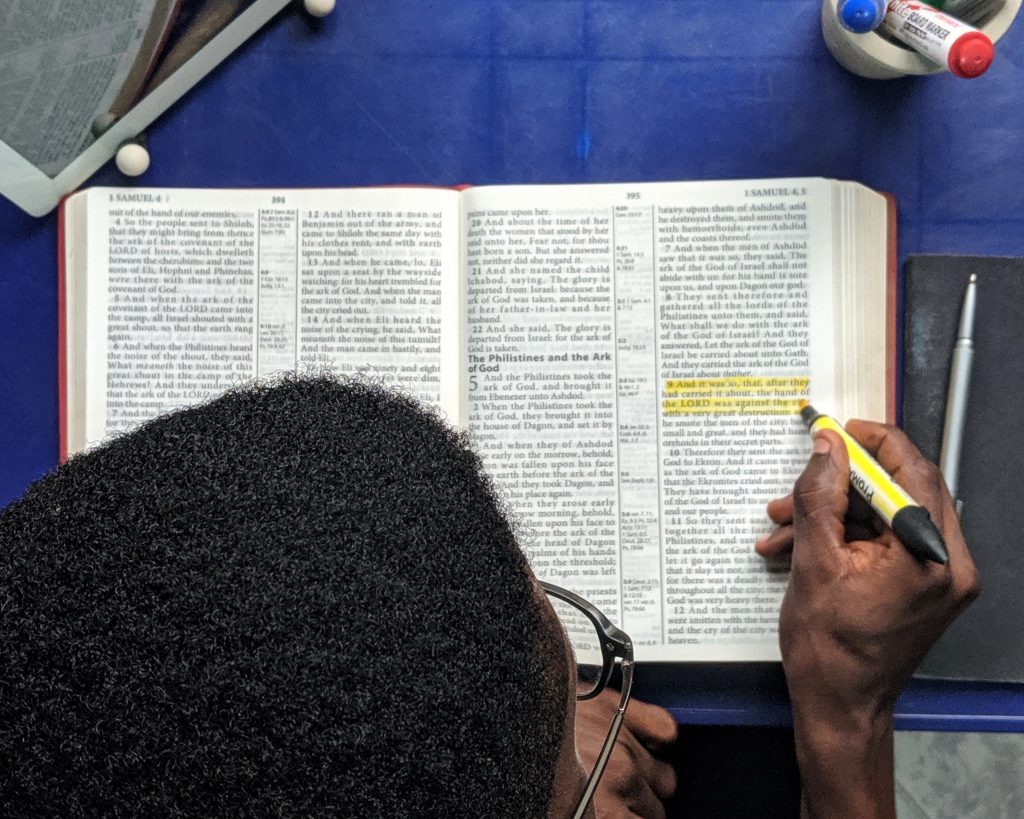
Stewardship and Mission
Study Scripture: Acts 1: 6 – 8; 2 Corinthians 8 3-9
Background Scripture: Matthew 28: 16 – 20
Lesson 12 February 21 2026
Key Verse
For you know the grace of our Lord Jesus Christ, that though He was rich, yet for your sake He became poor, so that you through His poverty might become rich. 2 Corinthians 8:9
INTRODUCTION
Our Study Lesson today is an unpleasant lesson for today. This is so because most Christians follow the Corinthian model of stewardship and mission. They do have gifts, and they do use those gifts sometimes come on a very limited basis
But the question is really how consistent are they in what they are doing? Are they stewards all the time, or only some of the time.
In this Lesson the Apostle Paul holds up before us the example of the Macedonian church, a church filled with very poor people, who were so poor that the Apostle did not seem to want to bother to ask them to help the needy brethren in Jerusalem
We therefore have to spend a little bit of time before we look at the passages reminding you who you are and what you have been given. It is only when you realize who you are as a believer, as a child of God, as one of the royal sons and daughters of God that you will be able to and want to fill the role of a steward and to carry out the mission that the Lord Jesus Christ has given you.
So let us recount some of these facts about you.
The risen Savior was with His disciples to announce His complete sovereignty. His nation had rejected Him and now the message for His disciples would be that all the nations and not simply Israel were fully available to come to Him.
The unnatural branches of all Gentiles would now begin to be grafted in to the promises given to Abraham.
Clearly a predominantly Gentile church would emerge but the book of Acts insisted clearly that the Gospel should first be preached to the Jews and then to the Greeks, the other name used for Gentiles.
We know therefore that the Gospel of Jesus Christ is a fit subject for evangelism to the Jewish people.
Note that when Jesus was speaking to the disciples He is always in a teaching mode for these disciples had a great deal of difficulty to believe in the Resurrection. He is trying to push them off of the old way of thinking to the next level and so He now had to have them live in His invisible presence and not His visible presence. He is trying to prepare them for this new set of circumstances.
In our Study we are faced with a very similar situation.
So therefore note the stress on the fact that all authority has been given to Him; He is always going to be with them, and that He has unrestricted sovereignty. As the Son of God, the King, the Messiah, sovereignty belonged to Him and He had authority over all flesh as well as over the angelic hosts. They should therefore go on their mission without any fear.
We should also remember that the ascension of Jesus is the final step in His exaltation for now at His ascension He is seated at the right hand of the Father.
The Ascension also marks the starting point of Jesus’ heavenly ministry on behalf of the people of God. He had completed the work of redemption in His shed blood and so now He was prepared to bring His little flock successfully into the presence of the Father.
The passage in the book of Acts now brings us to the reality of the ascended Jesus living in heaven. He would now be able to send the Holy Spirit to make possible the work of spreading the Gospel.
Note that we now know the destination of the risen Christ. We and the disciples know where Jesus is. He is present in heaven in glorified human form standing as the representative of men who believed in Him.
The Lord Jesus Christ therefore has ascended and is in the position to send the gift of the Spirit so that the Spirit will indwell all those that belong to Jesus and give gifts to all those that belong to Christ.
The inauguration of Jesus’ High Priestly Ministry will now begin immediately and we will serve as priests under the Great High Priest.
We note therefore that He went up in bodily form and will return in physical form from the particular place from which He left, when He returns to restore the Kingdom to Israel. So says the book of the prophet Zechariah.
The founding of the church (Acts 2) was a commission or charge given to the Apostles before Jesus’ ascension near Bethany (Luke 24:50, 51).
His ascension puts the reader in the same place as the Apostles and the disciples, as being responsible for the proclamation of what you now know, concerning the person and work of Christ. Their task was to “witness”; preaching the good news about repentance for the forgiveness of sins in Jesus’ name.
Our Lesson Study today deals with an extremely important aspect of our Christian life. This is so important that for some time important groups in the church are convinced that the church has failed in its teaching and practice of biblical stewardship. Because of this there are many errors and excesses in the church which have led to scandals over and over again.
The question we have to ask ourselves is what is our responsibility to God given the material possessions that have been given to us for a short while, that is, while we are on the world, for we came into it naked, and depending on how God enables us and how we have handled the trust bad or good, we will go back to the dust naked.
The issue is really about money and its relationship to spiritual things. This matter of money is not simply an economic issue. We will see in our Study how the Apostle Paul discusses the relationship between money and spiritual things and he shows us how this relationship touches on the Christian ministry of giving.
The comments on this matter by the Apostle Paul is set in the arena when he’s talking about his ministry and so we know it is significant. Besides this, we note this that he has brought it up after the great doctrinal section on the resurrection of the body when he discussed the ministry of Giving in 1 Corinthians 16.
We should also now note that the Apostle had spoken of covetousness which he tells us is idolatry for the apostle regards the individual who is covetous as a person who is not simply greedy but actually is an idolater because he puts something like money and material possessions before the Lord.
That object of idolatry is the object of his desire for since he said he loved God and made covenant promises before the Lord God he is guilty of idolatry; and so the Apostle concludes that covetousness is idolatry.
The writer of Hebrews in chapter 13 verse 16 speaks about sharing as being a spiritual sacrifice, and so the famous evangelist Wesley spoke from time to time about the temptations that money provided him and he said once, “When I have money I get rid of it as quickly as possible lest it should find a way into my heart”.
When Scripture and the Apostle speak about this matter of giving we are really being told about spiritual matters. It is quite easy for us to depart from the principles of the Word of God even when we think we are good servants of the Lord.
So let us be warned that this Study is not as simple as it looks.
This Study will raise an important question, given it is a subject matter of stewardship and Christian giving. This Study is about tithing or grace giving. Some regard this as the normative passage about Christian giving being covered in 2 Corinthians 8 to the end of chapter 9.
We must however remember also that it is possible to give generously and not give enthusiastically as the Lord would have us give. So we have to consider whether or not the Lord has given us that ability to give not only generously but to give enthusiastically.
Many of course have been trained to believe that the tithe is a large part of stewardship. In fact we know the tithe has been taken out of the Mosaic Laws and it is giving 10% of earnings. This is being accepted as a legal standard for Christian giving.
The argument for tithing also rests on Malachi 3:8 through 10 and as a result some object to how this is handled because the tithe has been taken out of the Mosaic Law.
They note that most people are not giving 10% but only 2% or 1% and so they object to what they consider to be a Jewish practice in the Christian church. The fear is that people have not and very likely cannot live up to this standard and so they are constantly living in a state of guilt.
You can see of course how this raises the issue of how much if any of Jewish practice which is stated as being under the Mosaic Law is applicable for Christians today.
And so some focus on this passage in 2 Corinthians 8, directing this passage as one on normative Christian practice even though it was addressed by the Apostle for a specific problem of poverty in the Jerusalem Church during what was obviously a severe famine.
So you will come across approaches that stress that this passage is about tithing. The point for those who argue against the need for tithing by Christians is that the tithe was specifically given to Levite priests because they did not have the privilege of a piece of land heritage even though they were a part of Israel. They were excluded from land ownership because they had been specifically entrusted to do the Lord’s work and were busy in the Tabernacle and the Temple; and so the tithe was given for their support.
One of the arguments against the validity of the tithe is that if you accept tithing you are placing yourself under the law, and were thus obligated to do the whole of the law, for if you broke one part of the law you are guilty of the whole.
In addition it is argued that the tithe was to be paid in Jerusalem.
Of course this Study will not go into all the pros and cons of this argument of tithing versus grace giving, but it is important to see what the Apostle teaches about this matter of “giving’.
We must not forget however that the emphasis of this Study is on the plan and purpose of God.
We must not forget or neglect the fact that we are looking at the exaltation of the Lord Jesus Christ and the fact that He died to bear our sins, and then was resurrected, ascending to the right hand of the throne of God.
Note that this ascension was the seal of the Father upon all that Jesus had done in His earthly work. It was the evidence that God the Father had accepted the work of the Son.
We should remember that the earthly work of the Son was only the starting point of His heavenly ministry at the Ascension to the right hand of the Father for He was there on behalf of the people of God. The work of redemption had been completed on the Cross and the ground of our redemption was accomplished when the blood was shed and Jesus bore the wrath of God for the people of God.
But never forget that that work of the Lord Jesus Christ was not finished for though the offering offered by the Great High Priest for the people of God was done, He lived to secure the effects of that offering of Himself having successfully completed all that God the Father had intended Him to do when He gave Himself on the Cross.
What we are looking at now therefore in the Book of Acts is not really a record of the acts of the Apostles. The book of Acts is really the Acts of the Holy Spirit enabling the Apostles who are prominently to do the work that had been entrusted to them with the divine power of the Lord Jesus Christ lying behind them. The Book of Acts therefore records the continuing acts of the Lord Jesus Christ.
Jesus continued to work because having ascended to the right hand of God and exalted, He received of the Father the promise of the Holy Ghost which He had stated would be shed abroad.
The Lord Jesus Christ then is the one who in a real sense gave the Holy Spirit and that made possible the work of the Apostles, and the work of the people of God throughout all the ages. In support of that idea the Apostle Peter would state in Acts 3:16 at the healing of the lame man who was carried daily to the gate of the Temple which is called Beautiful,
“Let it be known to you all and to all the people of Israel that by the name of Jesus Christ of Nazareth, whom you crucified, whom God raised from the dead, by him this man stands here before you whole”.
The Lord Jesus had come after the work of John the Baptist and had given the message, “Repent, for the kingdom of heaven is at hand”.
The Lord Jesus Christ had done the work that the Father had sent Him to do.
Close to the end of His work and His time on earth physically, the disciples asked Him if He would at that time restore the Kingdom to Israel and Jesus replied that it was not for them to know the times or the seasons which the father had set in His own power but He promised, “But you shall receive power after the Holy Ghost is come upon you, and you shall be My witnesses”.
We are therefore like the apostles witnesses to what Jesus has done, His work and the salvation that He had brought.
That is the New Commission. And we are told that as He spoke these things He was lifted up and a cloud received the Lord Jesus Christ out of the sight of the Apostles.
We know where the glorified human nature of the Lord is, for it is at the right hand of the Father. That is where Jesus’ physical presence is.
But we know that by the Spirit He is present in the life of every believer and so He is present with us no matter where we are through the Spirit.
The incarnation of the Lord Jesus Christ was the goal in the plan of God. God had planned that men would be saved through a representative mediator. As the Apostle Paul says “We are accepted in the beloved one”.
The Lord Jesus Christ is the High Priest of the people of God and He has given special spiritual gifts to those the Holy Spirit chose for that is the work of the Holy Spirit, namely, to bring us to maturity.
We now therefore look forward to the restoration of the Kingdom and the answer to the question of the Apostles. The answer to the Apostles is that when Jesus comes back, at His second advent, Jesus will stand on the Mount of Olives and begin His acts of correcting unbelieving humanity. He will then restore the kingdom to Israel.
Many tend to forget that the idea of the Kingdom of God has its roots in the Old Testament. God’s Kingdom is the territory over which God rules. He clearly rules over the heavens, the spiritual domain, and as well over the earth, even though He faces demonic opposition on earth
The people of Israel understood that God Yahweh had dominion over all and we read of this in 2 Chronicles 13:8, Psalm 103: 19; 145: 11- 13; Isaiah 40: 18- 26; Jeremiah 10: 7-16, and many other passages.
The people of Israel had problems at different stages in their history with this idea and when Jesus began His ministry, the Romans, the dominant world power, ruled the world.
The nation of Israel looked for the coming of the Messiah expecting Him to deliver Israel from Roman rule and to establish Israel once again as a great nation. As well he would establish the Kingdom of God on earth.
But they did not want to hear Jesus’ focus on a new understanding of the Kingdom of God as something that is near, that is, within us, and at the same time is yet to come.
Note that in Revelation 1:18 Jesus declared…“All power is given unto me” … and in this sweeping statement we see the emphatic declaration of Jesus’ conquest of death.
The word in the original language behind the translation “power” is also translated “authority” in other contexts (Matthew 7:29; 8:9). We may think of power as the ability to do something, while authority is the right to do something. Thus the two ideas are closely related, and Jesus has both in an absolute sense. Indeed, the word “all” dominates. There is nothing partial or halfway about anything here!
He had exercised power over disease, nature, and death. Now notice His own resurrection proves the claim beyond a shadow of a doubt. And what He claims is what He possessed in the beginning (John 1:1–3).
The fact that this power is given to Jesus implies that the heavenly Father, having sent the Son (Galatians 4:4), is the one who has given the Son all power and authority. What is implied here is unmistakable in Matthew 11:27; John 3:35; 13:3; 17:2; Ephesians 1:20–22; and Philippians 2:9–11.
Jesus’ disciples should go and make disciples because Jesus now has universal authority. He gave them a new universal mission in keeping with His new universal authority. Previously He had limited their work to Israel (10:1-8; cf. 15:24). Now He sent them into all the world. They could go confidently knowing that Jesus has sovereign control over everything in heaven and on earth (Rom. 8:28).
What the disciples are taught is not simply facts about Jesus, but obedience to all of His teachings. Christian maturity involves therefore
1. A repentant faith profession
2. A life of Christlike living
3. A growing doctrinal understanding.
And notice the assurance given
“And, lo, I am with you always, even unto the end of the world”.
Jesus concludes what we call the Great Commission with the assurance of His presence at all times. .
This was a reference to the Second Coming or consummation of the Kingdom of God.
We state all these facts to remind you of who you are.
It should therefore not be difficult for you to understand what the Apostle Paul is teaching about stewardship and the gratitude you should be displaying. Your gratitude is to be shown in the same way that the brethren in the poor Macedonian churches had manifested.
ACTS 1:6-8
In the first recorded words of Jesus in the book of Acts, He tells His apostles not to leave Jerusalem until the promised baptism of the Holy Spirit (Acts 1:4, 5). Our lesson picks up at this point. The forty-day period of Acts 1:3 is coming to a close.
The key to the Apostles’ successful fulfillment of Jesus’ commission was their baptism with, and consequent indwelling by, the Holy Spirit. Without this divine enablement, they would only have been able to follow Jesus’ example, but with it, Jesus could literally continue to do His work and teach His words through them. Consequently their preparation for the baptism of the Spirit was very important. Luke recorded it to highlight its foundational significance.
Verse 6. … When they therefore were come together … therefore connects the Apostles’ question with Jesus’ teachings concerning “the kingdom of God” (Acts 1:3) and His promise that they will be “baptized with the Holy Ghost” (1:5).
They asked of him …. The tense here means either repeated action in past time or the initiation of an act. Apparently these disciples had asked this many times.
… wilt thou at this time … the Old Testament associated Spirit baptism with the beginning of the Messianic (millennial) kingdom (Isa. 32:15- 20; 44:3-5; Ezek. 39:28-29; Joel 2:28—3:1; Zech. 12:8-10). It was natural, therefore, that the disciples would ask if that Kingdom was about to begin, in view of Jesus’ promise that the Spirit would baptize them in a few days.
‘This time’ refers to ‘not many days from now’ (v. 5).
In the Septuagint, the term “restoration” (Gr. apokatastaseos) technically refers to God’s political restoration of Israel (Ps. 16:5; Jer. 15:19; 16:15; 23:7; Ezek. 16:55; 17:23; Hos. 11:11).
The Gentiles had taken the Jews’ kingdom from them, which occurred with Nebuchadnezzar’s conquest in 586 B.C. Clearly the messianic kingdom is in view. But now we see their strong belief that God would restore Israel to its earlier position of power and prestige and they equated that restoration with the Kingdom of God.
Verse 7. Jesus had previously warned His disciples not to let themselves be distracted by a fascination with setting dates for His return (Matthew 24:36–44; 25:13). Here the issue is the establishment of His Kingdom, but the warning remains the same: God is the ultimate timekeeper. Information such as this has been withheld from humanity.
Note, Jesus did not correct the disciples for believing that the Messianic Kingdom would come. He only corrected their assumption that they could know when the Kingdom would begin and that the Kingdom would begin in a few days.
Accordingly, we should be giving careful thought to the statement of Luke 21:34-36 which states the warning words of Jesus:
“So be careful, or your hearts will be loaded down with carousing, drunkenness, and cares of this life, and that day will come on you suddenly.For it will come like a snare on all those who dwell on the surface of all the earth.
Therefore be watchful all the time, praying that you may be countedGod worthy to escape all these things that will happen, to stand before the Son of Man”.
Verse 8. Rather than trying to figure out when the Kingdom would come, the disciples were to give their attention to something different, namely, worldwide witness. Moreover, the disciples would receive divine enablement for their worldwide mission.
The power (dunamin)—the word from which we get our word ‘ dynamite’, the promised “power”, was not to enable the Apostles to live godly lives, though the Holy Spirit does enable believers to do that. What is promised to the Apostles is the power to fulfil their mission, that is, to speak, to bear oral testimony, and to perform miracles and in general act with authority.
This power is given through the Spirit, and conversely the Spirit in Acts may be defined as the divine agency that gives this power.
One writer notes: “They were now to be witnesses, and their definite work was to bear testimony to their Master; they were not to be theologians, or philosophers, or leaders, but witnesses. Whatever else they might become, everything was to be subordinate to the idea of personal testimony. It was to call attention to what they knew of Him and to deliver His message to mankind. This special class of people, namely, disciples who are also witnesses, is therefore very prominent in this book. Page after page is occupied by their testimony, and the key to this feature is found in the words of Peter: ‘We cannot but speak the things which we have seen and heard’ (4:20).”
Many students of the Bible have noted that this sequence of places provides an outline of the Gospel’s progress as recorded by Luke in the book of Acts. The Gospel is first preached by Peter in Jerusalem on the Day of Pentecost. The impact of that message is immediate as 3,000 are led to become followers of Jesus (Acts 2:41).
Later the movement expands into Judaea (the region in which Jerusalem is located) and Samaria. This is spurred by the persecution initiated by Saul, which forces the believers out of Jerusalem (Acts 8:1).
Taking the message unto the uttermost part of the earth begins with the conversion of Cornelius and his household (the first Gentile converts). It is furthered by the missionary journeys of Paul.
Note that on the day of Pentecost the Apostle Peter clearly stated that all the apostles are witnesses to the resurrection of Jesus. He would confront the High Priest with this fact when they complained that the apostles had intended to bring the blood of Jesus on them. Acts 5:28. When Peter preached to Cornelius the Centurion he again stated that they were witnesses of everything that Jesus did in the country of the Jews and in Jerusalem.
Note that the Gentiles who had heard the words of the gospel from the apostles and the other messengers of Christ had a task to do. God had promised in the covenant he had established with Abraham that all the families of the earth would be blessed in him. Genesis 12: 3. You should therefore remember I prophesy that, Yahweh of Armies will make all peoples a feast of fat things a feast of choice wines of fat things full of marrow of well refined choice wines,( Isaiah 25:6) and “will wipe away all tears from all faces”. (Isaiah 25: 8).
At the conclusion of Acts, Paul is in Rome—a location which at that time represented “the uttermost part.” It marked a goal that Paul had been keenly intent on reaching (Acts 19:21; 23:11). The Gospel was already there before Paul came. Of course, Paul was always thinking of new frontiers, such as Spain (Romans 15:23, 24) to which the gospel might be taken (compare 2 Corinthians 10:15, 16).
2 CORINTHIANS 8:3-9
The Apostle had been writing from Macedonia to the Corinthian church. They had not been listening carefully to the words and ministry of the apostles because false teachers had come among them and disturbed them, and so the Apostle Paul had to send Titus to them with a long letter. This letter had caused them sorrow and Paul did not altogether regret it but now he had rejoiced not that they were made sorrowful but they were sorrowful to the point of repentance.
So let us note the context and what the Apostle Paul stated to the Corinthian church in Chapter 8:
“For the sorrow that is according to the will of God produces a repentance without regret, leading to salvation, what the sorrow of the world produces death.
For behold what earnestness this very thing, this godly sorrow, has produced in you: what vindication of yourselves, what indignation, what fear, what longing, what zeal, what avenging of wrong! In everything you demonstrated yourselves to be innocent in this matter”.
So we note immediately that there had been a problem with the Corinthian church and the Apostle had to write a strong letter to them and engaged the work of Titus to correct errors in the church.
We are therefore looking in this Text at a problem that can occur in churches, and the need for the repentance of the church, even though the church might in the past have exceeded other churches in the spiritual gifts that God had given to them.
It therefore will be helpful if we look at some preceding verses to our Text in Chapter 7 before we look at the passage in our Text, Verses 1 to 8. By doing so, we can get a correct idea as to what the Apostle is really saying.
You can then decide for yourself whether this passage is the normative passage on giving or whether it is a most relevant passage when dealing with the untoward behavior of churches that clearly are endowed with spiritual gifts, and the necessary call for them to remember their first love, and to repent and to do the first works.
So let us read and establish the Context of the Biblical passage in our Study Text in our minds. Hopefully we will then be able to decide on what the normative position of the teaching it’s all about. We continue our previous quotation from Chapter 7:11b which reads:
“In all things you proved yourself to be clear in this matter. Therefore, although I wrote to you, I did not do it for the sake of him who had done the wrong, nor for the sake of him who suffered wrong but that our care for you in the sight of God might appear to you”.
Chapter 8:
“Moreover, brethren, we make known to you the grace of God bestowed on the churches of Macedonia:
That in a great trial of affliction the abundance of their joy and their deep poverty abounded in the riches of their liberality.
For I bear witness that according to their ability, yes, and beyond their ability, they were freely willing, imploring us with much urgency that we would receive the gift and the fellowship of the ministering to the saints.
And not only as we had hoped, but they first gave themselves to the Lord, and then to us by the will of God so we urged Titus, that as he had begun, so he would also complete this grace in you as well.
But just as you abound in everything in faith and speech, in knowledge, in all diligence, and in your love for us—see that you are bound in this gracious work also”.
I speak not by commandment but I am testing the sincerity of your love by the diligence of others.
For you know the grace of our Lord Jesus Christ, that though he was rich, yet for your sakes he became poor, that ye you through his poverty might become rich”.
We can therefore now look at what the Apostle Paul is concerned with. The context puts a very different picture on the claim as to whether this is a normative passage for giving and therefore is to be compared with the practice of tithing.
Please remember that in the first letter to the Corinthian church he had said that the church had exceeded other churches in the spiritual gifts that God had given them. They had misused these gifts and were not exercising them according to Scripture. So the Apostle had to write Corinthians 12,13 and 14 to admonish them about the exercise of the spiritual gifts in the assembly.
The Apostle urged them to abound in gifts but also in love and now to abound in this grace which meant giving to the poor in Jerusalem.
Chapters 8 and 9 of 2 Corinthians are really all about Christian giving. It is concerned with the motivation for giving, the joy that would come by this action of giving, and as well the thrill of doing the Father’s business.
So looking at Christian giving—the open- hearted,, thoughtful, joyful generosity, for Paul is telling the church in Corinth while he writes from Macedonia, that this is the only kind of giving that God puts any value on.
In his first letter to the Corinthian church, 1 Corinthians 16:1-4, Paul had encouraged the Greek Christians in this church to work with other churches to meet the needs of the Christians in Palestine. He had told them to collect from their church just as he has directed the church of Galatia.
When they did collect they should do so on the first day of the week, save it up or put it aside so that when he came the collections would have already been made. He would then carry the gift to Jerusalem.
We know that at the time in question Jerusalem was a very poor city, that the Christian church in Jerusalem had gone through a great persecution, famine and poverty and so the Gentile churches in Macedonia, Asia Minor, Acacia, and other places around the Roman Empire had agreed to take up a collection and that Paul would take the money that had been collected to give to the saints in Jerusalem.
The Apostle knew that it was very important for the Gentile churches to offer something to the Jews for their churches, the Gentile churches, had received much because their foundation was in Judaism. They knew that the Messiah, the Lord Jesus Christ had come from the nation of Israel. They also knew that the Old Testament Scriptures that they used came from the nation of Israel and their prophets. Given the difficult relationships between Gentiles and Jews the Apostle Paul was telling the Gentile churches that they should express their gratitude with these gifts and heal the tensions that existed between Jews and Gentiles
. Note therefore that Paul was comparing two churches, for the churches in the southern region of Greece, Acacia, and Macedonia would have been somewhat less sophisticated, less wealthy and less impressed with itself as the city of Corinth and Athens and the other great cities of Greek culture were. They looked on these northern regions as country bumpkins.
So the comparison then was between the churches of Macedonia and the church in Corinth and the Apostle was telling the Corinthians that they needed to follow the example of those churches that they would have looked down on.
That of course is a great lesson to us as well for sometimes a church might think that they are more sophisticated and thereby unwilling to learn from those that seem to be less sophisticated.
The Apostle Paul is quite clear as he puts the example of the Macedonians before his Corinthian readers and before us. We too are encouraged to make choices that will bring blessings to us and not simply blessings to the less fortunate.
We should like the churches in Corinth understand that giving to meet the needs of others should begin with the recognition that they themselves had been given a great deal. They were recipients of the grace of God.
The Lord Jesus Christ had found them in darkness and given them life, and met the needs of their heart, and offered them a hope of eternity that would not fade. So they should approach the subject of giving with gratitude because of what was already inside of them.
Paul was pointing out to the Corinthian church that the Macedonian church that was less wealthy to begin with, were filled with joy and the power of the Spirit to face the trials they faced. They experienced joy under very difficult circumstances for they knew that God was good. Their natural response was to be generous themselves and experience joy in the midst of sorrow for they understood that God was present with them and that He was at work with them.
The brethren considered it a privilege to help the brothers and sisters in need. For them it wasn’t a burden or something that they should discharge as quickly as they could if they could not avoid it.
So look at verse 3 in this chapter. On their own they begged the Apostle for the privilege of sharing in the service to the saints. They realized that the believers in Jerusalem were fellow believers and part of their family and so they counted it as a great honor to bless the other members of their family.
Therefore given this mindset the Macedonian Church gave all of themselves and as Paul said, “ they gave first to the Lord and then to us”.
What a great example for us! We should not just give as little as we can get away with. We should view the people that are in our family as being valuable in their own right.
We should encourage everyone to give their lives to the Lord to see the Lord at work and to receive the blessings that come from that kind of mentality.
Paul saw something beautiful happen among the poor Macedonian brethren and he held up this church as an example to others.
We know that the people in this church had made the heart of God rejoice. Therefore God would say to them, “ Well done, good and faithful servant! You have been faithful with a few things; I will put you in charge of many things. Come and share in your master’s joy!”
Clearly then, the very gifted people in the Corinthian church needed correction and therefore the Apostle wrote to them to get them out of the slump in this matter of giving.
Interestingly, the Scripture indicated that a year or so earlier the Corinthian church had been given the opportunity to help the poor brethren in Jerusalem and they were very enthusiastic about helping and they did give a lot. Their response stimulated other churches to join in the project and so Paul had told them to put aside a little every week so that it would add up over time so he would eventually come and take this wonderful gift to Jerusalem.
But the problem now emerged that their enthusiasm only made them jump from one project to the next project and they would respond in a flash to anything that seemed interesting and valuable. But as soon as Paul left them their interest waned and the Apostle therefore had to point out that they did excel in a lot of things to a certain degree, but they had something missing. They should look at the good example of the Macedonians.
So what is our problem? When we see disasters do we respond quickly and then forget about it? Or do we give the minimum and think that that is enough. One writer comments for our benefit:
“Jesus once said that where your treasure is, there will your heart be also. It’s appropriate and instructive for us to look at what we do in terms of giving. For those of us who have known the Lord for a time and consider and understand that we are stewards if stewardship consists of being motivated emotionally for the short term and then fading in responsibility ( the Corinthian pattern), then we have some significant things to learn.
Our decision to give on a regular basis can provide an opportunity over and over again for us to worship God to remember that what we are giving is his, to thank the one who has died for us, and to recognize the privilege of his using our choices to do good to others.
It can become the kind of thing where our discipleship grows precisely because we have an opportunity time and time again to renew our commitment.
But if we just give when our emotions are electrified or our ears tickled very little growth takes place, very little worship and we have diminished insight into who God is and what he has done.
Paul expected the Corinthians to give regularly because they have announced their intention to do so, and he is reminding them that they reluctance says something about the depth of their faith”.
CONCLUSION
Let us be very careful about this matter and remove the obstacles to giving.
Remember that we are sons and daughters of God. We are royal sons and daughters who have been given more than we can ever measure.
Do not forget that God loves all his children the same.
It would be wise for you to get into the frame of mind where you are giving church. The day might come when you are the poor church and then others will have to respond to your situation and care for you.
God does not bless you because He wants you to assemble great treasures for yourself, to drain people to build up yourselves. God wants to remind you that all of His children have to be cared for when they need it.
So, examine the standard that you use to measure yourself and your faith.
The Macedonians did not stop to look at process and details and calculate everything they had, for they were so caught up in gratitude, they wanted to stand before the Corinthian Christians and help even more than they rightfully could.
Note however in this matter we need to ask the leadership of our churches whether they have the same kind of selflessness that we see in Paul and Titus. They were not doing things for themselves. They were not there to take advantage of people and to accumulate things for themselves. They were not like the false teachers who are the greatest enemies of real faith on many fronts.
Note that Paul was not commanding but was advising, facing the church with the truth without rubbing it in. He did not use guilt trips or anything else to get the people in the churches to do what they were not themselves willing to do for the sake of Christ.
He was simply willing to advise them that they were to act for Jesus’ sake, not because of what he had said to them or what he had offered them.
It is very important that we look at verse 9. It is a powerful verse and you should memorize it.
Jesus had the absolute amount of riches one can imagine.
He was the sovereign of the seen and unseen worlds before He came down to Earth as a human being in His incarnation.
He gave up the glories of heaven and became a child in a manger, a poor looking place where animals were.
He became a criminal on a cross.
He was executed without ever defending Himself so that all of us, all of us who are poor people like we are, whose sin and folly are everywhere displayed, might become rich.
Do not kid yourself! You were nothing until Jesus found you.
And He gave up a great deal, more than you can imagine to make you royal sons and daughters and give you more than will ever be measured.
So think about it1
If anything ought to motivate you to delight in serving God and serving the brethren remember what Jesus has done for you and what He’s currently doing.
So instead of wasting time and energy arguing about tithing or not tithing you better realize that everything you have belongs to God. You should be concentrating on giving as much to Him as you possibly can even if it hurts.
Talking about restricting yourself to giving 10% is just a waste of time for people who have been given a massive amount, an amount that cannot even be measured.
Do not think you are pleasing God when you give less than you can.
Be like the Macedonians.
You are stewards of God. What you have to offer God is to offer Him your life and everything that you have.
He will tell you what He wants from you. He has given you gifts that are more than you can value. He wants you to love the brethren wherever they are.
You can’t show your love by one single solitary gift and then you forget the brethren family and their needs.
Remember that there is a famine in the earth today just as in A.D. 40. Then there was a famine sweeping across Judea and Christians in Jerusalem were in need.
So like Paul and Titus respond by encouraging Christians to contribute to an offering to provide relief for the needy Christians.
There are quite a few of them in need. They might be too proud to tell you. But is really your fault for you should have enough of the Spirit’s guidance to see what is happening around you.
Do not close your eyes to them.
Jesus wants His followers to take His message of salvation to the entire world. That was to be the top priority for the apostles as the Day of Pentecost approaches.
It must still be the church’s top priority today.